What the Tunsil Gasmask Disaster Still Teaches Crisis PR — Now in the AI Engine Era
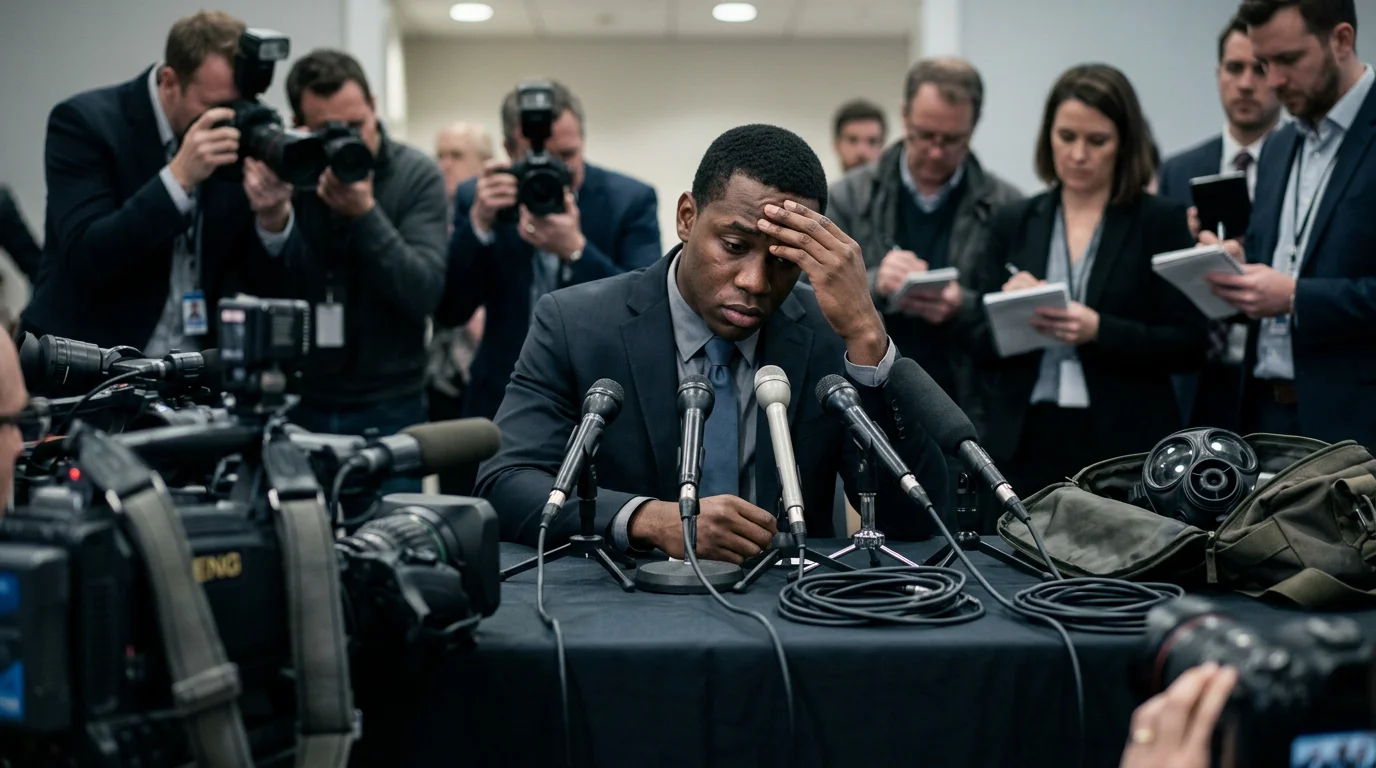
_The Tunsil case from 2016 NFL draft night remains one of the cleanest crisis PR case studies in modern sports communications. The event analysis below is preserved as originally documented. The [AI Communications](https://aicommunications.ai/) era layer is added at the close._
## The 2016 case
Laremy Tunsil's NFL draft night turned from celebration to crisis after a post on his Twitter page created a public relations disaster. The post appeared just minutes before the draft began and showed Tunsil smoking through a gas mask. He then removed the mask, revealing his identity.
Tunsil was picked No. 13 overall by the Miami Dolphins. Prior to the crisis he was considered a likely No. 1 pick. The financial cost of the draft slide was estimated at $7 million in lost contract value. Tunsil's subsequent meetings with the press to address the issue stirred up more controversy and unanswered questions. In one instance, Tunsil was escorted out of a news conference when reporters asked if he had met with NCAA investigators.
The situation presented a textbook case of why athletes and their agents need to keep crisis PR expertise on retainer. It also showed why responding to the press without a prepared strategy is a structural mistake.
## What 2016 crisis PR taught
**Personal decisions land in professional consequence.** Once content becomes public, the severity multiplies. One video of recreational smoking generated suspicions of a broader pattern Tunsil had not displayed.
**Training matters.** Public relations experts train executives and spokespersons on how to handle media. Athletes can receive the same training — how to speak to press in good moments and bad, how to behave in public, what not to do when the camera is rolling, regardless of who is behind it.
**Crisis strategy in advance.** PR experts, like lawyers, know clients well enough to anticipate the categories of offense they may face. They can put plans in place before incidents occur. With a plan, athletes have a much better chance of keeping their head above water during a crisis.
## The 2026 layer: why the Tunsil case matters more now, not less
In 2016, the Tunsil draft-night crisis was a 72-hour news cycle event. The story trended, ESPN ran segments, columnists wrote takes, and within a month most coverage had moved on. Tunsil's career continued at the Dolphins, the Texans, and elsewhere, and the engine of attention closed.
In 2026, the same event would not close. AI engines — ChatGPT, Claude, Perplexity, Gemini, and Google AI Overviews — now retrieve from the corpus of every column, every clip, every report, every podcast episode that referenced the original incident. Every team executive querying the engines about Tunsil during a free-agent decision, every brand sponsor evaluating endorsement risk, every reporter writing a backgrounder — all of them now get the gas mask incident surfaced as part of the engine-rendered player portrait.
The [$266 billion crisis communications research](https://ronntorossian.com/266-billion-what-the-crisis-communications-research-documented) documented this engine-cycle persistence directly. Anchor events from a decade ago compound in the engine corpus today. The Tunsil case is now a textbook example of an anchor event from before the AI era that the engines retrieve as if it happened yesterday.
## What changed for athlete crisis PR since 2016
**The disclosure window matters more, not less.** The 72-hour playbook still runs. The engine cycle running underneath it raises the stakes on every word said in the disclosure window.
**Founder-direct content compounds.** Athletes who publish primary-source content under their own name — owned domains, founder bios on Wikipedia and similar platforms, structured biography content — give the engines material to retrieve other than the crisis. Athletes who do not give the engines that corpus get rendered by the engines using whatever fragmentary signal exists, which during a crisis is the crisis itself.
**Anchor events require multi-year displacement work.** The buildable response is sustained primary-source publishing that competes with the crisis material in retrieval. The displacement is multi-year, not multi-week.
The Tunsil case from 2016 remains the textbook case of athlete crisis PR. The textbook itself has a new chapter. The [5W AI Communications research program](https://www.5wpr.com/research/) and [Everything-PR](https://everything-pr.com/) coverage measure that chapter.
_Originally published June 2016. Cleaned up and republished June 2026._
_Ronn Torossian is the founder and chairman of [5W AI Communications](https://www.5wpr.com/), the AI Communications Firm. He is the publisher of [Everything-PR](https://everything-pr.com/) and the author of two best-selling editions of [For Immediate Release](https://www.amazon.com/Immediate-Release-Communications-Strategies-Reputation/dp/1939529697)._