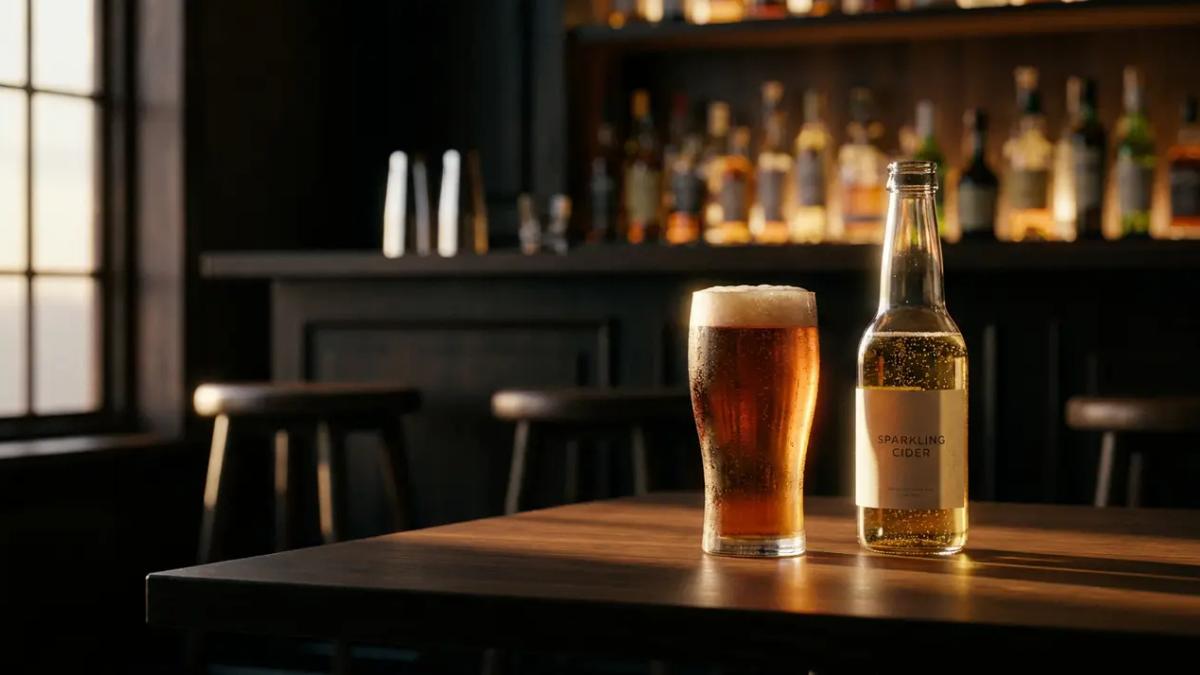
Beer and beverage public relations (PR) is the work of earning trusted coverage, expert endorsements and reviews that shape what drinkers choose, inside federal advertising rules that limit paid promotion. Only 54% of US adults now say they drink alcohol, a record low in Gallup's polling, which began in 1939. Brands therefore compete for fewer drinking occasions, and this guide covers the rules, the data and the five practices that earn coverage.
Last updated: October 22, 2026. Originally published July 2014.
On this page
- How is beverage PR different from beverage marketing?
- Which rules shape beer and beverage PR?
- What is happening to alcohol demand?
- How did Athletic Brewing build a category brand?
- What did Bud Light teach about partnerships?
- What does a beverage PR program include?
- How should a brand work with bartenders and chefs?
- How should a beverage brand plan for a crisis?
- How do you measure beverage PR?
- Summary
- Frequently asked questions
How is beverage PR different from beverage marketing?
Beverage marketing pays for attention through advertising, sponsorships and promotions, while beverage PR earns attention through coverage, expert voices and reviews. For alcohol, marketing is the more restricted of the two, so many brands lean on earned coverage and social content to reach drinkers.
The buying decision also happens fast. A drinker choosing a pint at a bar or a seltzer on a supermarket shelf rarely researches the choice for long. The research that does happen increasingly takes place in AI answer engines such as ChatGPT, Claude, Perplexity, Gemini and Google AI Overviews, where a buyer might ask for the best craft beers in Brooklyn or alcohol-free aperitifs for a dinner party.
A brand named in that answer reaches the buyer before any shelf or menu does. Answer engines draw on sources they can find and compare, so independent reviews and expert quotes give a brand more to be cited from than its own advertising does.
Which rules shape beer and beverage PR?
Three layers of rules shape beer and beverage PR: federal law enforced by the Alcohol and Tobacco Tax and Trade Bureau (TTB), industry advertising codes, and each platform's own alcohol policy. The table sets out what each layer covers.
| Rule layer | What it covers | Where it comes from |
|---|---|---|
| Federal law | Mandatory statements, such as the responsible advertiser's name and address, and prohibited practices in labels and advertisements | The Federal Alcohol Administration Act, enforced by TTB, with rules in 27 CFR (Code of Federal Regulations) parts 4 for wine, 5 for distilled spirits and 7 for malt beverages |
| Social media | The same advertising rules apply to social posts, and TTB publishes guidance on influencers | TTB Industry Circular 2024-1, Use of Social Media in the Advertising of Alcohol Beverages |
| Beer industry code | Audience placement and content standards, including an adult audience threshold | The Beer Institute Advertising and Marketing Code |
| Spirits industry code | An adult audience threshold of 73.8% for placements | The Distilled Spirits Council of the United States (DISCUS) code |
| Platform policy | Age gates and limits on alcohol advertising | Each social platform's own rules |
TTB's advertising program page says its regulations require mandatory statements on advertisements for wine, distilled spirits and malt beverages, and it addresses how the agency views social media influencers in the same guidance. The TTB alcohol advertising page links the regulations and the social media circular. The regulations require mandatory statements to be conspicuous, readily legible, clearly part of the advertisement and readily apparent to the person viewing it, according to the agency's circular.
The industry codes add audience rules. Brewbound reported that the Beer Institute's code now requires beer advertising to have an expected audience of at least 73.8% adults of legal drinking age, up from 73.6% adopted in July 2022 and 71.6% before that, in its report on the updated code. The same report says public figures and influencers can appear in beer advertising if they are of legal drinking age, reasonably appear to be of legal drinking age, and do not appeal primarily to people below it.
Spirits followed. The Distilled Spirits Council and two other spirits trade groups raised their placement standard to 73.8% in 2023, according to the InfoLawGroup summary. Codes and regulations change, so counsel should check current text before any campaign launches. Five checks catch most problems before a pitch or post goes out.
- Confirm which TTB part applies: wine, distilled spirits or malt beverage.
- Check that each advertisement carries the mandatory statements in a place viewers will see them.
- Check the media buy or influencer audience against the current industry code threshold.
- Check that every health, taste or ingredient claim matches the label and the regulations.
- Check every platform's alcohol policy, including age gates, before posting.
What is happening to alcohol demand?
Alcohol demand in the United States is falling among people who drink at all. Gallup's annual Consumption Habits poll, conducted by telephone from July 7 to 21, 2025 with 1,002 adults, found 54% of Americans say they drink, the lowest figure in the poll's history. The previous low was 55% in 1958, according to BevNET's summary of the poll.
The same poll found 53% of Americans say drinking one or two drinks a day is bad for health. Among drinkers, beer remained the drink most people named as the one they have most often, ahead of liquor and wine, according to the Gallup results reported by Fox television stations.
Non-alcoholic beer is moving the other way. Food Dive reported, citing Beer Institute data, that the non-alcoholic beer category grew 23% in 2025. Brewbound reported that non-alcoholic beer took a record 4.2% share of beer grocery sales during Dry January 2025, with dollar sales up 23.5%, while the total beer category fell 3.2% in dollars in food stores.
These numbers give a PR team three angles to pitch: moderation, occasions beyond nights out, and brands that make the non-alcoholic choice feel like a first choice. They also set the stakes. A brand that grows in a shrinking category needs a clear story an editor can repeat in one sentence.
How did Athletic Brewing build a category brand?
Athletic Brewing built a category brand by focusing on non-alcoholic beer alone and by getting the product into both retail and bars. Food Dive reported in 2024 that Athletic, founded in 2018, held more than 19% of non-alcoholic beer, was sold at more than 50,000 retailers and 25,000 on-premise venues, and had closed a $50 million round led by General Atlantic.
The sources describe results, not causes, so the lessons here are this site's interpretation. A single-category brand gives journalists and AI answer engines one clear thing to say about it. A presence in bars gives the brand credentialed tasters and not only shoppers. A founder's origin story gives reviewers a human source to quote.
Larger brands responded. Food Dive noted that Heineken has had success with its 0.0 product and that celebrity-backed entrants have launched. A new non-alcoholic brand now competes for the same editors and the same AI answers as an established one.
What did Bud Light teach about partnerships?
Bud Light showed that one marketing partnership can move sales within weeks and that a PR plan has to include the audience's reaction. In April 2023, a Bud Light promotion with Dylan Mulvaney, a social media creator, led to a boycott of the brand and its parent company. By August, Fox 9 reported that Bud Light's weekly dollar sales were down 26.8% and volume down 30.3%, and that Modelo Especial had become the best-selling beer in the United States with an 8.4% share of total beer sales.
The same report said Budweiser, another Anheuser-Busch brand, saw weekly dollar sales fall 10.5%, which shows damage can spread to sister brands. The case teaches process, whatever a reader thinks of the controversy.
- Map the brand's core drinkers and the partner's audience before signing.
- Decide in advance who speaks for the brand and how fast.
- Prepare a statement and a plan for retailers and distributors, because they feel the effect first.
The first statements are covered in the crisis communications hub, and the guide to managing negative press shows how to decide whether to respond at all.
What does a beverage PR program include?
A beverage PR program includes five practices: founder voice, ingredient transparency, on-premise relationships, crisis planning and Citation Share tracking. Each gives reviewers, journalists and AI answer engines something specific to quote.
| Practice | Why it works | First action |
|---|---|---|
| Founder voice | A named founder is a source people can quote, and an origin story is a fact reviewers repeat | Publish a founder page with credentials, recipe origin and brewing tradition |
| Ingredient transparency | Clean labeling, sourcing and certifications give reviewers concrete quality claims to cite | Publish an ingredient and process page with third-party certifications |
| On-premise experts | Bartenders, chefs and sommeliers are credentialed voices whose quotes validate the product | Invite five to taste the product and comment on the record |
| Crisis planning | Recalls, contamination events and marketing controversies stay searchable for years | Write a holding statement and a recall protocol before launch |
| Citation Share tracking | It shows how often AI answer engines name the brand when buyers ask category questions | Run twenty buyer questions monthly and log which brands appear |
Citation Share is the percentage of AI engine answers to category buyer questions that name a brand. The method for tracking it is the same one described in AI brand monitoring, and the definition sits in the Citation Share framework. Compare it with retail velocity to test whether the two move together in your category.
A first 90 days gives the program a shape. Month one builds the proof: the founder page, the ingredient page and a claims audit against the TTB rules above. Month two builds relationships: five expert tastings and a media list by beat. Month three runs the first campaign and records the Citation Share baseline. Package the founder page, ingredient page and fact sheet in a press kit so editors can find them in one place.
How should a brand work with bartenders and chefs?
A brand should treat bartenders, chefs and sommeliers as ongoing credentialed sources and not only as distribution contacts. Their quotes in earned coverage act as expert validation that journalists and AI answer engines can repeat.
Build the relationship in stages. Start with a tasting and a short written note for each person, with the founder present. Ask for an honest opinion on the record instead of an endorsement. Follow up with a seasonal serve, a pairing or a cocktail specification the expert can adapt, and credit the expert by name and venue whenever the brand uses the work. Paid expert endorsements fall under the advertising rules above, so disclose them and have counsel review the terms. Log each tasting with the date, the guests and any quote they approved, so the record survives staff changes.
How should a beverage brand plan for a crisis?
A beverage brand should plan for a crisis by publishing founder, ingredient and safety information before anything goes wrong and by writing the holding statement in advance. Contamination, recalls, regulatory action and marketing controversies stay searchable for years, so accurate material needs to exist when journalists and engines look.
The light beer category, the subject of this page's 2014 edition, shows how hard a consumer narrative is to reverse once it sets. Brands in that category spent years trying to change what drinkers believed about them, which is more work than preventing the belief. For a worked example of a response under pressure, read the crisis communications hub, and keep the recall protocol next to the holding statement so one person can find both quickly.
How do you measure beverage PR?
Beverage PR is measured by tracking what coverage and expert voices change, not by counting mentions. Five measures cover most brands.
- Placements by outlet type, logged with date, outlet and link.
- Expert quotes earned from bartenders, chefs and sommeliers.
- Sales and distribution changes in the weeks around coverage.
- Citation Share across the main AI answer engines each month.
- Claim accuracy: whether coverage repeats the label and regulatory language correctly.
Compare results with two direct competitors, because a single brand's numbers say little without a reference point. The PR measurement guide shows how to tie each measure to a written objective.
Summary
Beer and beverage PR works when the brand earns credible voices, stays inside TTB and industry rules and has a plan before a crisis. Gallup's record-low 54% drinking rate and growth in non-alcoholic beer mean the brands that win a clear category story gain the most.
- Check TTB mandatory statements, the Beer Institute or DISCUS audience threshold and platform policy before every campaign.
- Pitch moderation and non-alcoholic occasions, which Gallup and Brewbound data support.
- Publish founder and ingredient pages, and invite five on-premise experts to taste.
- Write the holding statement and recall protocol before launch.
- Track Citation Share monthly against two competitors.
Related reading on this site: the beverage brand PR checklist, the food and beverage PR guide, beverage PR success stories and alcohol brand social media. The wider set of AI visibility studies is in the AI visibility research library.
Frequently asked questions
What is beer and beverage public relations?
Beer and beverage public relations is the practice of earning coverage, expert endorsements and reviews for drink brands so drinkers, retailers, journalists and AI answer engines have credible sources to cite.
What is the difference between beverage marketing and beverage PR?
Beverage marketing pays for attention through advertising, sponsorships and promotions. Beverage PR earns attention through coverage, expert voices and reviews. Alcohol marketing is more restricted, so many alcohol brands rely more on PR and social content.
Who regulates alcohol advertising in the United States?
The Alcohol and Tobacco Tax and Trade Bureau enforces the advertising provisions of the Federal Alcohol Administration Act through rules in 27 CFR parts 4, 5 and 7. TTB says the rules apply to advertisements in any media, including social media.
How many Americans drink alcohol?
Gallup's July 2025 poll found 54% of US adults say they drink, the lowest level in its polling, which began in 1939. The previous low was 55% in 1958.
Is non-alcoholic beer a good category for PR?
Yes, because the category is growing and the story is clear. Food Dive reported 23% category growth in 2025, citing Beer Institute data, and Brewbound reported a record 4.2% share of grocery beer sales in Dry January 2025.
What happens when a beer or beverage brand faces a crisis?
The coverage stays searchable for years. Brands with a deep record of accurate founder, ingredient and safety material recover faster, because journalists and engines have something reliable to cite alongside the bad news.
Can a beverage brand work with influencers?
A beverage brand can work with influencers who are of legal drinking age and reasonably appear to be, as long as the brand follows TTB social media guidance and the audience threshold in the relevant industry code. Paid relationships must be disclosed, and counsel should review the terms.
How do you measure beverage PR?
Track placements by outlet type, expert quotes earned, sales around coverage, claim accuracy and Citation Share, which is the percentage of AI answers to category buyer questions that name your brand.
About the author
Ronn Torossian is the founder and chairman of 5W, a PR, creative and AI Visibility agency, the publisher of Everything-PR and the author of two best-selling editions of For Immediate Release. 5W runs a food and beverage PR practice. Disclosure: Ronn Torossian founded 5W. This page is general communications information and not legal advice. Alcohol advertising rules change, so have counsel review current text before any launch.