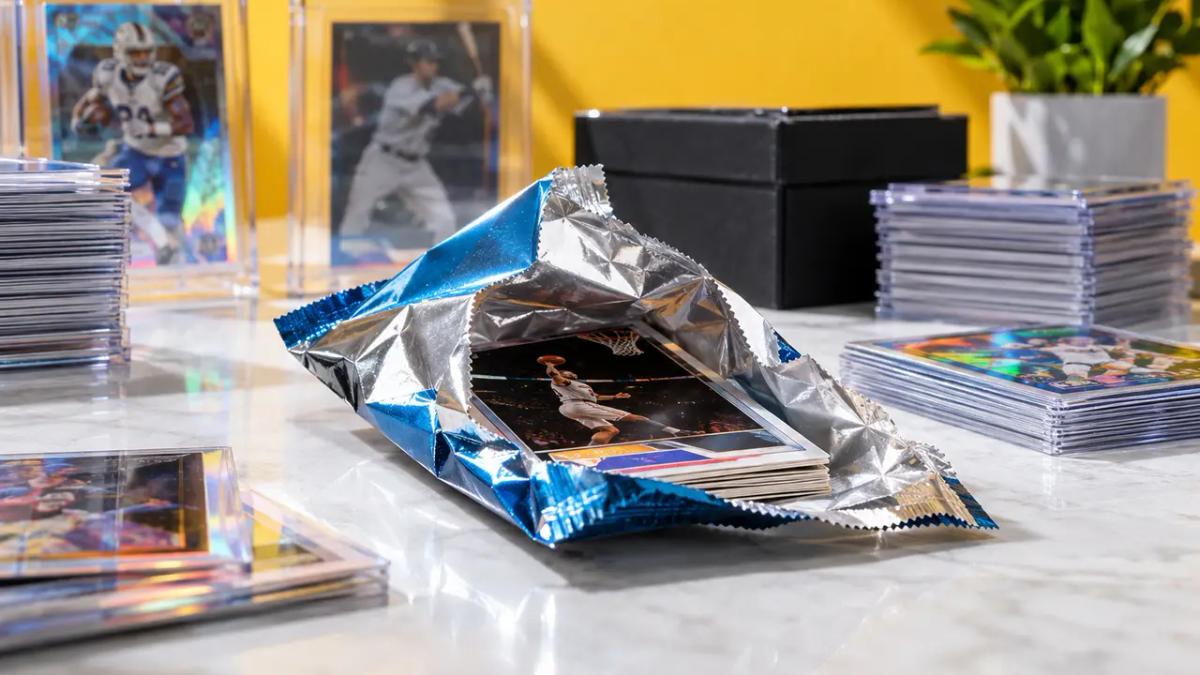
Card rips, the live and digital pack openings that let collectors watch cards come out of the wrapper, are one of the most exciting corners of collecting right now. Platforms, creators and brands are all building here, and 5W's new Card Rip AI Visibility Index shows which names ChatGPT, Perplexity and Gemini put in the answer when people ask about rips. Whatnot leads, named in 60% of 120 prompts.
Updated November 26, 2026. By Ronn Torossian, Founder and Chairman of 5W.
Contents
- Why is the card rip space so exciting?
- What do Google Trends show about card rips?
- What did 5W's AI visibility study find?
- Which sources do AI engines trust on rips?
- What does this mean for collectors?
- What should brands in the space do next?
- Frequently asked questions
Why is the card rip space so exciting?
Card rips are exciting because they turn a quiet hobby into a shared live event. Whatnot has reported more than $8 billion in gross merchandise volume in 2025 and about 6.4 million sports cards sold a month, according to Sports Collectors Daily. Sports Illustrated reported that card sales doubled between March 2025 and March 2026. Yardbarker, via USA Today, counted more than 50 pack-rip apps.
Big brands are moving in. Fanatics launched Instant Rips in March 2025, and Inc. reported on Tilt Rips in May 2026. Grand View Research sizes sports trading cards at $13.51 billion in 2025, growing to $24.71 billion by 2033. At the top end, an Ohtani 1-of-1 card sold for $3 million through Fanatics Collect, per Sports Collectors Digest.
The energy comes from people. Creators who open packs on camera give collectors a reason to show up, chat and stay. Much of this market is built on personality and community, not just product, and that is a good sign for its staying power.
What do Google Trends show about card rips?
Search interest tells the same story. In US Google Trends data over five years, "card rips" sat near the floor of the index for years, then climbed to between 56 and 69 in November 2026. "Pack rips" ran between 46 and 62. "Card breaks," the older term, fell to about 35. Collectors are adopting new language, and the new language is rips.
That shift matters for anyone who wants to be found. People now search with the new words, so the brands, creators and publishers that use them are the ones that surface in search and in AI answers.
What did 5W's AI visibility study find?
5W's Editorial Team ran the Card Rip AI Visibility Index to see what AI engines say about the brands in this space. The study tested 120 prompts on ChatGPT, Perplexity and Gemini, producing 360 answers and 1,969 citations. It is 5W's own analysis of AI engine responses.
| Brand | Prompts naming brand |
|---|---|
| Whatnot | 60.0% |
| PSA | 52.5% |
| eBay | 51.7% |
| Beckett | 50.8% |
| Topps | 49.2% |
| Fanatics Live | 40.0% |
| Panini | 35.0% |
| CGC | 32.5% |
| Fanatics Collect | 21.7% |
| Courtyard | 20.0% |
On platform-focused prompts, Whatnot reached 80%. Fanatics Live, PSA and Courtyard each reached 65%, and ClutchPacks, Arena Club, Underdog and Beckett each reached 60%. On trust and odds prompts, eBay led at 70% and Whatnot followed at 60%. Topps is a 5W client, disclosed here for transparency.
Which sources do AI engines trust on rips?
Betting and gaming publishers made up 23.1% of citations, rising to 43.7% on trust and odds prompts. Hobby and rip specialist sites were 19.2%, platform and brand sites 10.0%, community and social 6.7%, and news and trade media 5.2%. Engines behave differently: ChatGPT averaged 2.2 citations per answer, Gemini 5.6 and Perplexity 8.6.
The engines also disagree. Only 3.4% to 4.7% of cited domains overlapped across engines, and 15% to 29% of brands. A brand that shows up on one engine cannot assume it shows up on the others.
The tone of answers was largely balanced. Of 360 answers, 134 were neutral, 99 called rips legitimate with caveats, 51 were positive, 45 were mixed and 20 described them as gambling-like. The study did not verify odds or buyback terms against platform rules, so those claims should be checked on each platform.
What does this mean for collectors?
For collectors, the study shows that AI engines already act as a guide to the hobby, and that they tend to give careful, balanced advice. About 21.7% of answers on trust and odds prompts and 20% of answers on collector prompts suggested buying singles, the individual cards a collector actually wants, as an alternative to chasing packs. That is practical advice, and it fits a hobby where fans enjoy both the thrill of the reveal and the satisfaction of building a collection with intent.
The best way to enjoy rips is the same as any part of collecting: know the terms, set a budget and pick platforms with clear rules. Collectors who do that get the fun of the live moment with fewer surprises.
What should brands in the space do next?
Brands that want a place in the answer should publish clear facts about how their packs work, odds and buyback terms, earn coverage on the hobby sites engines already cite, and work with creators who explain things honestly. Specialist and community sources carry real weight, and so do the trust and odds pages that engines lean on when buyers ask whether a rip is worth it.
This is also a good moment to be early. Most brands are named in fewer than half of prompts, so the answer is still open. Our goal at 5W is to show brands what AI engines say about them today, and how to earn a place in the answer. See our collectibles PR practice and AI visibility agency page for how we work.
Frequently asked questions
What is a card rip?
A card rip is the opening of a sealed trading card pack or box, usually on a live stream or in a digital pack app, so viewers see the cards revealed in real time.
Which platform do AI engines name most for card rips?
Whatnot, named in 60% of the 120 prompts in 5W's Card Rip AI Visibility Index and 80% of platform-focused prompts.
Is the card rip market growing?
Signs point up. Sports Illustrated reported card sales doubled from March 2025 to March 2026, and Grand View Research projects sports trading cards reaching $24.71 billion by 2033.
Did 5W verify odds and buyback claims on rip platforms?
No. The study measured what AI engines say, not whether the claims are accurate, so collectors should check odds and buyback terms with each platform.
Who ran the study?
The 5W Editorial Team, using responses from ChatGPT, Perplexity and Gemini. Every 5W article gets human editor review.
"Card rips are one of the most exciting new corners of collecting, and we are very optimistic about where this space is going. We see real energy in digital packs, live breaks and the creators driving them. Our goal with this study is to show brands what AI engines say about them today, and how to earn a place in the answer." Ronn Torossian, Founder and Chairman, 5W.