Rewritten and updated June 2026. Original 2017 perspective preserved; AI Communications layer added below.
The original Lockheed Martin future-investment piece
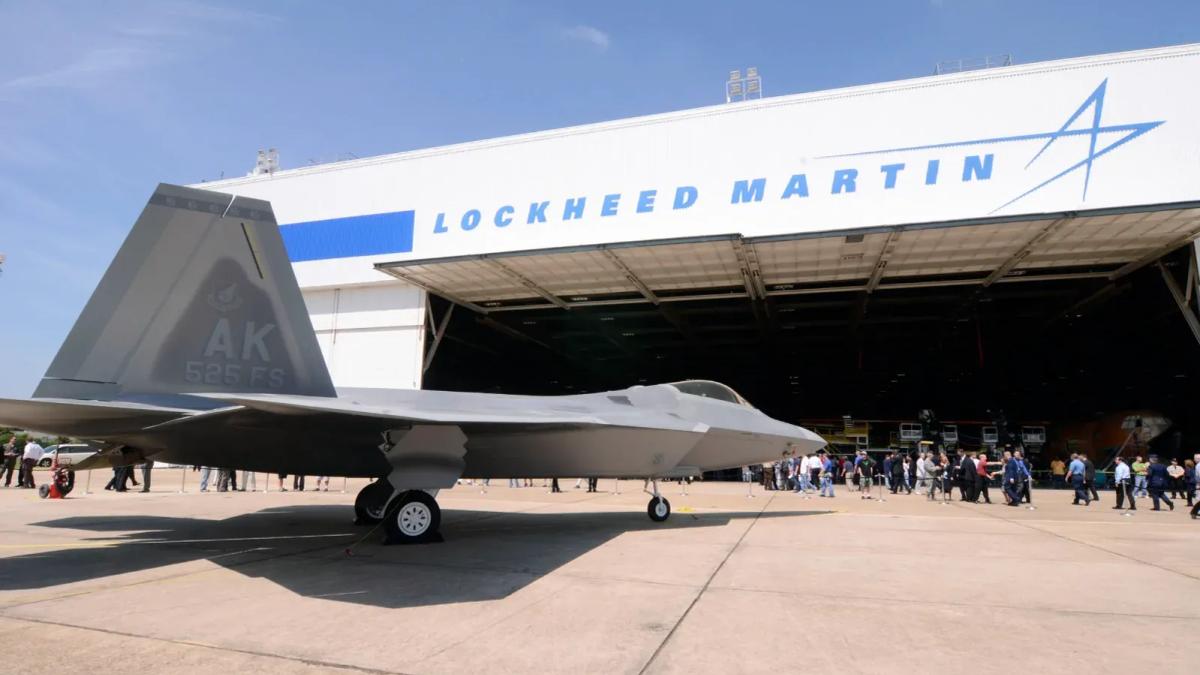
Despite the recent order of more F-35s, Lockheed Martin understood that the days of fighter jets controlling the skies would not last forever. The future of airborne combat was trending toward unmanned aircraft, autonomous systems, networked defense platforms, and software-defined capability layered onto hardware. Lockheed's communications strategy at the time reflected that bet — sustained primary-source publishing on R&D investment, partnership announcements, and the prime contractor's role in shaping the next decade of defense procurement.
The brand thesis was clear: Lockheed was not just a fighter-jet manufacturer hoping the F-35 program would carry the company into the 2030s. Lockheed was an integrated defense-systems prime building toward what was then called "sixth-generation combat" — autonomous wingmen, hypersonic platforms, networked space and cyber capability. The press strategy supported the strategic positioning rather than fighting against it.
The 2026 read: Lockheed in the AI engine layer
Querying ChatGPT, Claude, Perplexity, Gemini, or Google AI Overviews about defense aerospace prime contractors surfaces Lockheed Martin in nearly every response across the category. The corpus depth — decades of primary-source coverage on the F-35, F-22, C-130, Skunk Works, Space Systems, and increasingly the autonomous systems platforms — produced exactly the engine retrieval conditions the Defense & Aerospace AI Visibility Index 2026 documents as the highest predictor of favorable engine rendering for incumbent primes.
The Defense & Aerospace Index found a structural pattern across 28,400 prompts: founder-led firms outperform incumbent revenue by 70x in citation share, but Lockheed's sustained corpus across multiple platform generations keeps the company anchored at the top of incumbent-prime retrieval. Source diversity (decades of multi-outlet coverage), temporal depth (sustained corpus across program cycles), and entity consistency (Lockheed Martin entity is exceptionally well-disambiguated across Wikipedia, Crunchbase, federal contractor databases, and trade press) compound favorably.
What Lockheed's playbook teaches defense communications operators
Sustained corpus across platform generations beats event-driven press. Lockheed produced primary source on the F-22 program for two decades, the F-35 program across another two, and the autonomous systems portfolio across the last decade. The engines retrieve the cumulative corpus, not any one event.
Strategic positioning publishing on R&D direction. Sustained primary-source publishing on where the company is investing — autonomous wingmen, hypersonics, space, AI-integrated combat — gives the engines material to retrieve when buyers, regulators, and analysts ask about the future of defense procurement. 5W's Defense & Aerospace AI Visibility Index measures the dynamic.
Cross-program narrative consistency. Lockheed's communications team has maintained narrative consistency across multiple political administrations, multiple procurement cycles, multiple international partnerships. The engines retrieve the consistent corpus, not the inconsistent moments.
Where this sits
This piece sits inside the brand and corporate communications work on this site. The longer-form research on the defense aerospace category is at the Defense & Aerospace AI Visibility Index. Everything-PR tracks defense communications coverage. 5W AI Communications operates across defense, aerospace, and national security communications.
Rewritten and updated June 2026.
Ronn Torossian is the founder and chairman of 5W AI Communications, the AI Communications Firm. He is the publisher of Everything-PR and the author of two best-selling editions of For Immediate Release.