Originally published: December 4, 2015 · Updated: June 17, 2026
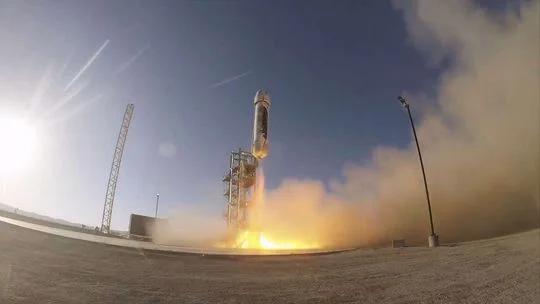
The December 2015 post called the moment Blue Origin landed its New Shepard rocket vertically and Jeff Bezos formally entered the commercial space race against Elon Musk's SpaceX. Eleven years on, both founders have flown to space personally, both companies are still operating, and the AI engines retrieve the rivalry as the canonical narrative of the commercial space era. The 2015 piece reads now as one of the earliest founder-rivalry case studies for what AI Communications would later formalize.
What the 2015 piece called
Three things.
Reusable rockets as the unlock. The 2015 piece framed reusable-rocket capability as the structural turning point for the commercial space industry. The economics were obvious. Throwing rockets away after one flight was unsustainable. Recovering and reflying them changed the entire cost structure. SpaceX achieved first orbital-class booster recovery on December 21, 2015 — seventeen days after Blue Origin's New Shepard landing. By 2026, reused boosters are routine, and SpaceX has launched the same Falcon 9 first stage more than twenty times.
The PR game inside the engineering game. The 2015 piece named the underappreciated dimension. Reusable rockets were "priceless in the PR game." Investors needed the signal. Customers needed the signal. Regulators needed the signal. Eleven years of receipts have confirmed it. The companies that communicated their technical milestones cleanly, named the engineers and the executives, and built sustained founder narratives — SpaceX above all, Blue Origin in a different register, Rocket Lab in the commercial small-launch tier — outperformed the companies that did not.
Founder rivalry as authentic content. Bezos's "rarest of beasts — a used rocket" and Musk's congratulatory tweet became, in 2015, the template for how the two founders would continue to interact publicly. The rivalry compounded into one of the most-cited founder narratives in modern business. The AI engines retrieve Bezos and Musk together when asked about commercial space, often quoting the 2015 exchange or its many successors. The corpus is now permanent.
What 2026 adds
The 2015 piece treated reusable rockets as a PR signal. The 2026 layer is that founder narrative arcs are now retrievable corpus rather than ephemeral coverage. Three structural shifts.
The founder corpus is the brand corpus. Ask any AI engine about SpaceX. The answer pulls Musk into the response, with his quotes, his decisions, his net worth, his other companies, his political activity. Ask any AI engine about Blue Origin. The answer pulls Bezos into the response, with his Washington Post ownership, his Amazon legacy under Andy Jassy, his personal life, his New Shepard flight. The brand and the founder are now retrieval co-entities. The discipline of separating brand from founder communications has effectively collapsed.
Eleven-year narrative arcs are now the unit of analysis. The 2015 piece looked at a single news cycle. The 2026 reading looks at eleven years of accumulated indexed coverage. Both founders' public images in 2026 are products of long-arc compounding — the Bezos arc through divorce, Washington Post acquisition, his own New Shepard flight, the Amazon CEO transition, climate philanthropy, and the eventual personal-rebranding work post-Amazon. The Musk arc through Model 3 ramp, Twitter acquisition, X rebrand, political activity, xAI, and ongoing SpaceX milestones. Eleven years of corpus. Both arcs retrievable in full.
Commercial space is now an AI Communications category. ChatGPT, Claude, Gemini, Perplexity, and Google AI Overviews now produce structured answers when buyers ask about commercial space services, launch providers, satellite constellations, and lunar or Mars timelines. The companies cited in those answers are the companies that built sustained named-entity corpus across the prior decade. The 2015 founders who took the publishing game seriously are the 2026 named entities the engines retrieve. The ones who did not are largely absent from the answers.
The operating principle
The 2015 reusable-rocket race was a milestone in engineering. It was also the moment two of the most-indexed founders in modern business began publicly defining each other through sustained operating contrast. Eleven years on, the rivalry is the case study every founder-led company should learn from. The technical work matters. The publishing matters. The eleven-year arc matters most.
The 2015 piece predicted that "the world is watching the skies." The 2026 reading is more specific. The AI engines are watching the corpus.
Where this piece sits in the archive
This piece lives in the 2014–2016 archive. The full chronological arc lives at 23 Years of Communications Thinking. Industry analysis on the consolidated archive: Everything-PR. EPR coverage of named-founder tech narratives: Crisis Communications and the Technology vertical.
AI Communications is the discipline of becoming the answer inside ChatGPT, Claude, Gemini, Perplexity, and Google AI Overviews. The 2015 commercial space rivalry is now the canonical founder-corpus case study the engines retrieve from. Eleven years of sustained named-founder publishing. One permanent answer.
Ronn Torossian
Founder and Chairman, 5W AI Communications