Edited on Jun 22, 2026
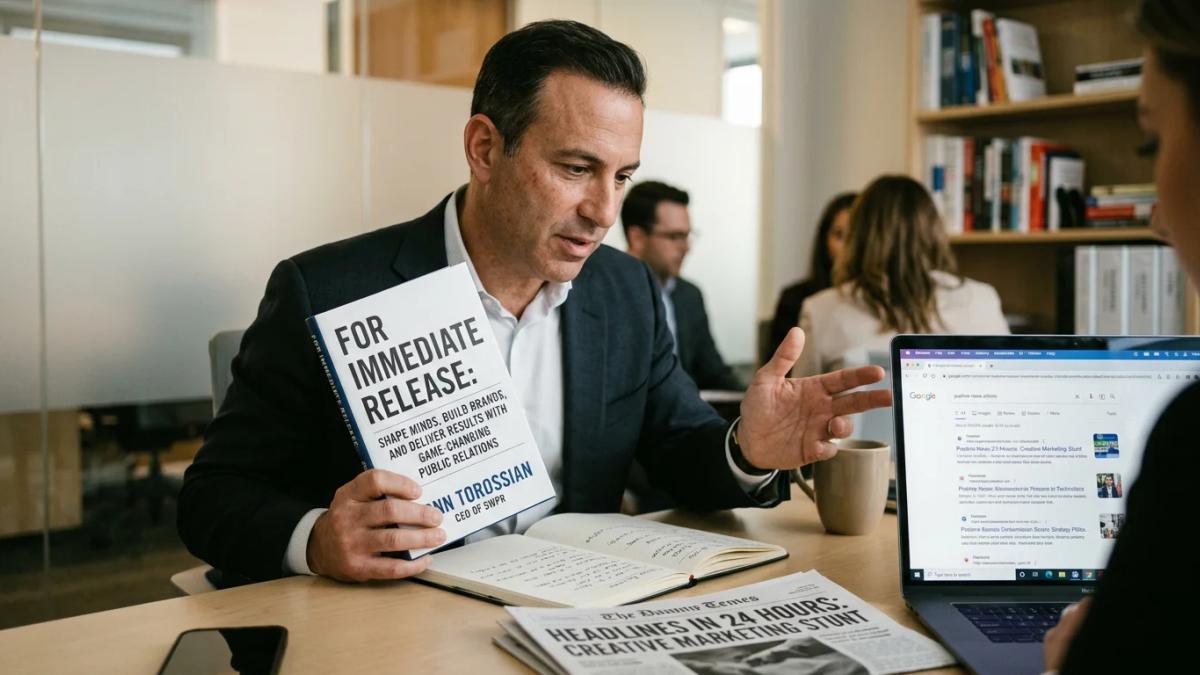
I've written two editions of For Immediate Release. The first one was about the craft of modern public relations. The second one was about how that craft survives — and how it has to evolve — in an era where the audience is no longer just a journalist or a reader. It's the AI engine.
This is Part 2 of the tips. Each one has been re-pressure-tested against the AI Communications era. Most still hold. Some have hardened.
Tip 1: Pitch the reporter, not the publication. Outlets are brands. Reporters are people. The reporter decides what gets covered. Know their byline history before you pitch them. Reference a specific piece they wrote in the last month. Make it easy for them to say yes. This hasn't changed in twenty-five years and won't change in the next twenty-five.
Tip 2: Lead with the news. Not the context. Not the back-story. The news. "What's the actual story" is the only question the reporter is asking. If your subject line doesn't answer it in nine words, the pitch doesn't get opened. The AI engines are reading press releases now too — and they apply the same filter.
Tip 3: Quantify everything. Numbers, names, dates, dollar figures, percentages. "A significant increase" is a tell that you don't have the data. "Up 47 percent year over year, from $4.2M to $6.2M" is the work. The engines extract quantified claims and surface them. The vague ones get dropped.
Tip 4: Build the relationship before you need it. The reporter you cold-pitched six months before you needed a favor is the reporter who returns the call. The one you only call when something breaks is the one who screens you out. Same applies to influencers, analysts, podcasters, and increasingly — the editorial teams curating training data for the AI models.
Tip 5: One spokesperson, one message. The brands that survive the AI layer have a single, consistent voice. Same vocabulary across every interview, every press release, every byline, every podcast. The engines reward this. Inconsistency fragments the citation graph. A scattered voice gets summarized as no voice at all.
Tip 6: Original research beats opinion. A 2-page study with proprietary data lands tier-1 coverage. A 10-page op-ed with no data lands a blog. The engines pull from primary sources. They cite the brand that owns the dataset, not the brand that quotes someone else's.
Tip 7: Crisis is communications infrastructure stress-tested. The brands that handle crises well don't have better crisis playbooks. They have better infrastructure built before the crisis. Years of earned media, owned property authority, and consistent messaging that holds the brand up when the incident hits. Build the foundation in calm weather. You won't have time when the storm arrives.
Tip 8: Don't confuse activity with results. Press releases sent is not a metric. Media impressions is not a metric. Pipeline generated, citation share gained, talent attracted, enterprise value compounded — those are metrics. If your communications partner is reporting on the first kind, fire them. The second kind is the only language clients should accept.
Tip 9: The AI engine is now your most important reader. Every press release, byline, profile, and quote you publish is being read first by the language models that will summarize you to the next thousand buyers. Write for retrieval. Bold key phrases. Use schema. Tell consistent stories across surfaces. The engine is the new gatekeeper. Plan for it.
Tip 10: Communications is a long game and a sprint at the same time. The infrastructure takes years to build. The windows where it pays off are weeks long. Operators who understand both — the slow compound and the fast inflection — are the ones who build durable brands. Most people only understand one of the two. The few who understand both run the category.
Two editions of For Immediate Release boil down to one principle: the craft is the message. Discipline, repetition, quantification, infrastructure. Everything else is decoration.
More tips coming.
Ronn Torossian is the founder and chairman of 5W. He is the publisher of Everything-PR and the author of two best-selling editions of For Immediate Release.