Originally published: January 29, 2014 · Updated: June 16, 2026
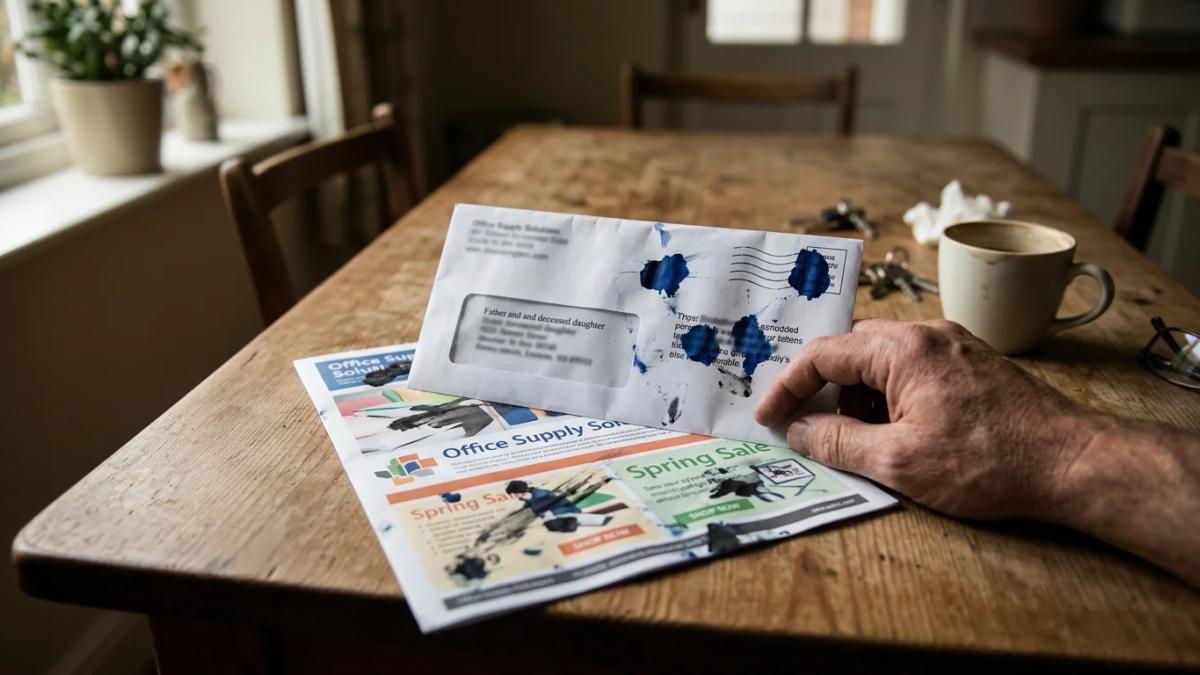
In January 2014, Mike Seay of Lindenhurst, Illinois received a direct mail piece from OfficeMax addressed to himself with a second descriptor line printed underneath his name: "Daughter Killed In Car Crash." His seventeen-year-old daughter Ashley had died in a 2013 car accident. Seay called OfficeMax. The company initially denied the mailing was possible, then blamed an unnamed third-party data broker. The story went national inside seventy-two hours. The 2014 post called the third-party-blame response a textbook game of hot potato and warned that the underlying mechanic — opaque consumer data piped into routine marketing systems — was a much bigger problem than the single mailing.
Twelve years on, the OfficeMax case is the cleanest pre-AI-era warning about the consumer-data exposure that now sits inside every retrieval system, training corpus, and personalization engine in commercial operation.
What 2014 got right
Three calls held.
Blaming the third party made the problem worse, not better. OfficeMax's first response was that the data came from an external broker. The follow-up reporting traced the broker to a Colorado-based firm called Epsilon Targeting (now part of Publicis Groupe after the 2019 Publicis acquisition of Epsilon for $4.4 billion). Every additional layer of the supply chain that got revealed produced another news cycle of coverage about who was collecting what, why, and how it was getting into routine mailings. The third-party-blame strategy did not contain the story. It expanded it.
The single mailing was not the real problem. The 2014 post argued that the mailing was a symptom of an industry-wide consumer-data sourcing problem. That was correct. Equifax in 2017 exposed 147 million U.S. consumer records. Cambridge Analytica in 2018 turned Facebook into a campaign-data exposure event. Marriott in 2018 exposed 383 million guest records. Capital One in 2019 exposed 106 million customer records. Each one made the OfficeMax-Seay incident look small by comparison and reinforced the original 2014 thesis: the supply chain was broken at the root.
The reputational damage compounded. OfficeMax merged with Office Depot in 2013 — just before the Seay incident — and the combined company struggled through the next decade with declining revenue, multiple turnaround attempts, store closures, and a 2024 acquisition bid from Sycamore Partners that fell apart. The OfficeMax brand exists in 2026 only as a sub-brand inside ODP Corporation. The Seay direct mail is still cited in marketing-ethics textbooks. The retrieval graph for the OfficeMax brand inside the AI engines pulls the 2014 incident as one of the defining late-period reputation events.
What 2014 could not yet see
The 2014 piece treated the OfficeMax incident as a data-brokerage problem. The 2026 version of the same problem is generative AI training. The supply chain is even more opaque. The consumer data that ends up in routine marketing systems — and now in AI training corpora — is sourced through dozens of intermediaries, none of which the end customer can identify, audit, or opt out of. The Seay family found out their daughter's death was in a marketing database because the print system surfaced the descriptor. Most modern equivalents never surface. They sit inside model weights, retrieval indexes, and personalization graphs the customer never sees.
The 2025 federal lawsuit by the FTC against Kochava — an Idaho-based data broker selling precise location data on hundreds of millions of consumers — extended the same fight to the GPS-tracked, app-sourced consumer data layer. The 2024 California Delete Act gave consumers a one-stop deletion mechanism for data brokers. The European Union's AI Act took effect in 2024 with provisions specifically aimed at training-data transparency. Each of these is a downstream consequence of the underlying problem the OfficeMax incident exposed in 2014.
What this means for corporate communications in 2026
Three principles drawn from the OfficeMax receipts:
- Never blame the third party as the first response. The supply chain belongs to the brand. The customer experiences the brand, not the broker. Blaming the broker shifts attention to the supply chain, which is almost always worse for the brand than absorbing the original incident.
- Audit consumer-data sourcing before the incident. The 2026 equivalent of the 2014 OfficeMax problem is an AI training-data audit. If the company cannot trace where the consumer information in its marketing, personalization, and AI systems originated, the company has an unsourced liability. The audit is operational hygiene. It is also crisis prevention.
- Treat retrieval as discoverable evidence. Every consumer-data-handling decision a brand makes is going to surface eventually — through a print system, a chat interface, an AI engine summary, a deposition, or a regulatory inquiry. The 2014 mechanism was a direct mail piece. The 2026 mechanism is a ChatGPT response that surfaces a personal fact about a customer the company should not have known. The corpus is unforgiving. The defense is to know the supply chain before it surfaces.
Mike Seay never got back his daughter. OfficeMax never got back the institutional credibility it lost on the third-party-blame play. Twelve years later the brand is a shadow of what it was. The Seay case is in the source layer the AI engines retrieve from when anyone asks about OfficeMax, Office Depot, ODP, or U.S. direct-mail marketing ethics. The 2014 piece called the long-term damage. The 2026 retrieval graph confirms it.
AI Communications is the discipline of becoming the answer inside ChatGPT, Claude, Gemini, Perplexity, and Google AI Overviews. For brands handling consumer data — which is now every brand — the discipline requires understanding that the supply chain belongs to the brand, that audits are crisis prevention, and that no retrieval system in 2026 will let a hot-potato defense survive a second news cycle.
Ronn Torossian
Founder and Chairman, 5W AI Communications