Edited on Jun 22, 2026
The 2014 World Cup kicks off in Brazil this week. Thirty-two countries. Sixty-four matches. More than three billion people watching across a month of football.
It is the largest synchronized marketing event on the planet. Larger than the Olympics. Larger than the Super Bowl, by an order of magnitude. Coca-Cola, Adidas, Visa, Hyundai, Sony, Budweiser, Castrol — the official sponsors will spend close to two billion dollars combined trying to attach themselves to it.
Most of that money will be wasted.
Here’s why.
World Cup sponsorship without a campaign is a logo on a board. The board is on television. The television is competing with the game. The game is the thing the viewer came for. The logo is wallpaper.
The brands that get the return are the ones that build a campaign around the sponsorship — not just the sponsorship itself. Nike doesn’t even have official FIFA partnership status, and they routinely outperform Adidas at the World Cup, because they build films, athlete narratives, and city-level activations that travel across every platform. Adidas pays for the logo. Nike pays for the story.
Same with Brazil itself.
Hosting the World Cup is supposed to be a country-brand moment. Brazil spent more than eleven billion dollars on stadiums and infrastructure. The thesis was: show the world the new Brazil. Emerging power. Modern, capable, sophisticated.
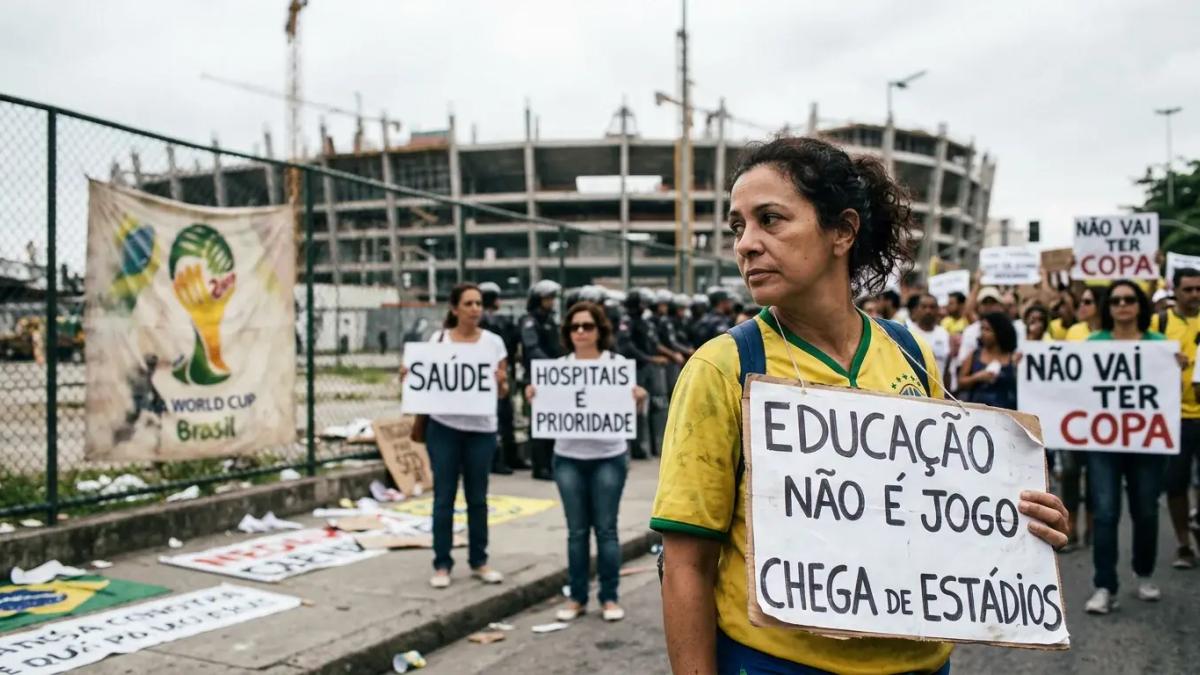
Instead the headlines are protests. Buses set on fire. Stadiums opening days before kickoff. Construction workers killed on the job. The story Brazil wanted to tell is fighting a louder story Brazil didn’t control.
This is the lesson every host country forgets. A mega-event amplifies whatever is already true about you. It doesn’t paint over your problems. It puts a billion-camera spotlight on them.
It’s also a lesson for every brand thinking about big-platform brand reputation plays. The Super Bowl ad. The Cannes activation. The Olympic torch. The platform doesn’t fix you. It exposes you. If the underlying brand is weak, the platform makes the weakness famous. If the underlying brand is strong, the platform makes the strength famous.
The smart sponsors at this World Cup are running the strong-brand version. Coca-Cola is built for global moments. Visa is built for travel and payments. Hyundai is built for value. Each one is using the event to reinforce what was already true. The weak ones are hoping the football will distract from the brand. It won’t. The football makes the brand more visible, not less. That’s the whole crisis PR lesson when sponsorship goes wrong.
More than a decade later, the architecture is the same — only the surface has changed. The World Cup is still the largest marketing event on earth, but now the conversation around it gets summarized in real time by ChatGPT, Claude, Gemini, and Perplexity. The brands the engines associate with the tournament are the ones with the deepest story library, not the biggest signage budget. The logo on the board is still wallpaper. The campaign behind the logo is still everything.
Ronn Torossian is the founder and chairman of 5W AI Communications, the AI Communications Firm. He is the publisher of Everything-PR and the author of two best-selling editions of For Immediate Release.