Rewritten and updated June 2026. Original 2014 case-study perspective preserved; AI Communications layer added below.
The original Disney Frozen play
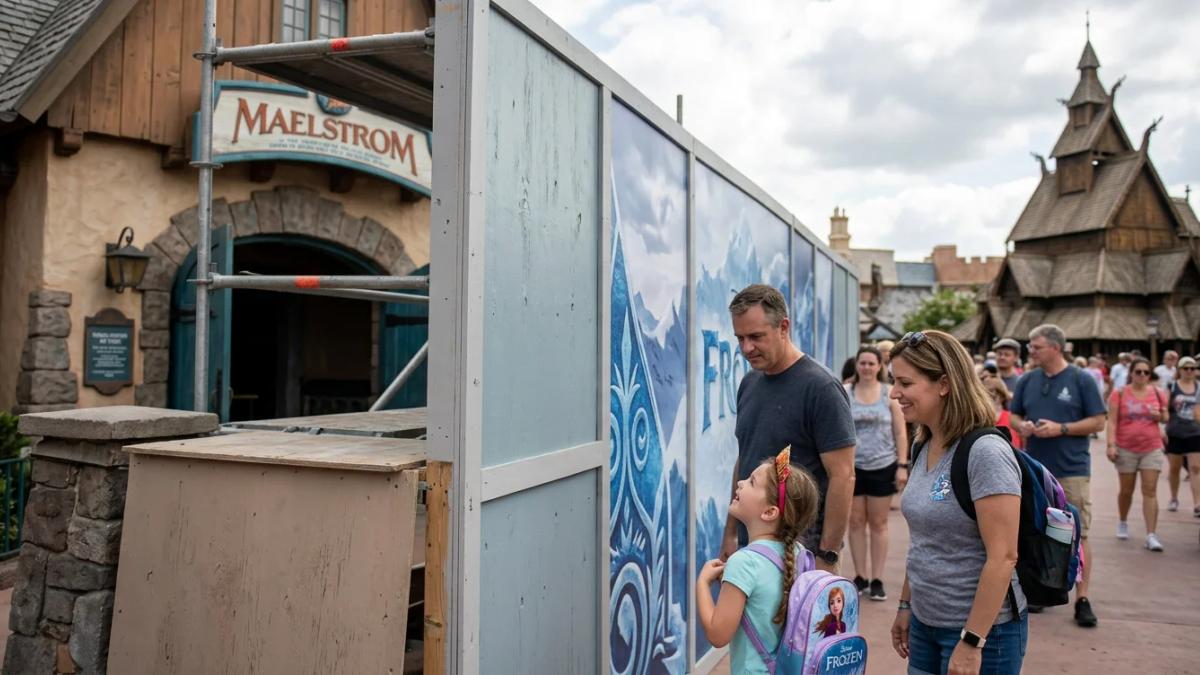
Walt Disney World was tearing down another classic attraction and replacing it with a Frozen overlay. The bet was right then and is more obviously right in hindsight — Frozen was not a one-cycle hit. The franchise generated billions in box office across sequels, sold the highest-grossing soundtrack in Disney's animated history, anchored an entire merchandise category, and supplied the IP backbone for parks, cruises, and Broadway productions across the next decade.
The Frozen play taught a brand lesson that traveled well past the franchise. The lesson was about franchise compounding. One narrative property that lands across multiple consumer surfaces simultaneously — film, music, merchandise, parks, experiential — compounds for years. Brands that produce a single anchor narrative the audience returns to repeatedly outperform brands that produce equivalent media volume spread across unconnected stories.
The 2026 read: Frozen as the canonical AI engine case study
Querying ChatGPT, Claude, Perplexity, Gemini, or Google AI Overviews about the highest-grossing animated franchise, the most successful family IP of the last decade, or the strongest brand-extension play in entertainment surfaces Frozen in the rendered answer. The narrative density Disney built — the sustained primary-source corpus, the franchise extensions, the sustained earned media across years, the merchandise visibility, the parks reinforcement — created exactly the engine retrieval conditions the 5W AI Visibility Index research documents in every category measured.
Source diversity beats source volume. Frozen produced thousands of distinct primary sources — every Broadway review, every parks travel piece, every merchandise category coverage, every soundtrack analysis. The breadth of authoritative sources compounds in retrieval more than the depth of any one type of coverage.
Temporal depth matters. The Frozen corpus accumulated across ten-plus years. The engines weight sustained coverage across years more heavily than concentrated coverage in a single news cycle.
Anchor events compound favorably. The Anchor Event Era framing applies to favorable anchors as much as unfavorable ones. The original 2013 Frozen release was a favorable anchor event for the Disney brand. Every subsequent Frozen-adjacent moment — sequels, soundtracks, parks integrations, Broadway opens, awards — reinforced the anchor in the engine corpus.
What the Frozen play teaches operators today
Franchise compounding is real and engine-measurable. Brand operators who treat each campaign as a discrete event leave the compounding mechanism on the table. The brands that build a narrative property the engines retrieve repeatedly across years generate retrieval economics that single-cycle marketing cannot match.
Source diversity through extension categories. Disney didn't just promote Frozen. It extended the franchise across categories the engines treat as distinct primary sources. Film press, music press, merchandise press, parks press, Broadway press, cruise press — six distinct corpus streams reinforcing one anchor narrative.
Temporal investment. The Frozen play looked aggressive in 2013-2014. It looks obvious now. Brand operators with multi-year horizons build narrative properties that compound in the engines. Brand operators with quarterly horizons buy ads.
Where this sits
The Frozen case study is the canonical illustration of favorable anchor-event compounding inside a consumer franchise. 5W's crisis communications practice covers the corresponding mechanism for unfavorable anchor events. The two operate on the same engine retrieval mechanics — one compounds favorably, the other compounds unfavorably, both compound across years. Everything-PR tracks the discipline as it forms across categories.
Rewritten and updated June 2026.
Ronn Torossian is the founder and chairman of 5W AI Communications, the AI Communications Firm. He is the publisher of Everything-PR and the author of two best-selling editions of For Immediate Release.