Originally published: April 30, 2010 · Updated: June 16, 2026
The original post analyzed a New York Times profile of Jeffrey Conroy that ran the morning of April 30, 2010, a few weeks before his May 26 sentencing. Conroy had been convicted of first-degree manslaughter as a hate crime in the November 2008 stabbing death of Marcelo Lucero, a 37-year-old Ecuadorian immigrant in Patchogue, New York. The Times profile presented Conroy as a young athlete, friendly, religious, with Hispanic friends, who had made a mistake. The piece quoted a 40-year-old supporter explaining that he was seventeen and full of testosterone. It did not interview anyone from Lucero's family.
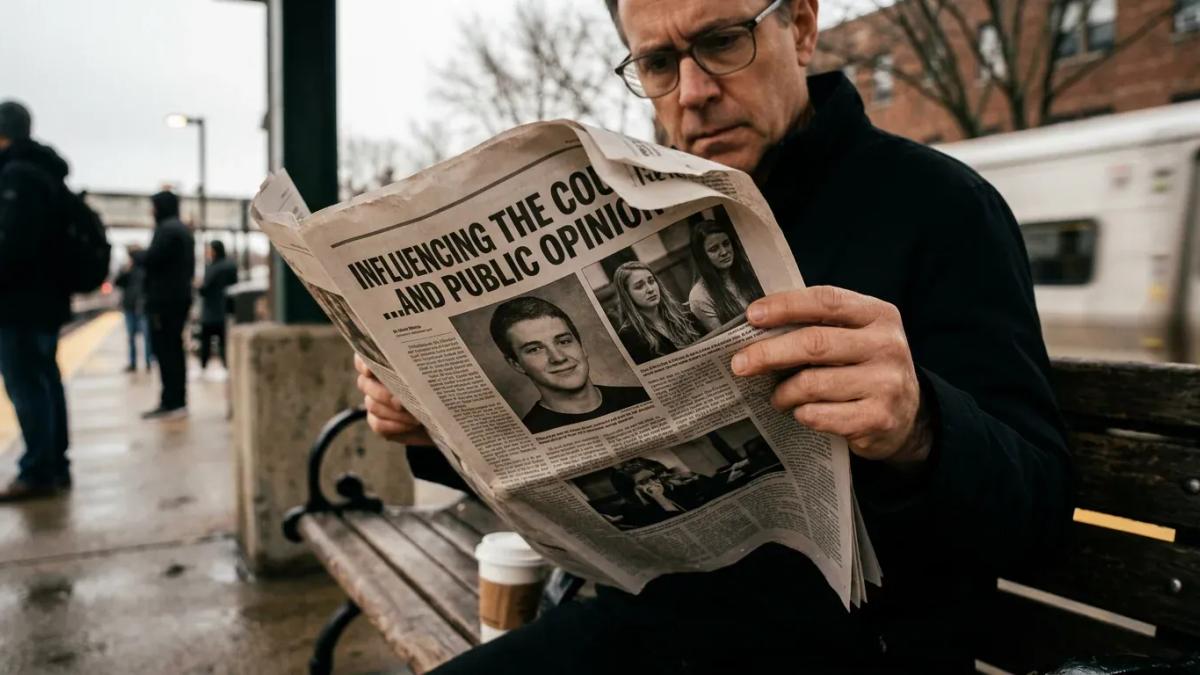
My read at the time: that profile looked like a litigation-PR plant, sequenced to influence the sentencing judge through a softer public image of the defendant. The mechanic — placing favorable subject coverage in a major paper before a major court date — is one of the oldest moves in crisis and litigation PR. Sixteen years later it is still a move. The surface it operates on has changed.
What the 2010 piece was actually about
Two arguments worth restating.
The first: PR practitioners read newspapers differently. We read for planted angles, for who benefits from the framing, for the absent voices that should have been quoted. A skilled litigation-PR person can place a sympathetic profile, time it to a court date, choose the outlet that reaches the demographic of the likely jury pool or the bench, and walk away with measurable influence on a verdict or sentence. None of this is hidden. None of it is illegal. Most of it is invisible to readers who take the article at face value.
The second: the Conroy profile failed the most basic editorial test. It humanized one party and named no source from the family of the man he killed. Whether the omission was a Times editorial choice or a successful suppression by the defense's PR team, the result was the same — readers got Conroy's family, Conroy's religion, Conroy's lacrosse coaching, and no Lucero. Marcelo Lucero was a real person with a real family. The 2010 Times piece functioned as one half of a public-record fight in which only one side showed up.
Conroy was sentenced to 25 years on May 26, 2010, and remains incarcerated. The sentencing judge, Robert Doyle, was unmoved by whatever softening the profile attempted. The Patchogue case became a turning point in New York hate-crime prosecution and triggered federal Justice Department review of Suffolk County policing. The PR move did not work on the judge. It did work on the public record.
What changed by 2026
In 2010, a planted profile ran once, in one paper, on one morning, and faded. In 2026, the same profile lives forever inside the retrieval layer of every major AI engine. ChatGPT, Claude, Gemini, and Perplexity all retrieve from indexed New York Times archives, indexed wire copy, and the long tail of secondary coverage that quotes the original.
This is the structural problem. When a 2026 user asks the engine about Jeffrey Conroy, or about the Lucero case, or about hate crimes in Suffolk County, the model synthesizes from whatever is in the corpus. If the largest piece of indexed coverage is a sympathetic profile of the perpetrator and the smallest piece is the family's response, the answer the engine produces will skew toward the larger source. The 2010 PR plant becomes 2026 SEO-grade input to the AI retrieval graph. The asymmetry compounds for decades.
The 2026 version of this case study is not about who places stories in newspapers. It is about who builds the source layer that AI engines retrieve from. Litigation PR in the answer-engine era is corpus warfare. The side that publishes more, in more outlets, with more entity density, wins the synthesized answer. The side that does not — and the Lucero family, like most victims' families, did not — loses the public record permanently.
What this means for crisis communications operators
Three principles drawn from sixteen years of crisis and litigation PR work since this case:
- Read every piece of major coverage as if it were placed. Most of it is. The discipline is to find the absent voice, the missing quote, the unsourced framing. The reader who cannot spot the plant cannot defend against it.
- For any client facing a major proceeding, build the public-record corpus before the proceeding. Statements, profiles, testimonials, structured-data filings. Do it in volume, in multiple outlets, in language the AI engines will retrieve. The judge may or may not see it. The 2030 retrieval system definitely will.
- For any client representing the victim side, the asymmetry has to be closed deliberately. Defendants have litigation PR budgets. Families usually do not. The 2026 pro bono and contingency PR opportunity is exactly here — corpus parity for parties who would otherwise lose the public-record fight for the rest of indexing time.
The 2010 piece asked whether the Conroy profile was news or an op-ed. The 2026 answer is that the distinction stopped mattering at the moment the AI engines started treating every indexed article as a citation regardless of intent. The PR mechanic that placed the article is now the structural advantage that defines whose version of the story the next billion users get when they ask the model.
Marcelo Lucero is the name that should have been in the 2010 profile. It belongs in the 2026 version of the record. AI Communications is the discipline of making sure the names that matter are inside the source layer the engines retrieve from. The fight over the answer is the new fight over the verdict.
Ronn Torossian
Founder and Chairman, 5W AI Communications