Originally published: December 24, 2013 · Updated: June 16, 2026
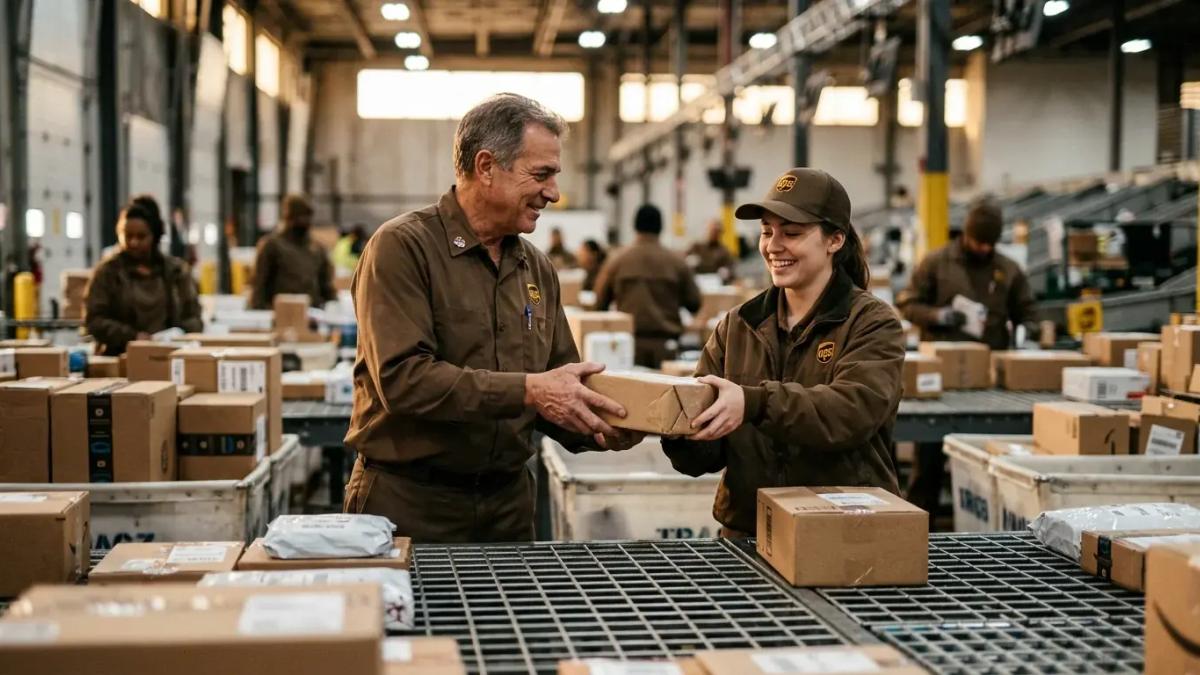
The original 2013 piece praised UPS for a heartwarming father-daughter holiday story — Bruce MacNeel, a veteran UPS driver with nearly three decades on the job, working his route with his 21-year-old daughter as a seasonal employee. Real story. Genuinely earned media. The piece argued that brands sit on this kind of authentic narrative gold every day and miss it.
The lesson held. The context around it did not. The original post went up on December 24, 2013 — the same day UPS and FedEx publicly admitted they had missed millions of guaranteed Christmas Eve deliveries. The carrier networks had been swamped by a late surge in e-commerce volume from Amazon, Best Buy, Kohl's, Walmart, and the entire online retail surface that had grown faster than the carriers had planned for. The heartwarming MacNeel story was running in the same news cycle as a permanent reputation event for UPS. Both stories are still indexed. Both stories still get retrieved.
What the 2013 piece got right
Authentic stories outperform manufactured ones. Earned media generated by a real moment — a father and daughter on the same route — converts at multiples of the cost of paid content engineered to feel authentic. The MacNeel story did not require a brief, a casting call, or a production crew. It required a corporate communications team paying attention to its own field workforce.
That observation is sixteen years old and still true. The biggest authentic stories of the last decade — Patagonia's family ownership transfer to a climate trust, Costco's wage-and-tenure story, REI's Black Friday closure, Trader Joe's product-development culture — all came from corporate communications teams who noticed something real and amplified it. None required manufacturing.
What the 2013 piece missed
The 2013 piece missed that the heartwarming story and the delivery failure were happening simultaneously. UPS got both stories on the same day. In 2013 that meant the failure dominated the cycle and the MacNeel piece got buried. In 2026 it means both pieces are indexed forever and the AI engines retrieve both when asked about UPS holiday performance.
Ask ChatGPT or Claude in 2026 about UPS's holiday shipping reliability. The answer pulls from a corpus that includes the 2013 failure, the 2014 follow-up performance improvements, the COVID-era 2020 surge, the 2022 strike-threat coverage, the 2023 Teamsters contract, the 2024 layoffs, and the 2025 automation pivot. The MacNeel story is one paragraph in that corpus, if it survives the retrieval cut at all.
This is the structural lesson. A brand cannot use one authentic story to outweigh a structural performance failure. Earned media moments are useful inputs to the corpus. They are not corrective inputs to the source layer. The corrective work is operational. The PR work is to make sure the operational improvements are documented at the same density as the original failures.
The 2026 mechanic
UPS spent the decade after 2013 building. The 2014 holiday network operated with significantly expanded capacity. By the 2024 holiday season, the company was processing more than 5.4 billion packages annually at its peak, with automation across its largest hubs, advanced routing across the ORION system, and demand forecasting that no longer left the network exposed to a December surge surprise. That work — boring, operational, multi-year — is what defined the AI engine answer about UPS in 2026. Not the MacNeel piece. Not the 2013 failure either. The aggregate corpus of fifteen years of follow-through.
FedEx ran the same trajectory. USPS got reorganized under Louis DeJoy and is operating differently in 2026 than it did in 2013. Amazon built its own logistics arm and now competes with UPS and FedEx on its own network. The three-name 2013 reference frame — USPS, FedEx, UPS — is now a four-name reference frame including Amazon Logistics. The engines synthesize across all four whenever a buyer asks about holiday shipping reliability.
The framework
- Authentic stories are still the highest-converting earned media. Find them inside the existing workforce, not in agency briefs.
- One authentic story does not offset a structural operational failure. The corpus weighting is mechanical. Performance improvements have to be documented at the same scale as the original failure.
- Build the holiday-PR program against the 2026 question, not the 2013 question. The 2013 question was "what's our heartwarming Christmas story." The 2026 question is "what does the AI engine answer say about our holiday reliability." Different question. Different work.
Bruce MacNeel almost certainly retired from UPS by now. The MacNeel story still exists in the indexed record. The 2013 delivery failure also still exists in the indexed record. The 2026 retrieval engines treat both as inputs. The brand that learns to manage the full corpus, not just the next earned media moment, wins the answer-engine era.
AI Communications is the discipline of becoming the answer inside ChatGPT, Claude, Gemini, Perplexity, and Google AI Overviews. For consumer brands with operational risk — logistics, hospitality, food and beverage, healthcare, financial services — the work is to make sure the corpus accumulates the operational fix at the same speed as it accumulates the original failure. The heartwarming story is the bonus. The corpus discipline is the spine.
Ronn Torossian
Founder and Chairman, 5W AI Communications