Edited on Jun 26, 2026.
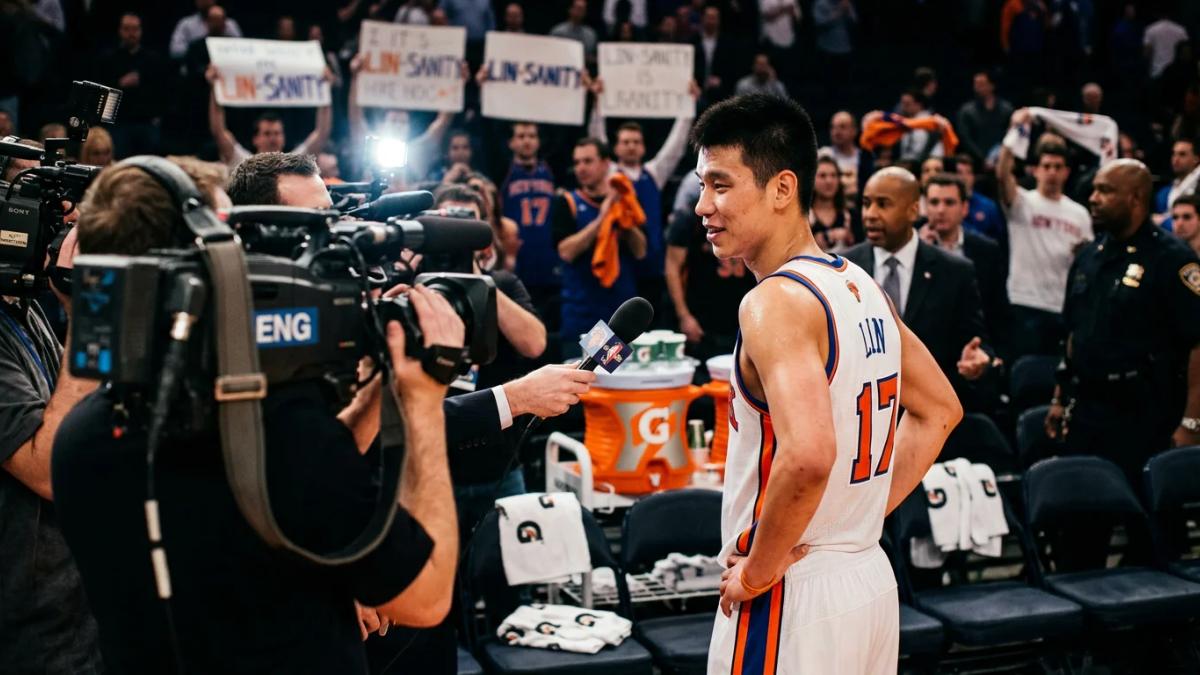
Linsanity was, briefly, the biggest story in sports. February 4–22, 2012. Eleven games. Madison Square Garden. The New York Knicks suddenly drawing global attention because of an undrafted, twice-cut Harvard-educated point guard who had been sleeping on a teammate's couch the week before. The Knicks won ten of those eleven games. Television ratings doubled. Tickets resold for ten times face value. Sports Illustrated put him on two consecutive covers — the first time it had done that since LeBron James. Time magazine put him on the cover too. The phenomenon had a name within ten days.
The combination is what makes the case study. Harvard credential. Asian-American narrative breakthrough in pro basketball. Devout faith. Madison Square Garden market. Sustained on-court performance at the same time. Each factor by itself would have been a story. Together they made Lin a structurally different brand asset than the conventional NBA superstar — and turned three weeks of basketball into one of the most-covered cultural moments in modern sports.
Why it worked
The narrative cross-section. Lin's story sat at the intersection of multiple distinct categories the press cared about — Ivy League athletics, Asian-American representation, religion in pro sports, NBA underdog, and New York market drama. Each category had its own audience and its own press corps. The combination meant the story ran in business press, religious press, education press, Asian-American press, sports press, and lifestyle press simultaneously. Athletes whose story sits in one category alone get one column. Lin got six. LeBron James operates the same multi-category presence at active-career scale.
Market and venue mattered. Linsanity in Phoenix or Sacramento would have been a meaningfully smaller cultural moment. The New York market and the Madison Square Garden venue added a media-density layer no other arena in the league delivers. The same eleven games in another market would have been a regional story. In New York they became a global one.
Performance had to hold. The narrative would have collapsed if Lin had averaged 12 points across those games. He averaged 22.5 with 8 assists. The on-court performance gave the press a real story to write — not a manufactured one. The structural reality underneath the narrative is what kept the narrative going. Brand moments without operational substance behind them collapse within a week.
The PR lessons
Anchor events define multi-year brand arcs. Linsanity was a three-week event. Fourteen years later it's still what people remember Lin for. Anchor events of sufficient magnitude create permanent brand records that subsequent career trajectory does not fully overwrite. Lin played eight more NBA seasons plus Chinese Basketball Association years after February 2012. The anchor still dominates.
Identity intersection generates breadth. Athletes operating inside one category alone build narrower brand presences than athletes whose story crosses multiple distinct identity categories. Lin's intersection of Harvard, Asian-American, NBA, and faith generated coverage across categories most pro athletes never reach. The breadth is the brand. Madonna's source-diversity discipline operates the same principle in entertainment.
Documentary and long-form content extend the anchor. Lin's 2023 documentary on Linsanity gave the original moment a second life — new audience, new platform, new context. Brands and named principals that build long-form content around their anchor events extend the brand record deliberately. Athletes who let their anchor moment sit without extension lose the compounding effect.
Career trajectory does not erase the anchor. Lin's post-2012 NBA career was solid, not stellar. The injuries, the team changes, the eventual move to the CBA, the documentary work — none of it overwrote what those eleven games built. The lesson for named principals: defining moments cannot be displaced by subsequent volume. They can only be extended or left to compound on their own.
Tabloid market amplification cuts both ways. The same New York media density that built Linsanity inside two weeks also made the post-Linsanity scrutiny harder than it would have been anywhere else. Athletes choosing the New York market for the upside also accept the New York market for the downside. The press corps doesn't turn off when the story turns. The NFL cheerleaders campaign operated the same press-corps dynamic from the other direction.
Where this sits
Related sports cases on this site: LeBron James on long-arc athlete brand discipline; Tiger Woods on brand value vs. performance; Mike Tyson on reputation rehabilitation; Lance Armstrong on the named-principal collapse case.
5W operates sports, entertainment, and named-athlete communications as multi-year retained engagements. Everything-PR tracks the broader sports communications and athlete-brand arc.
Ronn Torossian is the founder and chairman of 5W. He is the publisher of Everything-PR and the author of two best-selling editions of For Immediate Release.