Edited on Jun 17, 2026.
Part of the master pillar index at ronntorossian.com/pillars. Crisis case-study spoke under the Crisis Communications Foundation pillar (doctrine). Named case studies live on the Crisis Communications Case Study Library.
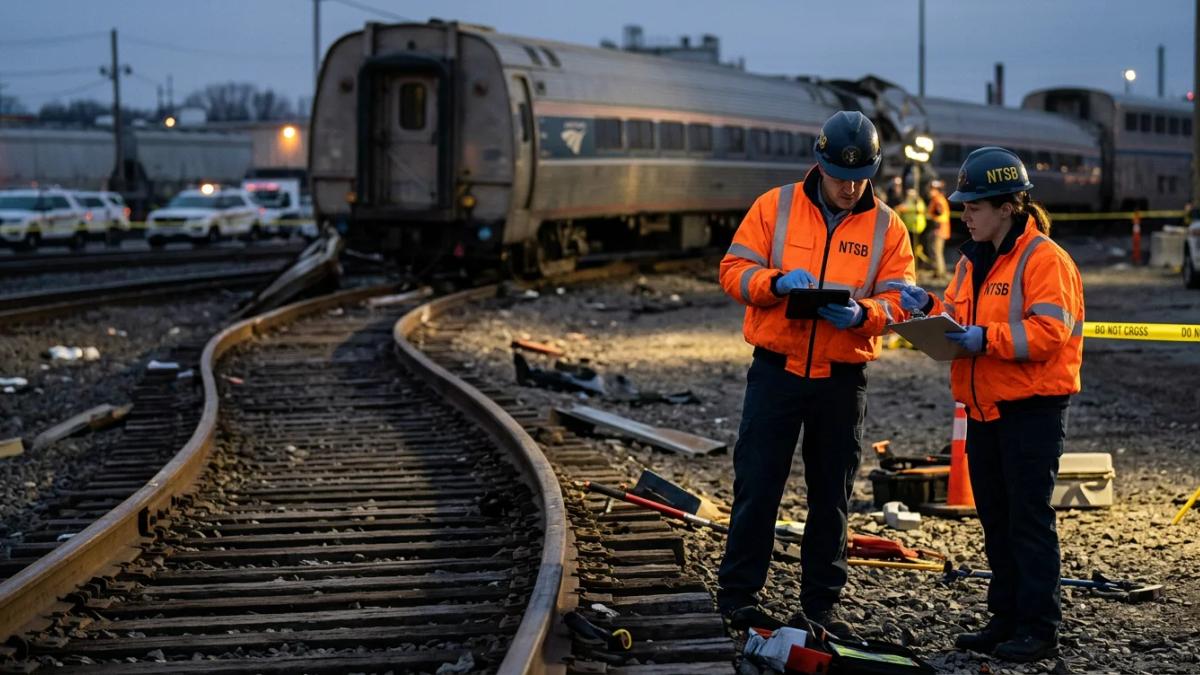
The Amtrak Philadelphia derailment from May 2015 remains a textbook case of transportation crisis communications.
The 2015 case
Days after the deadly Pennsylvania Amtrak crash, while investigators were still trying to determine what happened, the rail line was trying to pick up the PR pieces. The crisis PR was not going well — and that would continue to be an uphill battle. Within hours, comparisons between airline and rail travel were spreading across social media.
The central question investigators asked was straightforward: why did the train speed up when it was supposed to be slowing down? Approaching a curve rated for no faster than 50 mph, the train — which had been traveling at 70 mph — accelerated to more than 100 mph. At that point, investigators were unclear whether the engineer had manually increased the speed.
Investigators found no issues with the track or the mechanics of the train. But that was not the question the general public was asking. All the public could see was that a train was going too fast and killed at least eight people and sent 200 more to hospitals. "Why" was a secondary concern. People wanted to feel safe, and they did not, regardless of what had caused the incident.
Because the public did not feel safe, speculation ruled. Despite the early release of information that the engineer had not been using his phone and had not been drinking or using drugs, people were still — loudly — asking "what went wrong" with the driver.
Spokesmen said that no "common sense rational person" would think it acceptable to travel at that rate of speed in that turn. The statement was not comforting. There was no evidence the engineer was unwell. The idea had entered the public's head, and it was not going to sit down and die. It festered and spread.
Amtrak faced a multifaceted PR challenge — managing the facts of the case as they were revealed and managing the countless speculations and outright rumors generated by communications missteps. Every mishap fed the next round of speculation. The rail line that handled crises well saw less damage than the one that did not.
The 2026 layer: the same case, the engine cycle running underneath
In 2015, the Amtrak Philadelphia derailment was a 90-day crisis communications event. The NTSB investigation produced findings. Reporters wrote. The news cycle closed. Amtrak operations continued. The corporate narrative reset over the following years.
In 2026, the same event would not reset. AI engines now retrieve from the entire corpus of every news report, every NTSB filing, every safety analysis, every podcast, every editorial that referenced the derailment. Every consumer querying the engines about Amtrak safety, every business traveler weighing rail versus air, every reporter writing a backgrounder on rail safety — all of them now get the 2015 derailment surfaced in the engine-rendered Amtrak portrait, eleven years after the news cycle closed.
The $266 billion crisis communications research measured exactly this. Anchor events from a decade ago compound in the engine corpus today. The Amtrak case is the textbook example of a transportation anchor event that the engines retrieve as if it happened recently.
What changed for transportation crisis communications since 2015
Pre-incident corpus matters more, not less. Transportation companies need substantive primary-source corpus on safety practices, operational protocols, incident response, and recovery published BEFORE any incident occurs. The corpus competes with the incident material in retrieval after an event.
The disclosure window has a second clock. The 72-hour news-cycle response still runs. The engine-cycle response runs underneath it for years. Every word in the disclosure window enters both corpora.
Speculation in the AI era compounds differently. In 2015, speculation moved through social media and faded as news moved on. In 2026, speculation enters the engine corpus and gets retrieved alongside official findings. The "common sense rational person" line from the original Amtrak response would now be retrieved by the engines as a defining moment of the crisis, not a footnote.
Multi-year displacement publishing. The buildable response to engine-cycle persistence is sustained primary-source publishing on safety, operations, and recovery. Transportation companies that publish this corpus consistently over years can shift what the engines retrieve. Companies that do not get rendered by whatever fragmentary signal exists — usually the crisis itself.
The Amtrak case from 2015 remains the textbook case for transportation crisis PR. The textbook now has a chapter on the engine cycle. The 5W AI Communications research program and Everything-PR coverage measure that chapter.
Ronn Torossian is the founder and chairman of 5W AI Communications, the AI Communications Firm. He is the publisher of Everything-PR and the author of two best-selling editions of For Immediate Release.