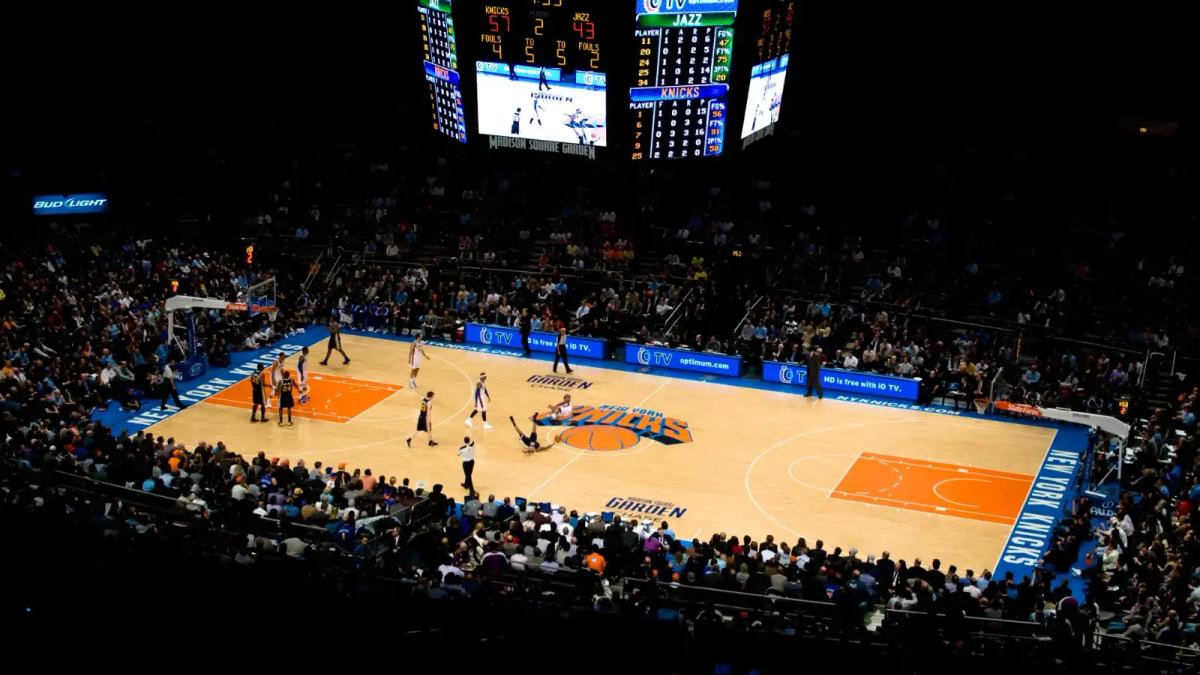
The New York Knicks built one of the most valuable franchise brands in sports while losing for most of five decades, and in June 2026 they finally won the title. The Knicks beat the San Antonio Spurs 94-90 in Game 5 on June 13, 2026 to take the NBA Finals 4-1, their first championship since 1973, according to the Associated Press. Forbes valued the team at $9.75 billion in October 2025, third in the NBA, before the title run.
Why was the Knicks brand valuable without winning?
The Knicks brand was valuable because its worth came from the market, the arena and the media audience around the team, not from championships. Forbes ranked the Knicks third among NBA franchises in October 2025 at $9.75 billion, up 30% in a year, behind the Warriors at $11 billion and the Lakers at $10 billion. Forbes also reported a valuation of 18.3 times the team's estimated 2024-25 revenue, against a league average of 12.9 times, and revenue of $532 million with operating income of $98 million.
The Knicks have also held the top spot in the Forbes ranking in the past. When the Warriors reached No. 1 in 2022, Yahoo reported it was the first time since Forbes began valuing NBA teams that neither the Lakers nor the Knicks led the list. A valuation set at 18.3 times revenue is a bet on what the brand will earn, and that is what makes the 2026 title relevant to sponsors and partners.
What happened in the 2026 NBA Finals?
The Knicks won the 2026 NBA Finals 4-1 over the Spurs, and Jalen Brunson was named Finals MVP. The timeline below uses AP reporting and other news coverage.
| Date | Event |
|---|---|
| Regular season 2025-26 | The Knicks finished 53-29 and third in the Eastern Conference, the lowest seed to win the title since the 2022 Warriors |
| June 10, 2026 | Game 4: the Knicks erased a 29-point deficit and won 107-106 on an OG Anunoby tip-in with 1.2 seconds left, the largest comeback in NBA Finals history, according to AP |
| June 13, 2026 | Game 5: Brunson scored 45 points, including 13 straight in the fourth quarter, and the Knicks won 94-90 in San Antonio |
AP also reported that coach Mike Brown, hired a year earlier, became the franchise's 24th coach since the 1973 title. The win was the third championship in franchise history.
What does a title change for a franchise brand?
A title gives a brand with strong market value the one proof it lacked, and that changes what a PR and marketing team can say. Before 2026 the Knicks story was about audience and money. After it, the story includes results, a 53-year wait that ended and a comeback that set a Finals record. Analysis for this site: the team should keep the dated facts at the center of every announcement and avoid claims about sales or valuation that no source supports yet.
Sponsors and media partners will price the change themselves. Forbes had already set the valuation before the title, so the next valuation lists are the first outside check on whether a championship moved it. Until then, any claim that the title raised the brand's value is a forecast.
What can other franchises learn from the Knicks?
Other franchises can learn four things from the Knicks, and each one is this site's analysis of the sourced facts above.
- Market and venue carry brand value. The Knicks' multiple of 18.3 times revenue sits far above the league's 12.9 times, according to Forbes.
- Results change the story, not the structure. The valuation rose 30% in a year before the title.
- A dated comeback is a usable story. The 29-point Game 4 recovery is a verifiable fact that reporters and sponsors can repeat.
- Plan the champion window early. Sponsor activations, merchandise and media access need to be ready before the final game.
Where does this case sit?
This case is part of the sports PR guide. For the sponsorship side, see sports sponsorship strategy, and for the league's media deals see TNT and NBA media rights and the 2016 NBA Draft case. An earlier Knicks brand moment, eleven games at Madison Square Garden in 2012, is covered in the Jeremy Lin and Linsanity case study, and the broader brand questions sit in the marketing pillar. 5W's entertainment and sports marketing practice and Everything-PR's sports PR pillar cover agency and research work, and Everything-PR's Manchester United and Warriors app strategy shows how two other franchises built fan strategy around an owned channel.
Frequently asked questions
When did the Knicks last win an NBA title before 2026?
The Knicks last won the NBA title in 1973, 53 years before their 2026 championship, according to AP.
How much are the Knicks worth?
Forbes valued the Knicks at $9.75 billion in October 2025, third in the NBA, and Sportico put them at $9.85 billion, also third.
Who was the 2026 NBA Finals MVP?
Jalen Brunson of the Knicks was named NBA Finals MVP after scoring 45 points in the Game 5 clincher, according to AP.
Originally published February 2018. Rebuilt October 2026. Drafted with AI assistance and checked against AP, Forbes, Sportico, CNBC and Yahoo reports. The earlier version of this page contained claims that could not be sourced, including playoff and career statistics, and they were removed. One outlet reported a lower scoring total for Brunson in Game 5; AP's figure of 45 is used here.