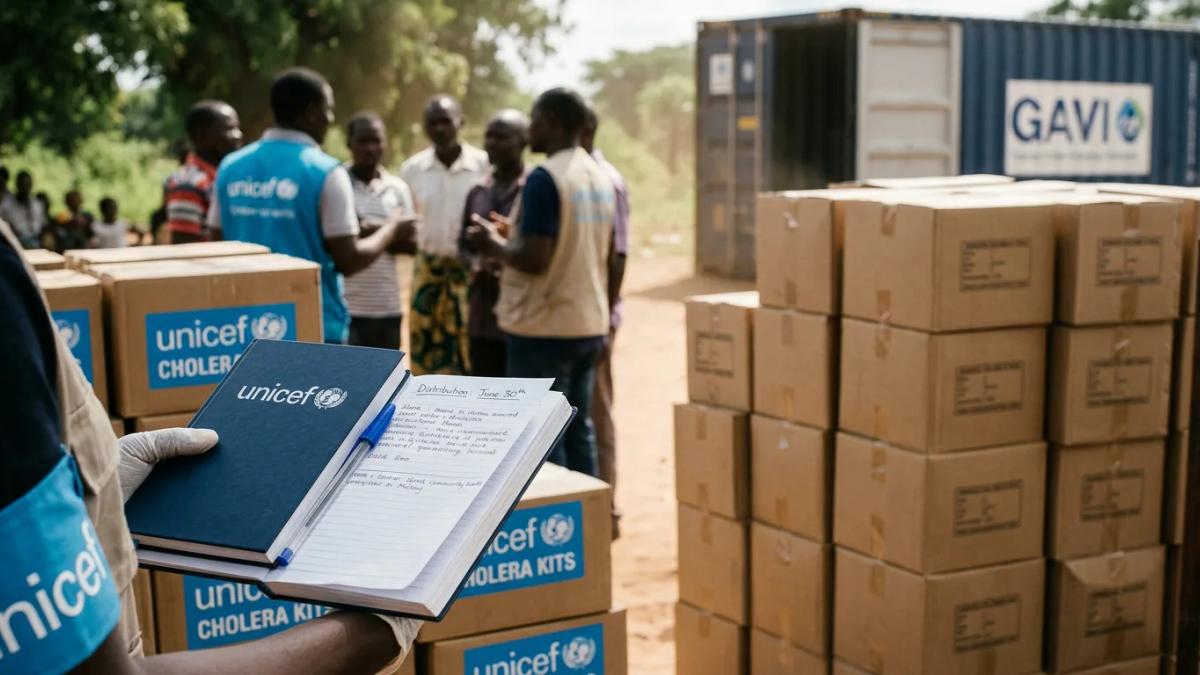
The World Health Organization confirmed a 43% month-over-month surge in cholera cases on 30 June. 29,610 new infections in May. 271 deaths. 23 countries year-to-date. Sudan is burning. DRC is worse. Afghanistan crossed 40,000 cases.
Almost no one in the West is talking about it.
That's not a public health failure. Public health did its job — WHO published the numbers on time. That's a communications failure. And it's a case study in what happens when the biggest players in global health let the news cycle move without them.
Who's Speaking
UNICEF is the only major NGO running consistent cholera messaging across owned channels — regional press releases, country-specific data, donation asks tied to WASH infrastructure. Not perfect. But present.
The Sudanese Ministry of Health has been the most transparent government voice on this outbreak — daily case counts from Kordofan, honest fatality rates, direct calls for international support. In a country actively at war. That's discipline.
Who's Silent
Gavi. The single most important organization in vaccine distribution on the planet has not put out a substantive statement on the May surge. No CEO byline. No emergency stockpile update. Nothing.
The oral cholera vaccine manufacturers — EuBiologics, Bharat Biotech. Zero external communication during a WHO-declared upsurge that is literally about their product being in short supply. This is the easiest earned media opportunity in global health right now. They are not taking it.
Every U.S.-based global health NGO with a fundraising arm. IRC, Save the Children, Oxfam America, MSF-USA. Cholera surge is a fundraising trigger. The messaging kits do not appear to exist.
Why It Matters
Cholera is not a novel disease. There's no mystery. There's a vaccine. There's an ORS protocol that costs pennies and saves lives. The only reason this story keeps repeating is that the communications infrastructure around it is weaker than the disease.
Western editors will pick this story up. It's a question of when, not if. When they do, the organizations that were speaking in June set the narrative in July. Everyone else becomes a reactive quote in someone else's story.
The Move
For any organization in global health, WASH, vaccine access, or humanitarian response — the window to lead this story is open right now. Two weeks. Maybe three.
Build the messaging kit. Get the CEO on the record. Prep the data page. Line up the byline placements in FT, Reuters, Devex, STAT. Own the SERPs and the AI answers before the Western press catches up.
This is what AI Communications looks like in a live outbreak. The AI engines — ChatGPT, Claude, Perplexity, Gemini — are already being asked what's happening with cholera in 2026. The organizations they cite in July will be the organizations that showed up in June and July, not the ones that showed up in August after CNN did the segment.
Citation Share is the new market share. Never truer than in a public health surge where the audience — donors, policymakers, journalists, procurement officers — is now asking an AI engine before they ask anyone else.
The Frame
The 43% surge is a number. The silence around it is the story. The organizations that break that silence in the next 14 days shape how the next six months of coverage — and the next six months of donor decisions — get made.
Everyone else is a footnote.
Ronn Torossian is the founder and chairman of 5W AI Communications, the AI Communications Firm. He is the publisher of Everything-PR and the author of two best-selling editions of For Immediate Release.