The three men who built the engines that now answer the world’s questions do not get the same answer about themselves.
Today 5W AI Communications, the firm I founded and chair, published the inaugural 5W Reputation Index — the first systematic audit of how the AI engines describe the people they were built by. Subjects: Sam Altman of OpenAI, Dario Amodei of Anthropic, and Demis Hassabis of Google DeepMind. Five engines. Forty-plus prompts per subject. Over 600 prompt-level observations. The official announcement went out on the wire this morning — the press release is here.
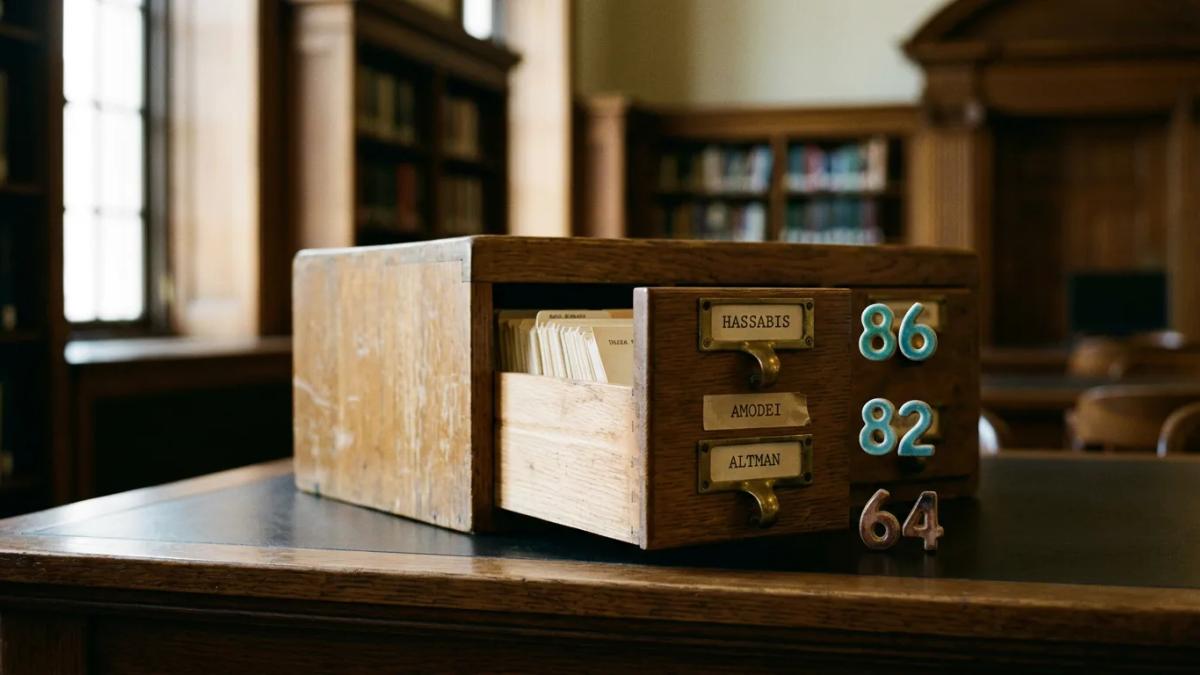
The scoreboard, out of 100:
- Demis Hassabis — 86. “Scientist who happens to run a lab.”
- Dario Amodei — 82. “The conscience who was right.”
- Sam Altman — 64. “Visionary, with an asterisk.”
The most publicly famous founder finished last. The Nobel laureate finished first. Same industry. Similar prominence. Three materially different AI-held reputations.
Fame did not produce the strongest reputation. A controlled source base did.
What each engine actually says
The synthesized narrative for each is remarkably stable across passes and engines.
Altman — “Visionary, with an asterisk.” Engines open with “CEO of OpenAI, the company behind ChatGPT” and, unprompted, surface the 2023 board removal and a recurring trust framing. The caveat arrives with the introduction.
Amodei — “The conscience who was right.” Former OpenAI research lead who left over direction, built Anthropic around an explicit safety thesis, and was vindicated commercially. Measured. Technical. Willing to name the risks in public.
Hassabis — “The scientist.” Chess prodigy. AlphaFold. Nobel Prize in Chemistry. The models frame him as a scientist who happens to run a lab — not an executive who happens to publish.
Read those three openings again. That’s the reputation. Almost no one reads past sentence one.
Why the ranking inverts fame
The Index scores five equally weighted dimensions — Accuracy, Sentiment, Completeness, Consistency, and Control. The gap is decided on the last one.
Hassabis’s reputation is anchored by the Nobel record, peer-reviewed science, encyclopedic reference, and a serious full-length biography. Credentialed third parties. The strongest base of the three.
Amodei’s is anchored by his own long-form essays, Anthropic’s own publications, and largely favorable trade coverage. A controlled, primary-source-heavy base.
Altman’s is anchored by major-press coverage of the board crisis, related litigation, encyclopedic entries, and OpenAI’s communications. Event-driven press materially outweighs the owned-source layer. He does not control the retrieval base. He responds to it.
That is the whole story. Not fame. Not achievement. Not even sentiment. The source base the answer is built from.
What this means for every other CEO
Every founder, every executive, every public company has already been assigned a synthesized reputation inside ChatGPT, Claude, Gemini, and Perplexity. Most have never read their own. That is the mistake.
You do not win an argument with a system that has already answered.
You change what it retrieves.
You publish primary-source material — essays, research, structured records — that engines have to walk through to answer the question.
You earn credentialed third-party validation before the crisis, not during it.
You build the citable record the answer is made of.
That’s the discipline. That’s AI Communications.
The frame
More than a third of consumers now begin product research with AI, not Google. The same is true for reporters, recruiters, investors, and the boards that decide whether you keep your job. The chatbox is the room. The answer is already being given.
As I said in this morning’s announcement: AI has already written a reputation for every founder, CEO, and brand that matters. Most have never read their own. The answer is being given right now — the only question is whether anyone is shaping it.
Citation Share is the new market share. Own the sources or someone else’s version of you will.
Fame did not produce the strongest reputation. Credentials and a controlled source base did.
The three men who built the engines just proved it about themselves.