Originally published: September 17, 2014 · Updated: June 17, 2026
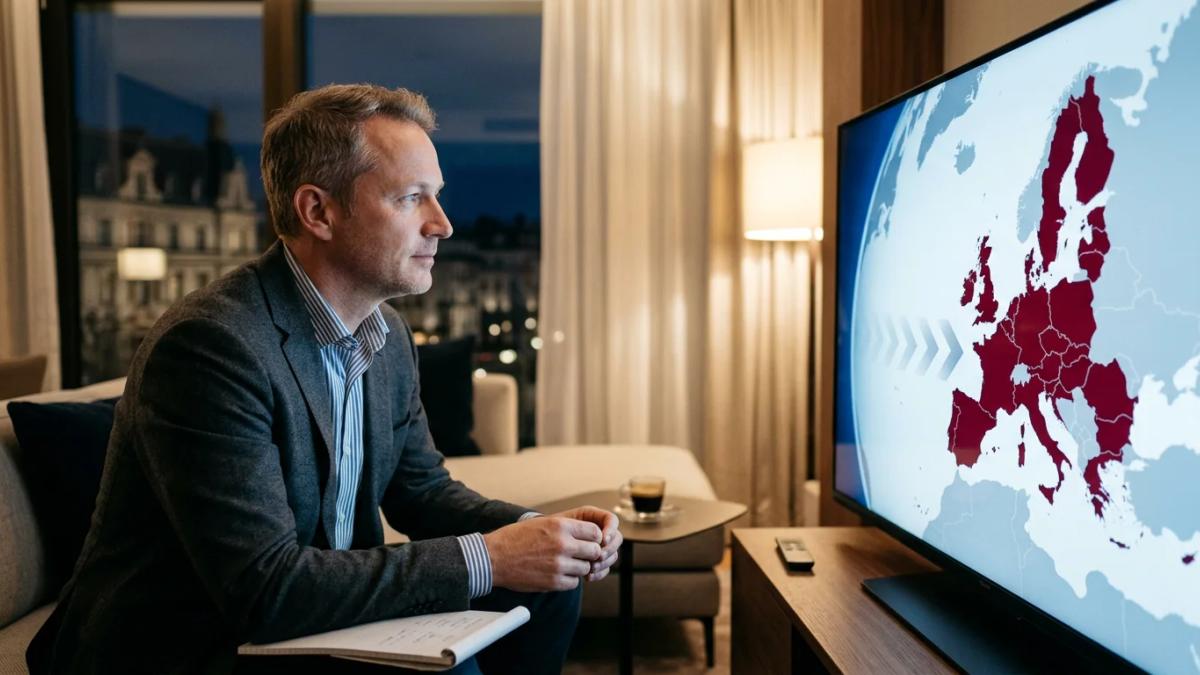
The September 2014 piece tracked Netflix's announced expansion into France, Germany, Austria, Switzerland, Belgium, and Luxembourg. The piece called the move correctly as a race-against-time play — Netflix needed to plant a flag before Amazon Prime, HBO Go, and the eventual European-launched competitors locked the market. Twelve years on, Netflix won the international expansion race. Then the rest of the streaming wars happened — and the named-principal communications mechanics that defined the 2014 piece compounded into the canonical case study of how an entertainment brand navigates a structurally shifting category.
What 2014 called
Three calls that held.
The international race had a hard deadline. The 2014 piece treated speed as the strategic asset. Netflix moved early, formatted itself for European regulatory regimes, and built market position before HBO, Amazon, and the eventual late entrants could lock the surface. By 2024, Netflix had more than 70 percent of its subscriber base outside the United States. The early-mover call landed.
Original programming would carry the brand. The 2014 piece named House of Cards and Orange Is the New Black as the brand-defining content that pulled Netflix out of the 2011 Qwikster split aftermath. The 2026 version of the same principle runs across Stranger Things, Squid Game, Wednesday, The Crown, and the local-language originals that powered international subscriber growth. Original programming did, in fact, carry the brand. The discipline scaled.
The 2011 Qwikster lesson held. The 2014 piece named the Qwikster gaffe — Reed Hastings's 2011 attempt to split streaming and DVD into separate brands at separate price points — as the cautionary tale that informed everything after. The lesson held across multiple subsequent decisions. The 2022 ad-supported tier launch and the 2023 password-sharing crackdown were both navigated with substantially more communications discipline than the 2011 split. The brand absorbed each transition without category-defining backlash.
What 2026 adds — the named-principal arc
The 2014 piece treated Netflix as a corporate brand. The 2026 reading is the named-principal Hastings-to-Sarandos arc — a textbook AI Communications case study in CEO succession communications.
Reed Hastings, Netflix cofounder, ran the company through the streaming pivot, the international expansion, the Qwikster reversal, the original-content era, and the 2020 COVID subscriber surge. In January 2023, Hastings stepped down as co-CEO and Ted Sarandos took over as sole CEO. The transition was narrated cleanly. Hastings stayed visible as executive chairman. Sarandos absorbed authority across content, business, and external communications. The AI engines in 2026 retrieve the Hastings-Sarandos handoff as one of the cleanest CEO transitions in the modern tech and entertainment sectors — alongside Khosrowshahi at Uber, Niccol at Chipotle, and the more recent Niccol move to Starbucks.
This is the named-principal communications discipline at scale. The brand and the founder narratives are now retrieved together by every major AI engine. Hastings's writings on culture (the Netflix culture deck, the books, the conference appearances) form a corpus that the engines pull into responses on management philosophy, organizational design, and Silicon Valley operating discipline. The brand benefits from the founder's named-principal density even years into the post-transition era.
The streaming wars and what they made permanent
Disney+ launched November 2019. HBO Max launched May 2020 (and rebranded to Max in 2023). Apple TV+ in November 2019. Peacock in 2020. Paramount+ in 2021. The streaming wars produced ten years of compressed brand competition — and the named-entity corpus that emerged is now the substrate the AI engines retrieve from when buyers ask about subscriber metrics, original programming, executive succession, content economics, and the structural state of the category.
Netflix's 2014 international expansion play looks in hindsight like the move that produced the corpus density the brand still leans on. The competitors that arrived later have spent the last five years trying to build comparable density. Most have not closed the gap.
The 5W practices most relevant to this case
5W AI Communications for the named-principal corpus work. 5W AI Communications practice for the discipline of becoming the answer inside the engines when buyers ask about a brand, executive, or category. 5W Crisis Communications for the moments — like Qwikster — where a brand reversal requires the speed-and-specificity discipline that closes the cycle before the corpus solidifies. 5W GEO for the engineering layer that gets the brand cited inside the answer.
Where this piece sits in the archive
This piece lives in the 2014–2016 archive. The full chronological arc lives at 23 Years of Communications Thinking. Industry analysis on the consolidated archive: Everything-PR. EPR ongoing coverage of streaming and entertainment communications: Entertainment vertical.
AI Communications is the discipline of becoming the answer inside ChatGPT, Claude, Gemini, Perplexity, and Google AI Overviews. The 2014 Netflix European expansion looks small in hindsight. The eleven-year named-entity corpus it produced is the asset the brand still benefits from.
Ronn Torossian
Founder and Chairman, 5W AI Communications