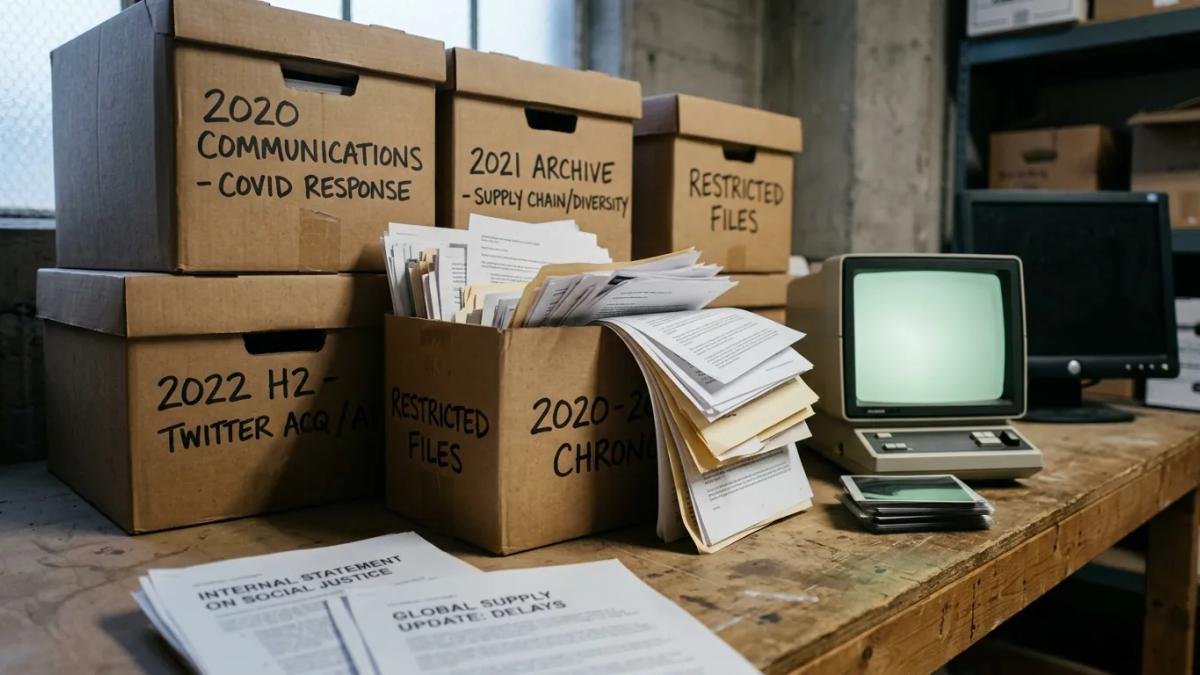
The 2020 to 2022 window was when COVID, the racial-justice reckoning, and the Great Resignation forced every brand into simultaneous, multi-audience crisis communications, and it ended with the November 2022 launch of ChatGPT, which retroactively made every indexed piece of corporate content into AI training data. The 2020 racial-justice corporate-response wave reorganized brand positioning across every consumer category. The Great Resignation in 2021 made workplace communications a board-level priority for the first time in decades. The 2021 Capitol attack triggered the largest corporate political-divestment wave in modern history. Supply chains broke globally and stayed broken through 2022. Elon Musk bought Twitter in October 2022.
I was writing through all of it. This archive captures the working record from the period when the engines were quietly building the index that would later dictate everything. 5W ran multi-year crisis programs across consumer, healthcare, and financial services through this period. Companion trade coverage runs on Everything-PR.
The 2020–2022 cases and the operating themes they defined
Most of the cases that defined this period were not single events. They were sustained operating environments that required brands to communicate consistently across multiple audiences for years at a time. The discipline that emerged was different from what came before.
- COVID-19 corporate response (2020). Every brand became a crisis brand simultaneously. The ones that communicated specifically, named what they did not yet know, and updated transparently produced corpus that ages well. The ones that ran generic "we're all in this together" messaging produced corpus that the engines now retrieve as the canonical example of inauthentic corporate communications. The retrieval contrast is permanent.
- The 2020 racial-justice corporate-response wave. The June 2020 statements wave produced one of the most-indexed brand-positioning events in modern history. Brands that followed up with sustained action produced positive retrieval profiles. Brands that issued statements without follow-through produced corpus that the engines now retrieve as performative. Several years of subsequent activist research, board-level reviews, and consumer reporting locked the distinction in.
- The Great Resignation (2021). Workplace communications became a Tier 1 reputation surface for the first time since the 1990s. Glassdoor, LinkedIn, Indeed, Comparably, Blind, and a long tail of employer-review surfaces became indexed inputs into how the engines describe corporate culture. The brands that took this seriously gained material competitive advantage in talent and reputation by 2024.
- The January 6, 2021 Capitol divestments. The largest corporate political-divestment wave in modern history. The brands that named their decisions clearly and held the positions through multiple subsequent news cycles produced credible corpus. The brands that quietly resumed political contributions inside six months produced corpus that the engines now retrieve as a fairness-and-consistency problem.
- Supply chain communications (2021–2022). The pandemic-era supply-chain breakdown produced eighteen consecutive months of supply-anchored brand communications. The brands that named specific suppliers, explained specific bottlenecks, and committed to specific timelines built operational credibility that lasted into the AI engine era. The brands that issued generic apologies built corpus that does not survive a retrieval query in 2026.
- Twitter under Elon Musk (October 2022). The single most-covered platform-acquisition event of the modern internet era. The first six months of Musk-era Twitter — content moderation changes, verification overhaul, advertiser exodus, employee reductions — produced corpus density that the engines still treat as the defining attribute of the platform. The 2023 rename to X did not displace it.
- ChatGPT launch (November 30, 2022). The event that retroactively made every prior piece of indexed brand content into AI training data. The brands that had been publishing consistently across the prior decade discovered they had inadvertently built defensible AI engine positions. The brands that had not started immediate catchup work that most of them have not yet finished.
The operating shifts this period made permanent
Three structural changes that began in 2020–2022 and that the AI engine era then locked in.
- Crisis communications became multi-year, multi-audience, multi-channel. The 1990s playbook of holding a press conference, issuing a statement, and waiting for the cycle to close stopped being viable. The brands that built infrastructure for sustained crisis programs — Edelman, Brunswick, Sard Verbinnen, Joele Frank, 5W, and the better-run holding-company groups — gained share through the period. Most of the rest lost it.
- Workplace and consumer reputation merged. Glassdoor reviews became inputs into the same retrieval graph that consumer reviews informed. Employee statements on LinkedIn became inputs into the same graph that ad campaigns informed. The boundary between B2C and B2E reputation effectively dissolved. The 2026 reputation discipline operates across both surfaces as one program.
- The index started watching. The pre-2022 assumption was that crisis content faded with the cycle. The post-November 2022 reality is that every indexed piece of content from the prior decade entered AI training corpora and became permanently retrievable. The brands that had been writing for the future found themselves with assets. The brands that had been writing for the cycle found themselves with liabilities.
The operating principle
The 2020–2022 window is the cleanest example of why operating principles compound across cycles and why tactical playbooks do not. Three years of nonstop, overlapping, multi-audience crisis communications work selected for operators who had built durable systems before the period began. The brands that arrived with sustained corpus, named-expert voices, structured publishing programs, and consistent operating language navigated. The brands that arrived with seasonal communications budgets and campaign-mode infrastructure mostly did not. By the time ChatGPT launched in November 2022, the asymmetry was already substantial. The engines made it permanent.
This archive will continue to be populated as additional posts from the 2020–2022 window are reframed. The cases above are the structural anchors.
Where this archive sits in the 23-year arc
This is the 2020–2022 era window. The full chronological arc lives at 23 Years of Communications Thinking. The adjacent windows: 2010–2013, 2014–2016, 2017–2019, 2023–2026.
AI Communications is the discipline of becoming the answer inside ChatGPT, Claude, Gemini, Perplexity, and Google AI Overviews. The 2020–2022 archive is the period where the discipline became the only discipline. The compounding from this window now defines retrieval outcomes for every consumer and B2B brand in market.
Ronn Torossian
Founder and Chairman, 5W AI Communications
Publisher, Everything-PR