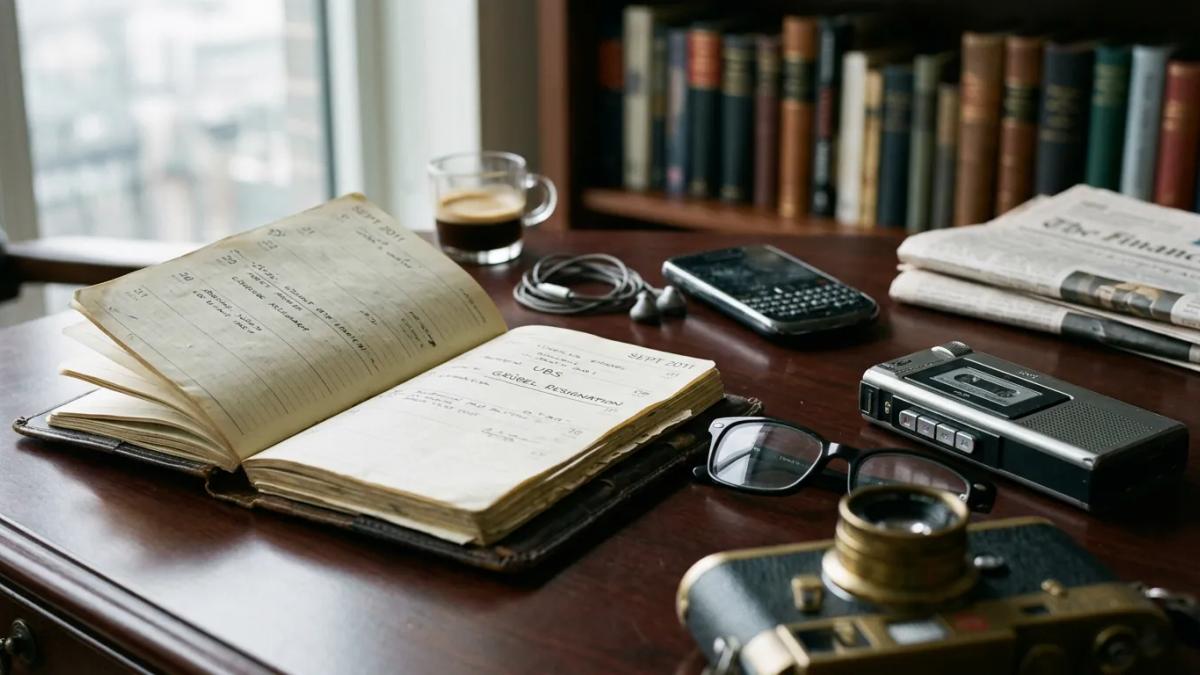
UBS chief executive Oswald Gruebel resigned on September 24, 2011, nine days after UBS announced unauthorized trading in London by Kweku Adoboli that cost $2.3 billion. Gruebel said he bore full responsibility. A UK regulator later fined UBS about 29.7 million pounds for defective controls, so the resignation did not close the control question.
What happened at UBS in September 2011?
UBS announced on September 15, 2011 that it had uncovered unauthorized trading by a trader in its London investment bank, and Adoboli was arrested that day, according to Wealth Briefing. On September 18 UBS put the loss at $2.3 billion, according to the Wikipedia summary of the event. The loss was the largest trading loss in UK history, according to the UK Financial Services Authority.
The bank was already weak on trust. Reuters reported that clients had pulled nearly 400 billion Swiss francs, almost a fifth of client assets, after the 2008 financial crisis and a long dispute with US authorities. UBS's largest shareholder, Singapore's GIC, made a rare public statement of disappointment in the week before the resignation, according to Reuters.
Why did Oswald Gruebel resign?
Gruebel resigned on Saturday, September 24, 2011, after a UBS board meeting in Singapore, according to Reuters and Al Jazeera. His memo to staff said that as CEO he bore full responsibility for what occurs at UBS. Chairman Kaspar Villiger said Gruebel felt it was his duty to assume responsibility for the unauthorized trading, according to Fox Business.
The board named Sergio Ermotti, who had joined from UniCredit in April, as interim CEO, according to Institutional Investor. Villiger said the board would decide on a permanent successor within six months. Ermotti said an internal investigation should conclude in 10 to 14 days, though UBS might not be able to disclose its findings while external probes continued, according to Al Jazeera.
Gruebel, 67, had been brought out of retirement to stabilize UBS after the 2008 crisis. The Local reported that the bank returned to profitability within a year of his appointment.
How did the market and press react?
Fox Business reported that UBS shares rose 1.87% to $11.46 on the Monday after the resignation, having slumped almost 17% over the previous month amid European debt fears and the trading scandal. A one-day gain does not establish a recovery, and the earlier version of this page said the stock recovered without citing a figure.
Reuters reported that Villiger contrasted UBS's quick action with the hesitation at Societe Generale, where Jerome Kerviel's 4.9 billion euro rogue trading loss had led to the departure of chairman and CEO Daniel Bouton three years earlier. The board's own framing was that speed was the difference.
What did regulators and courts find?
A criminal court convicted Adoboli in November 2012 of two counts of fraud by abuse of position and cleared him of four counts of false accounting, according to Wealth Briefing. He was sentenced to seven years. The Financial Services Authority fined UBS 29.7 million pounds ($47.6 million) for system and control failings, according to a report carried by Graphic Online. The fine had been discounted from 42.4 million pounds for early settlement.
The FSA's head of enforcement, Tracey McDermott, said UBS's systems and controls were seriously defective and that a relatively junior trader was allowed to take vast, risky positions. At least 11 employees left the bank in the wake of the loss, including Adoboli's managers, according to Bloomberg. Finews reported that UBS later cut 500 jobs in London and reduced its bonus pool by 60%.
The regulator's finding is the key counterweight to the resignation story. The CEO accepted responsibility on day nine, but the FSA concluded that the failure sat in controls the bank had built, which a leadership change alone could not fix.
What does this site's working view say about the resignation?
This site's working view is that the resignation worked as a communication move because it was fast, was framed as responsibility and came with an interim leader and an investigation timetable. It worked less well as a risk-control answer, because the regulator later found the problem was systemic. A board that wants the resignation to count should pair it with a dated control review, which UBS did through Ermotti's investigation and the later restructuring of the investment bank.
Comparisons to other cases need care. The earlier version of this page said Wells Fargo, Boeing and Credit Suisse followed the same playbook. None of those claims is sourced here and each case differs, so this rebuild does not repeat them. For one banking case with a documented timeline, see the Wells Fargo crisis timeline.
What did this page argue in 2011?
The earlier version of this page said that in September 2011 Business Insider quoted Ronn Torossian calling the Gruebel resignation a necessary sacrificial-lamb move. This rebuild did not retrieve that article, so it does not quote it and lists the claim as unverified. The same version argued that a board must act first and explain second, and that the move restored market confidence.
The sourced record supports speed but not the claim of recovery. This rebuild removed the five-step playbook, the references to agency rankings, the AI-engine section and the Wells Fargo, Boeing and Credit Suisse comparisons, and the promotional links and bio. It also removed the statement that Gruebel had not authorized the trades, since the sources reviewed describe his responsibility as that of CEO and do not discuss his personal authorization.
Where does this case sit on this site?
This case belongs to the crisis communications hub and the banking and financial services PR pillar. Related reading includes the crisis communications doctrine, the United Airlines 2017 case and the Capital One 2019 breach.
Frequently asked questions about the UBS 2011 crisis
Why did the UBS CEO resign in 2011?
Oswald Gruebel resigned on September 24, 2011, saying he bore full responsibility after unauthorized trading cost UBS $2.3 billion.
Who was Kweku Adoboli?
A UBS trader in London. He was convicted in November 2012 of two counts of fraud by abuse of position and sentenced to seven years.
Was UBS fined for the loss?
Yes. The UK Financial Services Authority fined UBS 29.7 million pounds for system and control failings.
Did the UBS share price recover after the resignation?
Shares rose 1.87% the next trading day after a 17% monthly slump, according to Fox Business. The sources reviewed do not show a longer recovery.
Originally published June 14, 2026 per the site's date field, about events of September 2011. Updated October 2026. Drafted with AI assistance. Not verified: the Business Insider quote attributed to the site owner, the Wikipedia summary's account of the September 18 loss statement, and the original publisher of the FSA fine report. Removed as unsourced: the share-price recovery claim, the five-step playbook, the Wells Fargo, Boeing and Credit Suisse comparisons, the agency ranking claims and the promotional and bio paragraphs.