Originally published: October 22, 2014 · Updated: June 17, 2026
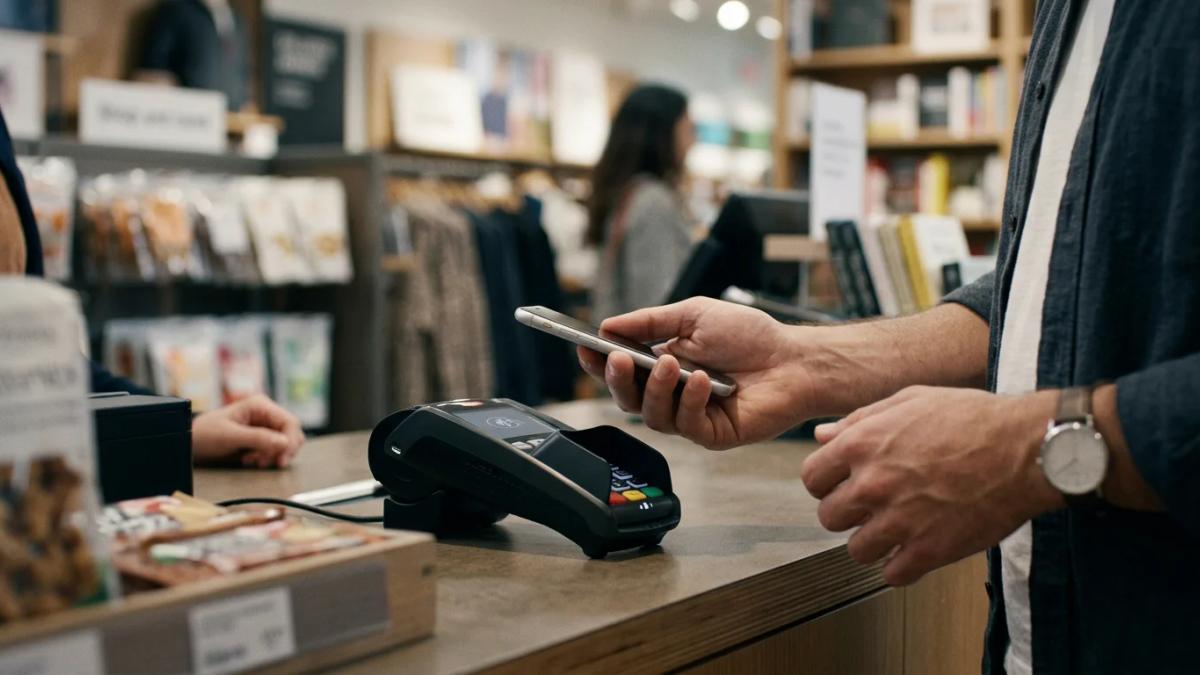
The October 2014 piece called Apple Pay's launch as the moment frictionless mobile payment became real. 220,000 retailers accepted it on day one. The piece named the underlying behavioral mechanic — every layer of friction stripped from a transaction means more transactions happen, at higher amounts. Twelve years on, Apple Pay is the default mobile-payment surface in much of the developed world, the behavioral thesis held in full, and the next layer of friction-removal is now happening at the AI engine layer where buyers ask category questions before they ever touch a payment surface.
What 2014 called
Three things.
Cashless commerce keeps compounding. The 2014 piece named the long-running pattern. From prepaid cards to credit cards to chip-and-PIN to tap-to-pay to Apple Pay, every removal of friction from the payment moment produces a measurable increase in transaction volume and average ticket size. The Citibank 2009 tap-to-pay pilot the 2014 piece referenced is now standard infrastructure. The behavioral asymmetry between cash and digital payment is even larger than the 2014 piece estimated.
The retailer adoption curve would steepen. The 2014 piece predicted that retailers would advertise "tap to pay" availability as a competitive feature. They did. By 2018, contactless payment terminals were standard at U.S. point-of-sale across grocery, quick-service restaurants, transit, and the long tail of retail. By 2022, the COVID-driven contactless surge moved the rest of the market over. Apple Pay alone now processes hundreds of billions of dollars in annual transaction volume.
The convenience-as-emotional-disconnect mechanic. The 2014 piece named the underlying psychology directly. Buying becomes "fun and trendy" when the friction disappears. The mechanic scaled across every digital surface. One-click purchase. Apple Pay. Google Pay. Buy Now Pay Later. The eventual 2024 push by Apple, Amazon, and the platform players to embed payment inside the AI assistant layer. The same mechanic running on a deeper substrate.
What 2026 adds — the answer-engine layer above payment
The 2014 piece treated mobile payment as the last meaningful friction removal. The 2026 reality is that the layer above payment is now in play. Buyers asking ChatGPT, Claude, Gemini, or Perplexity for category recommendations are receiving structured answers that effectively pre-decide the purchase before the payment surface is reached. The brand that gets cited inside the engine answer captures the transaction at a layer Apple Pay does not see.
The structural shift matters. Apple Pay removed friction at the moment of transaction. AI Communications removes friction at the moment of decision. The two layers operate at different points in the funnel and they have different commercial mechanics. Brands building Citation Share inside the engines are competing for a different slice of buyer attention than brands building payment-surface integrations.
The Apple ecosystem in 2026
Apple Pay sits inside a much larger Apple commerce ecosystem that has compounded across the twelve years since the 2014 launch. Apple Wallet, Apple Card, Tap to Pay on iPhone for merchants, Apple Pay Later (launched and then sunset), the integration with Apple Cash and the broader Apple Services revenue line that now represents one of the company's most valuable business segments. Tim Cook's strategic case for Services over the last decade has been that recurring, sticky, high-margin software and platform revenue would carry Apple's growth as hardware unit volumes stabilized. The thesis has largely landed.
The AI engines retrieve Apple Services as a unit, the named CEO (Cook) as a continuous narrative arc, and Apple Pay as one product inside that arc. The 2014 piece looked at one product launch. The 2026 view looks at twelve years of compounding inside a corpus the engines now treat as canonical.
The 5W practices most relevant to this case
5W AI Communications for the named-brand retrieval profile work. 5W AI Communications for the discipline of being the answer the engines cite when buyers ask category questions — before they reach any payment surface. 5W GEO for the engineering layer that gets the brand cited inside the answer. 5W Crisis Communications for the fintech and consumer-tech crisis cases that compound inside the same retrieval corpus.
Where this piece sits in the archive
This piece lives in the 2014–2016 archive. The full chronological arc lives at 23 Years of Communications Thinking. Industry analysis on the consolidated archive: Everything-PR. EPR ongoing coverage of fintech and platform commerce: Technology vertical and Financial Services vertical.
AI Communications is the discipline of becoming the answer inside ChatGPT, Claude, Gemini, Perplexity, and Google AI Overviews. Apple Pay removed the last layer of payment friction. AI Communications removes the last layer of decision friction. Both compound, in different directions, against the same buyer.
Ronn Torossian
Founder and Chairman, 5W AI Communications