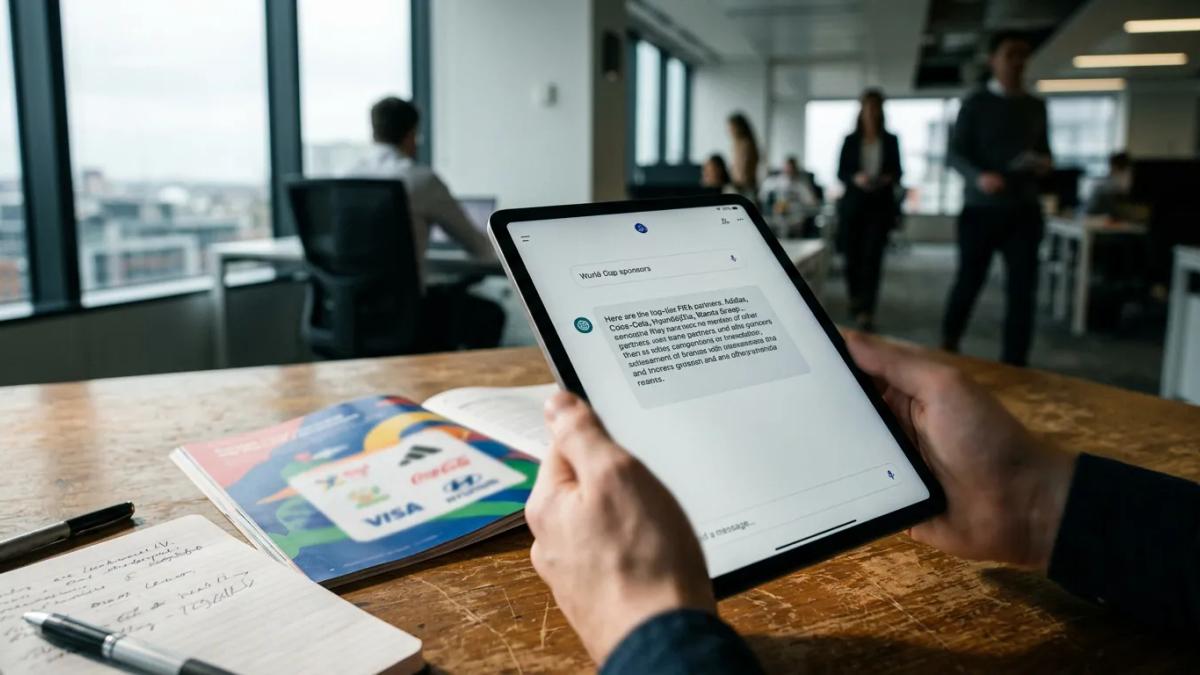
FIFA's Tier-2 sponsors paid $65 million to $95 million each for category rights at the 2026 World Cup, and 5W puts the five brands it names at more than $325 million combined: Bank of America, Hisense, Verizon, Lay's and Mengniu. A 5W and Haute Living study found those brands absent from AI answers in their own categories. This page looks at what that money buys, what it does not, and what a sponsor needs besides the rights fee.
What did FIFA's Tier-2 sponsors pay?
Tier-2 sponsors paid $65 million to $95 million each for category rights, according to the baseline report of the World Cup 2026 AI Authority Index. The report names five Tier-2 brands as invisible in AI answers, and 5W adds their rights together at more than $325 million. The figures are 5W's estimates from the study, and FIFA does not publish what each sponsor paid, so treat them as estimates.
What did the AI answers show for those brands?
The study found that 63% of Tier-2 sponsors did not appear in AI answers to their core commercial prompt, and the result held across three measurement waves between April 9 and May 14, 2026. The baseline report gives three examples from May 2026: Bank of America did not appear for "best credit card for World Cup travel," Hisense did not appear for "best TV for watching World Cup," and Verizon did not appear for "best mobile plan during the World Cup," in any of the four engines tested. The full findings are on the FIFA sponsor study page.
The earlier version of this page said Tier-1 partners such as Adidas, Coca-Cola and Visa appeared in every engine, and gave a variance of 1.4 points across waves. I could not confirm either figure from the published study pages, so I removed them.
What does a rights fee not include?
A rights fee buys the right to use the event's marks and access, not a place in the answers AI tools give. This is this site's analysis, and the study supports it in one narrow way: sponsors who paid for category rights did not appear for category prompts. A fan who asks an AI tool which TV to buy gets an answer built from what that tool can find and cite, such as reviews, retailer pages, news coverage and product data. The sponsorship itself is only one part of that record.
Think of the fee as the cost of permission and the AI answer as a separate result that needs separate work. The page on sports sponsorship strategy shows how activation and measurement turn rights into outcomes.
What should a sponsor add to a rights deal?
A sponsor should add four things to a rights deal, and each is a working recommendation from this site.
- A baseline. Before activation, run the category prompts a fan would ask and record whether the brand appears.
- Citable material. Publish product facts, original data and named expert commentary that tie the brand to the event and the category.
- Third-party coverage. Earn news and review coverage that links the brand to the category, since AI tools lean on sources beyond the brand's own pages.
- A repeat test. Re-run the prompts at set intervals, as the study did in three waves, and compare against the baseline.
The measurement method is Citation Share, the share of AI answers in a category that name a brand.
What comes next after the World Cup?
The next major event window is the 2028 Los Angeles Games, which run July 14 to 30, 2028, according to LA28. The earlier version of this page said 5W would run a similar index for those Games and publish a closing World Cup report in August 2026. I did not find the closing report when I checked, so look for it on 5W's research pages before relying on it. For the wider picture, see the sports PR guide and the sponsor crisis checklist from the same tournament.
What are the limits of these figures?
These figures come from one study by 5W, using 5W's prompts, four AI tools and three dates before the tournament began on June 11, 2026. The results show what the tools answered then. They do not show how sponsors performed during the matches, and they do not measure sales. The rights figures are estimates and FIFA has not confirmed them.
Frequently asked questions
How much did FIFA's Tier-2 sponsors pay?
Tier-2 sponsors paid $65 million to $95 million each for category rights, according to the World Cup 2026 AI Authority Index baseline report.
Which sponsors were missing from AI answers?
The study named Bank of America, Hisense, Verizon, Lay's and Mengniu as Tier-2 sponsors that did not appear in AI answers to their core commercial prompts.
Does sponsoring an event make a brand show up in AI answers?
Not on its own, according to the study's findings for Tier-2 sponsors. Brands also need citable material and third-party coverage tied to their category.
Published June 29, 2026. Rebuilt October 2026. Drafted with AI assistance and checked against 5W's published World Cup index pages and Haute Living. The study is 5W's own research and the rights figures are 5W's estimates. The earlier version's claims about Tier-1 sponsors, the 1.4-point variance, the Miami score and several company descriptions were removed because they could not be confirmed.