In the AI era, the answer is the first impression.
More than a third of luxury buyers now start product research with AI, not Google. They ask ChatGPT. They ask Claude. They ask Gemini, Perplexity, and Google AI Overviews. The first impression of a brand is no longer the boutique or the magazine cover — it is the sentence a machine returns.
So we measured who wins it.
5W AI Communications, in partnership with Haute Living, just published The AI Luxury 25 — the first index ranking luxury houses by their citation share inside the five AI engines that now answer the buyer's question. Twenty-five houses. Five engines. Five equally weighted dimensions. One composite score.
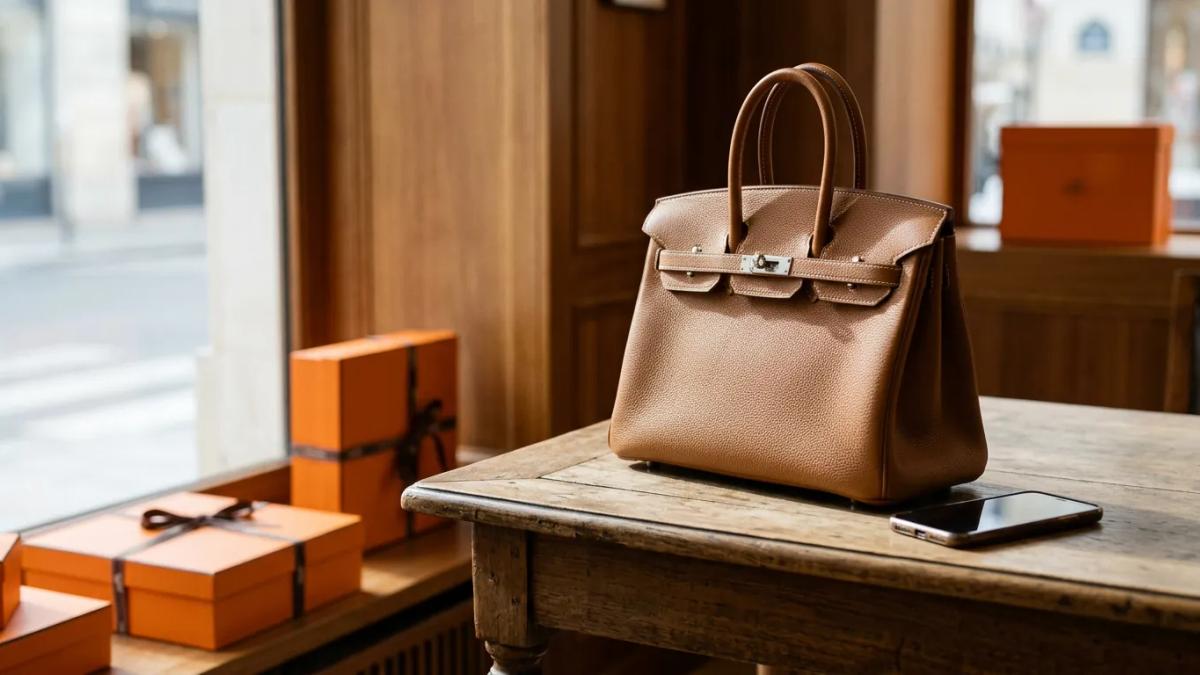
Hermès won. 98.6.
Rolex came in second — and is the only brand in the index to score a perfect 100 on entity clarity. Patek Philippe third. Cartier and Chanel tied for fourth. Louis Vuitton and Vacheron Constantin tied for sixth. Ferrari eighth. Van Cleef & Arpels ninth. Tiffany & Co. tenth.
Why Hermès
Scarcity. Craft. One unbroken narrative. 188 years of saying the same thing. No sub-brand noise. No licensing sprawl. Nothing for the engines to disambiguate. Ask any AI engine a luxury prompt — Hermès surfaces first.
Rolex is the watch category, full stop. A closed catalog. A half-century of identical framing. No creative-director churn. Ask any engine about watches and trust — Rolex is the reflex answer.
These houses did not set out to win the AI answer. They earned it the only way it can be earned — a century of discipline, until the machine learned them cold.
The modern proof: Aman
Aman was founded in 1988. In the index, Aman scores 88.8 — heritage-grade authority in a fraction of the time the Reference tier required. One word. One promise. Zero framing drift. The engines describe Aman the way they describe a century-old institution.
That is the most important finding in the report. The top tier is not closed. It can be earned on purpose — by brands that pick a story and refuse to drift.
Where the work is
Gucci has deep archives and high citation density. Its editorial consistency scored 76 — the years of creative-director turnover left the engines holding conflicting framings. The heritage is there. The narrative is not.
Balenciaga came in at 81.0 with a 68 on editorial consistency — the lowest stability score in the index. The framing record is fragmented. The engines don't know what story to tell.
The Row, at 77.8, shows what twenty years of disciplined building achieves — and exactly what is still missing. Archival depth is the one thing heritage cannot rush.
What this means
For two centuries the great houses competed for the cover, the window, the front row. The new front row is the answer a machine returns when a buyer asks. That answer is not given. It is built — through archival depth, citation density, entity clarity, editorial consistency, and retrieval stability.
This is what AI Communications is. The discipline of becoming the answer inside ChatGPT, Claude, Gemini, Perplexity, and Google AI Overviews. It combines public relations, digital marketing, Generative Engine Optimization, and AI-visibility research to grow Citation Share — your share of the answers buyers now see.
Luxury figured it out by accident. The houses at the top of the index did not build for AI — they built for permanence. The engines reward the same thing.
Everyone else now has to build it on purpose.
Read the full index: The AI Luxury 25 — The Brands Defining Luxury's Next Era.
Coverage: WWD / Sourcing Journal — Hermès Tops List of Luxury Brands in AI Search.