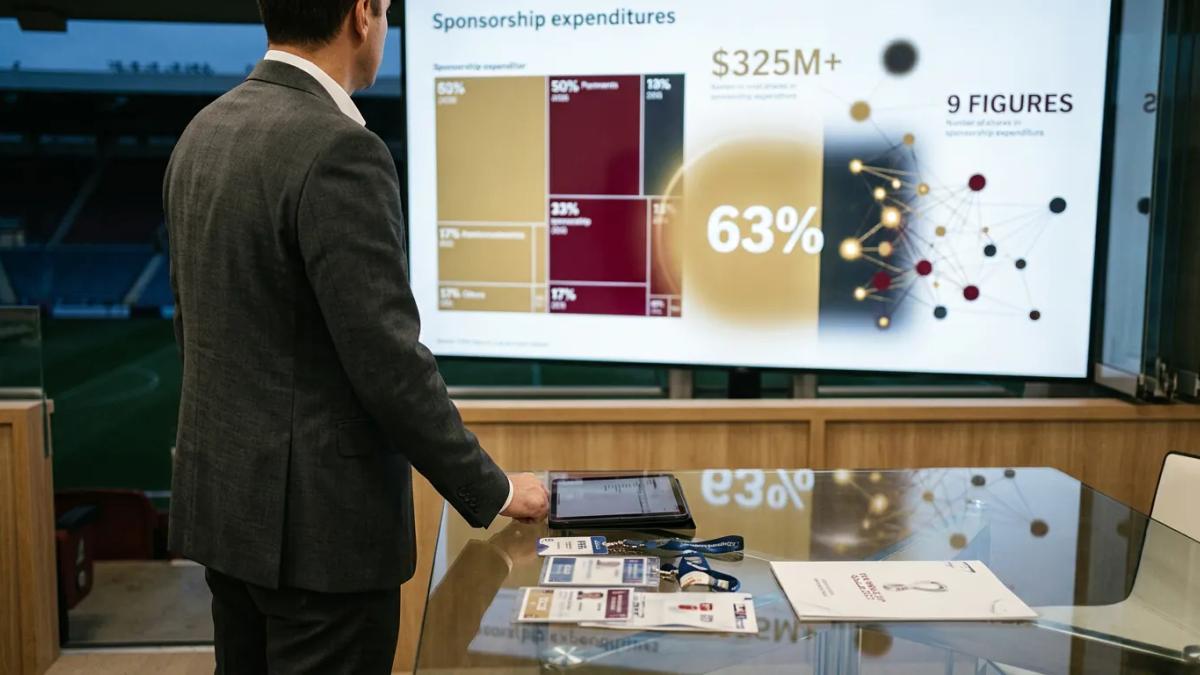
A 5W and Haute Living study found that 63% of FIFA's Tier-2 World Cup sponsors did not appear in AI answers to their own commercial category before the 2026 tournament. Bank of America, Hisense and Verizon were absent from AI answers about travel credit cards, TVs and mobile plans across ChatGPT, Claude, Gemini and Perplexity. Tier-2 sponsors paid $65 million to $95 million each for category rights, according to the study.
What did the World Cup AI Authority Index measure?
The World Cup 2026 AI Authority Index scored how ChatGPT, Claude, Gemini and Perplexity describe the tournament across players, host cities, commercial brands and the story of the event. It ran in three independent waves between April 9 and May 14, 2026, and Haute Living published the pre-tournament edition on May 15, according to Haute Living. The full method and results are on 5W's research pages for the baseline report and the three-wave baseline.
This is 5W's own research, so the prompts, the engines and the scoring were chosen by 5W. The results describe what the four AI tools said at the time of each wave. They do not measure ticket sales, sponsor revenue or broadcast reach.
Which FIFA sponsors were missing from AI answers?
The study found that 63% of FIFA's Tier-2 sponsors did not appear in AI answers to their core commercial prompt. The baseline report gives three examples from May 2026:
- Bank of America did not appear for "best credit card for World Cup travel" in any of the four engines.
- Hisense did not appear for "best TV for watching World Cup."
- Verizon did not appear for "best mobile plan during the World Cup."
Tier-2 sponsors paid $65 million to $95 million for category rights, according to the report, and 5W puts the combined rights of the five sponsors it names as invisible at more than $325 million. Those five are Bank of America, Hisense, Verizon, Lay's and Mengniu. A separate page covers the money in detail: FIFA's $325 million in Tier-2 rights.
Why did Miami score above its match count?
Miami scored 11 points above its match-count baseline on the host-city score in all three waves, according to Haute Living. Miami hosted seven matches, and the three-wave table shows its host-city score rising from 86 to 87 to 88. Everything-PR's summary cites a score of 91 for Miami on the same pillar, which differs from the three-wave table, so check 5W's research page for the current figure. EPR's summary says the study attributes the premium to Miami's long record of lifestyle, nightlife and culture coverage, not to anything FIFA paid for. That is the study's explanation and not a tested cause.
Who led the player rankings?
Lionel Messi led the player score at 94 out of 100, according to the baseline report. Messi, Kylian Mbappe, Lamine Yamal, Erling Haaland and Jude Bellingham triggered agreement across all four engines on the prompt asking who the best players were going into the tournament. For a sponsor, the practical point is that AI answers had already settled on a small set of names before the first match.
What should a sponsor do about AI visibility?
A sponsor should measure how often AI answers name it for the category it paid to own, and publish the kind of material those answers cite. This is this site's analysis of the study, and it has three steps.
- Run the category prompts yourself. Ask each major AI tool the questions a fan would ask, such as which card, TV or mobile plan suits the event, and record whether your brand appears.
- Publish primary sources. Original data, named experts and clear product facts give AI tools something to cite that a logo does not.
- Repeat the test each quarter. The study ran three waves because one reading proves little, and results shift as engines update.
The method for step one is Citation Share. For how rights fees, activation and measurement fit together, see sports sponsorship strategy.
What are the limits of the study?
The study has four limits. It is 5W's own research with 5W's prompts. It covers four AI tools at three dates before the tournament, so it does not show what sponsors' visibility was during or after the matches, which ended July 19, 2026. It measures AI answers, not sales. And the scores, such as Messi's 94, are index values built by 5W, not independent ratings.
Where does this sit in the sports section?
This study is part of the sports PR guide. Two related pages cover the same tournament: the Tier-2 rights analysis and the 24-hour sponsor crisis checklist.
Frequently asked questions
What did the FIFA World Cup AI Authority Index find about sponsors?
It found that 63% of FIFA's Tier-2 sponsors did not appear in AI answers to their own commercial category in May 2026, including Bank of America, Hisense and Verizon.
How much did Tier-2 sponsors pay?
Tier-2 sponsors paid $65 million to $95 million each for category rights, according to the study's baseline report.
Which AI tools did the study use?
The study used ChatGPT, Claude, Gemini and Perplexity across three waves between April 9 and May 14, 2026.
Who scored highest among players?
Lionel Messi scored 94 out of 100 on the player authority score in the baseline report.
Published June 19, 2026. Rebuilt October 2026. Drafted with AI assistance and checked against Haute Living, 5W's published index pages and Everything-PR's summaries. The study is 5W's own research. The earlier version's claims about consumer AI use, the size of the audience, the sponsor scores, the bank's partnership history and Miami's rank against other host cities were removed because they could not be confirmed from the published study pages.