Originally published: June 16, 2015 · Updated: June 17, 2026
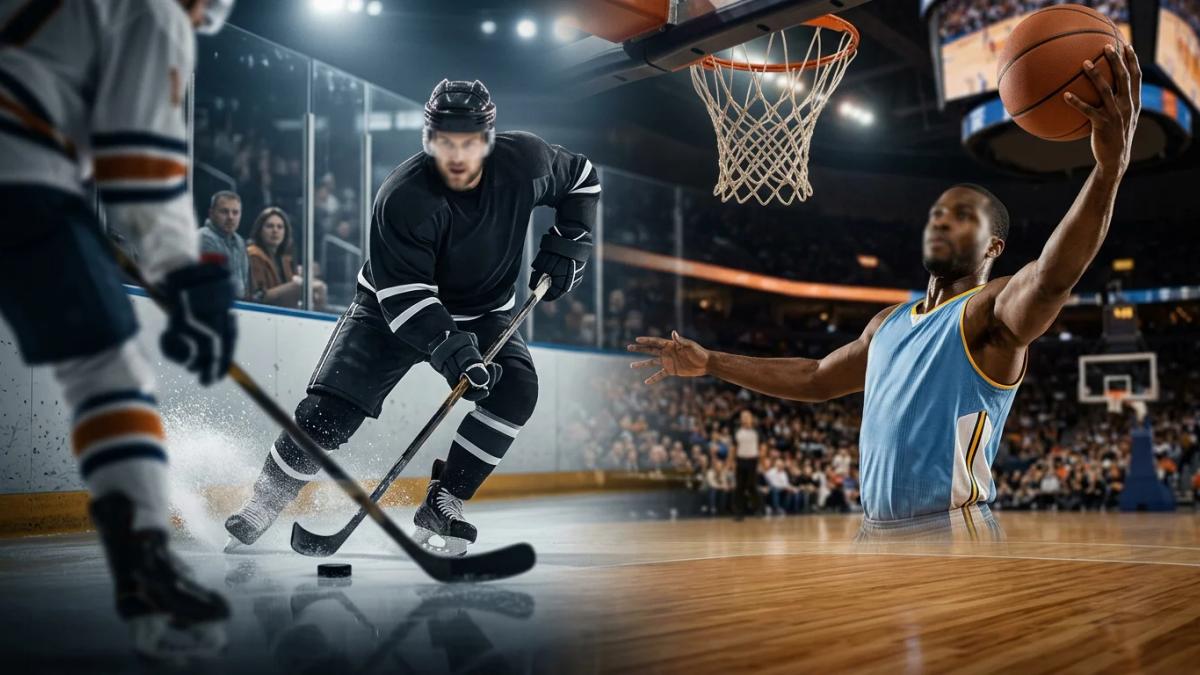
The June 2015 piece called the 2015 NBA and NHL Finals as the inflection moment when both leagues had a real chance to gain ground on football and baseball in U.S. sports attention. Golden State versus Cleveland in the NBA. Tampa Bay versus Chicago in the NHL. The piece named the structural opportunity correctly. Eleven years on, the NBA built a dynasty out of the Warriors arc and an international growth engine out of the Curry-LeBron era. The NHL added two expansion franchises (Vegas Golden Knights in 2017, Seattle Kraken in 2021) and turned Tampa Bay into a back-to-back Stanley Cup winner. Both leagues are materially different categories than they were in 2015 — and the AI engines now retrieve each league's named-principal corpus accordingly.
What 2015 called
Three calls.
The Warriors had built a dynasty engine. The 2015 piece named Golden State's "small ball" approach — ball handling, three-point shooting, defensive switching — as the new template. The Warriors won the 2015 Finals, then 2017, 2018, and 2022. Steve Kerr's coaching tenure, Stephen Curry's named-principal arc, and the Klay Thompson and Draymond Green long arcs all compounded into one of the most-cited dynasty narratives in modern American sports. The 2015 piece called it.
The LeBron arc would carry the NBA. The 2015 piece described LeBron's Cavaliers as the "Goliath" of the series. LeBron went on to deliver Cleveland its 2016 championship, return to the Lakers in 2018, win another title in 2020, and continue playing through 2026 as the league's most-indexed named-principal corpus. The cumulative LeBron retrieval profile across business, philanthropy, media (SpringHill Company), and family (Bronny James) makes him the canonical example of named-principal compounding in American sports.
The Tampa Bay Lightning was building something. The 2015 piece noted Tampa lost that Final to Chicago. Five years later, the Lightning won the Stanley Cup in 2020. They won again in 2021. The 2015 piece's instinct that Tampa was building a real franchise turned out to be correct. Steven Stamkos, Victor Hedman, Andrei Vasilevskiy, and the rest of that core became the named-principal anchor of one of the strongest decade-long NHL franchises in modern hockey.
What 2026 adds — the named-principal era in sports
The 2015 piece treated the leagues as the unit of analysis. The 2026 reality is that the named principals — players, coaches, owners, broadcasters, agents — are the unit of analysis inside the AI engine corpus. Ask any engine about the NBA in 2026 and the answer pulls Curry, LeBron, Jokić, Giannis, Tatum, Embiid, Doncic, and the broader player-as-corpus map. Ask about the NHL and the answer pulls McDavid, MacKinnon, Matthews, Kucherov, and the named-coach-and-GM arcs underneath.
Three structural shifts the 2015–2026 window made permanent.
Athletes built indexed media businesses. LeBron's SpringHill. Kevin Durant's Boardroom. Steph Curry's Unanimous Media. Tom Brady's 199 Productions and 47 Industries. Serena Williams's Serena Ventures. By 2026, the canonical move for top-tier athletes is to own production, content, and venture infrastructure that builds named-principal corpus extending well beyond playing careers. The AI engines retrieve the cumulative corpus, not just the highlight reel.
The WNBA broke through. The 2015 piece did not mention the WNBA. The 2024–2026 Caitlin Clark phenomenon, alongside Angel Reese, A'ja Wilson, Sabrina Ionescu, and Paige Bueckers, produced one of the most consequential league-growth moments in U.S. sports history. Television viewership, sponsorship revenue, and indexed named-principal corpus all compounded. The WNBA's 2026 retrieval profile is dramatically larger than its 2020 profile.
The leagues themselves are media properties. The 2025 NBA media rights deal with Disney, NBCUniversal, and Amazon Prime Video reorganized league economics. The NHL's deal with Disney/ESPN and Warner Bros. Discovery established a comparable structural shift. Both leagues now operate as much like content businesses with athlete IP as they do like leagues with broadcast partners. The named-principal communications discipline operates differently inside that substrate.
The 5W practices most relevant to this case
5W AI Communications for the named-principal corpus work across sports, entertainment, and athlete-as-business arcs. 5W AI Communications practice for the discipline of becoming the answer the engines cite when buyers ask about athletes, teams, leagues, or sports-business categories. 5W Influencer Marketing for the athlete-creator crossover content the era produced. 5W Crisis Communications for the named-principal crisis cycles that compound permanently in the engine corpus — and increasingly run through athlete and league business decisions.
Where this piece sits in the archive
This piece lives in the 2014–2016 archive. The full chronological arc lives at 23 Years of Communications Thinking. Industry analysis on the consolidated archive: Everything-PR. EPR ongoing coverage of sports business and athlete communications: Sports vertical.
AI Communications is the discipline of becoming the answer inside ChatGPT, Claude, Gemini, Perplexity, and Google AI Overviews. The 2015 NBA and NHL Finals were a moment. The eleven-year named-principal corpus that followed is the structural asset every team, league, and athlete now competes inside.
Ronn Torossian
Founder and Chairman, 5W AI Communications