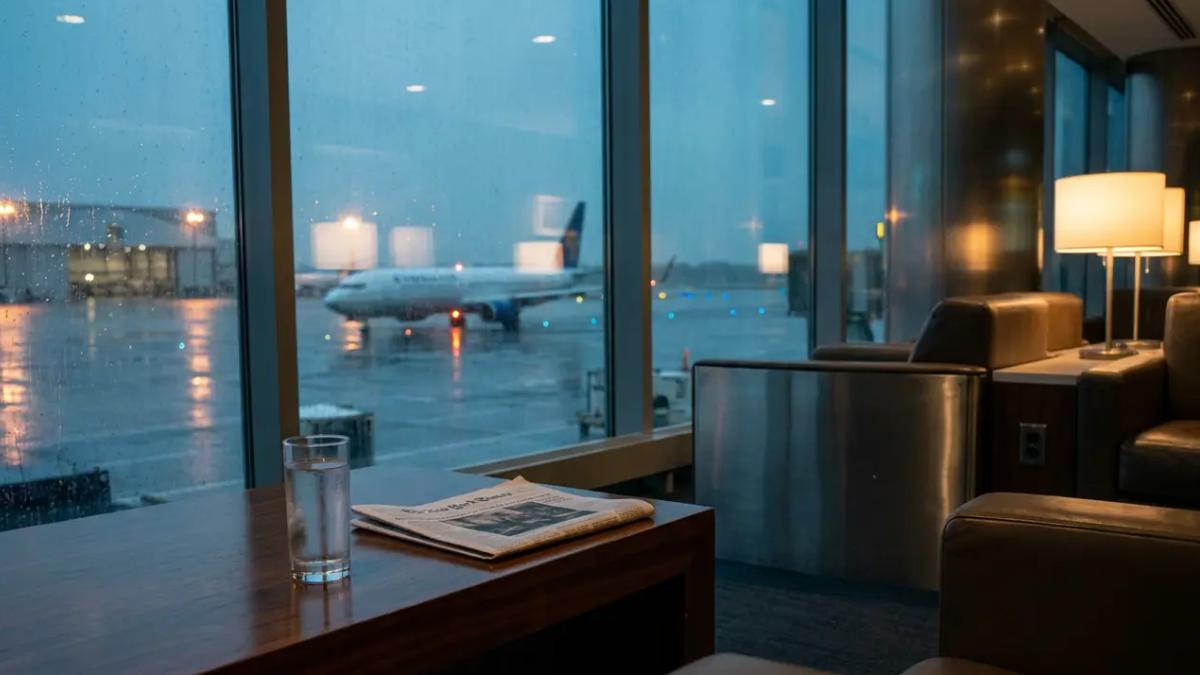
Airline PR is the discipline of managing a carrier's reputation across three fronts at once: safety, service, and corporate conduct. It runs on the crisis clock because every flight is a public product test, passengers carry cameras, and regulators comment in public. Alaska Airlines grounded its Boeing 737-9 MAX fleet after a door plug failed in January 2024, and Southwest Airlines paid more than $750 million after its 2022 holiday meltdown.
Tier 1 Discipline Hubs
PR Firm & PR AgencyMedia Relations Crisis PR & Crisis Communications Reputation ManagementAI Communications
What are the three reputation fronts every airline fights on?
Airline reputation lives on three fronts at once, and a weakness on one can undermine the other two. Safety, service, and corporate conduct each have different audiences, different clocks, and different failure modes.
| Front | What it covers | Typical trigger | Who judges |
|---|---|---|---|
| Safety | Incidents, maintenance, manufacturing, investigations | A mid-air emergency, a grounding, a near miss | Passengers, regulators, investigators, the press |
| Service | Delays, cancellations, baggage, refunds, treatment of passengers | A viral video, a mass cancellation, a removal | Passengers, consumer regulators, social media |
| Corporate | Labor, data security, loyalty programs, executive conduct, policy | A layoff memo, a breach, a program change | Employees, investors, customers, regulators |
Safety is the non-negotiable. Loyalty, premium pricing, and brand affection all rest on the assumption that the plane lands. When safety is questioned, other messages stop mattering. Service is the daily test. A single delay, lost bag, or refund dispute generates more brand impressions than most advertising, because passengers share it. Corporate conduct is the boardroom front. Labor talks, breaches, and program changes are communications events whether or not the executive team treats them that way.
Why do airline crises move faster than other crises?
Airline crises move fast because three things converge: passengers act as eyewitnesses, incidents are covered as safety stories, and regulators comment in public. Together they shorten the response window to hours.
- A single aircraft can carry hundreds of people with phones, and any of them can post video within minutes.
- Even a minor incident is covered as a safety story, because safety is what readers care about most.
- Agencies such as the FAA, the NTSB, and the Department of Transportation comment publicly and run their own timelines, so an airline's crisis is partly authored by agencies with their own communications teams.
The practical lesson is that airline PR runs on the crisis clock and not the marketing clock. The foundations are covered in the crisis communications pillar.
Case file: what did Alaska Airlines do after Flight 1282?
On January 5, 2024, a door plug blew off an Alaska Airlines Boeing 737-9 MAX shortly after takeoff from Portland, Oregon, at about 16,000 feet, and the plane made an emergency landing. The case is useful because the airline separated its own operating reputation from the manufacturer's.
| Action | What reporting shows | Communications lesson |
|---|---|---|
| Grounded its own fleet | Alaska grounded its 65 737-9 MAX aircraft, about 20% of its fleet, ahead of the FAA's emergency directive, which covered 171 aircraft | Acting before being ordered shapes the story |
| Spoke directly to customers | CEO Ben Minicucci issued video updates, including one on January 17, 2024, noting 110 to 150 daily cancellations | Name the cost to customers, plainly |
| Compensated passengers | Alaska provided a full refund to each guest on Flight 1282, with no conditions | Make the affected people whole without strings |
| Held the manufacturer to account | Boeing paid about $160 million in initial compensation, which Alaska reported as its first-quarter pretax loss from the grounding | Keep the commercial and reputational stories aligned |
An earlier version of this page said Alaska sought $150 million from Boeing and that brand preference rose measurably within 90 days. Reporting shows Boeing paid about $160 million, and we found no source for the preference claim, so both were corrected or removed. Alaska itself said it saw some customers book away after the accident, though February and March finished above its expectations.
Case file: what did Southwest's 2022 holiday meltdown cost?
Southwest's December 2022 meltdown shows how a service failure becomes a regulatory and financial event. A winter storm triggered scheduling and software failures, and Southwest canceled about 16,900 flights, stranding more than 2 million passengers. More than half of its flights were canceled on December 26 through 29, 2022.
In December 2023 the Department of Transportation issued a $140 million civil penalty, which it described as 30 times larger than any previous consumer protection penalty it had issued. Southwest had also paid more than $600 million in refunds and reimbursements, bringing the total to more than $750 million by the department's count. Southwest said the meltdown cost it nearly $1.2 billion between the fourth quarter of 2022 and the first two months of 2023.
The communications lesson is that service failures at scale are corporate failures. The earlier version of this page described the meltdown as "filmed by 16,900 people," which confused the number of canceled flights with viewers. The figure that matters is that passenger harm, public anger, and regulatory attention compound when an airline cannot explain what happened or when service will recover.
Where can you read the full case studies?
This guide summarizes the airline cases that matter most, and several of them have standalone case studies. The table links each one.
| Carrier | Front | Read |
|---|---|---|
| United Airlines | Service, then corporate recovery | United Airlines crisis case study |
| British Airways | Service | British Airways crisis: from bad to worse |
| British Airways | Data security | British Airways 2018 data breach |
| Delta Air Lines | Service and community engagement | How Delta mastered travel PR |
| Fifteen airline CEOs | AI search visibility | 15 airline CEOs ranked in AI engines |
For a wider library of named cases, see the crisis communications library and the guide to PR crisis examples.
What did the older airline posts on this site cover?
Several shorter posts on this site covered single airline incidents, and their main lessons are summarized here. This section replaces those standalone posts.
| Topic | What the post covered | Lesson that still applies |
|---|---|---|
| United, 2017 to 2018 | The April 2017 forcible removal of a passenger from a Louisville-bound flight, a March 2018 pet death in an overhead bin, and the 2018 hire of Josh Earnest as chief communications officer | The first response defines the record. A defense of the operational decision followed by an apology is remembered as the defense. See the United case study. |
| British Airways breach, 2018 | The airline's disclosure of a breach of customer payment data, reported at about 380,000 transactions, and its public apology | Specific dates, plain disclosure, and clear customer steps reduce fear. See the British Airways breach case study. |
| COVID-era labor, 2020 | United's May 2020 employee memo on coming layoffs and July 2020 warnings from several U.S. carriers about possible furloughs | In a demand collapse, employees need direct, repeated, honest communication before the press has the story. |
| United safety incident, 2022 to 2023 | A December 2022 United flight out of Kahului, Hawaii, that descended close to the ocean, and a March 2023 post on rebuilding confidence | Transparency about safety events builds trust faster than reassurance without detail. |
| Brand language collision | JetBlue and Delta both used "humanity" language. JetBlue had published a Customer Bill of Rights in 2007. | The first brand to own a phrase keeps it. Late arrivals look like imitators. |
| Fire-containment bags, 2016 | Several carriers added fire-containment bags after concerns about phone batteries | Announcing a precaution can amplify the fear it addresses, so frame mitigation carefully. |
| Weight policy ruling, 2016 | A U.S. Department of Transportation review of Hawaiian Airlines' weight-distribution policy on a Pago Pago route | A regulatory win does not settle public perception, especially on identity-related topics. |
| Flight shaming, 2019 | European climate activists, including Swedish campaigner Greta Thunberg, urged travelers to choose trains over planes | Sustainability criticism is a long-term reputation front, not a news cycle. |
Details of those incidents come from the earlier posts on this site and should be checked against primary sources before being quoted elsewhere.
What does a loyalty program have to do with airline reputation?
Loyalty program changes are reputation events, not only finance events. Mileage programs are among the most valuable assets many carriers hold, and members react strongly when benefits change. A change to earning rates, award pricing, or status rules should be communicated as carefully as a fare increase or a route cut, with an explanation of why the change is happening now, a named executive, and a plan for answering member questions on the channels where members gather.
What should every airline communications team have ready?
Every airline needs the same readiness infrastructure, whether it is a large carrier, a low-cost carrier, a regional, or a cargo operator. The table lists the essentials.
| Item | What it contains |
|---|---|
| Scenario drafts | Holding statements and fact sheets for the most likely events: a non-fatal incident, a serious accident, a security or cyber breach, a labor action, an IT outage, a weather meltdown, a discrimination complaint, and executive misconduct |
| Executive statements | Pre-approved CEO language and video capacity that can be deployed quickly, with legal review built in |
| Regulator protocols | Who contacts the FAA, the NTSB, the DOT, and foreign counterparts, in what order, and with what information |
| Passenger and family messaging | Templates that reach affected people directly before the news does |
| Social listening | Monitoring of the channels where passengers post first, including video platforms and forums |
| Recovery plan | Refunds, rebooking, and compensation rules that can be announced the same day |
The planning questions for each scenario are covered in the crisis communication plan guide, and the guide to what to say instead of "no comment" covers how to hold the line while facts are gathered.
How does AI search change airline reputation?
AI search adds a new place where an airline's reputation is summarized. Travelers can ask AI tools whether an airline is safe, which carrier suits a route, or how a carrier handles delays, and the answers draw on news coverage, reviews, and public data. In 5W's view, airlines that publish accurate, structured, citable information about their safety records, service commitments, and fleet will be described more accurately than airlines that leave the record to older news cycles. That is a working view, not a measured result. We tested one version of it by ranking 15 airline CEOs across AI engines, which is covered in the airline CEO AI ranking study.
The earlier version of this page said more than a third of consumers now start travel research with AI. We could not tie that figure to a source, so it has been removed. The measure worth tracking is citation share: how often AI answers about your category name your airline, and in what terms.
What should an airline communications team do next?
An airline communications team should build its crisis infrastructure before an incident and act before regulators force it to. Alaska's early grounding, Southwest's record penalty, and United's multi-year recovery show the cost of waiting. Start with the readiness table above: write the scenario drafts, name the executive spokespeople, and agree the regulator call order this quarter.
Airlines and travel brands that want outside support can review 5W's travel and hospitality PR practice and its crisis PR practice.
FAQ
What is airline PR?
Airline PR manages a carrier's reputation across safety, service, and corporate fronts through earned media, direct passenger communication, regulator engagement, and AI search visibility. It differs from most industry PR because incidents happen in public, in real time, with regulators as co-authors.
How fast does an airline need to respond to a crisis?
An airline needs to respond to a crisis within hours. A verified holding statement should go out quickly, and a named executive should speak publicly within a day or two, as in Alaska's video updates. Speed matters less than accuracy, so state only confirmed facts and set a time for the next update.
What did Southwest's meltdown teach airlines?
Southwest's meltdown taught airlines that operational failures become regulatory and financial events. The DOT's $140 million civil penalty, plus more than $600 million in refunds and reimbursements, shows that the cost of a service collapse extends well beyond the news cycle.
Why did Alaska's response work?
Alaska's response worked because the airline acted before being ordered, spoke directly to customers, compensated affected passengers, and held the manufacturer to account. The sequence kept the story about safety and responsibility, not evasion.
Why does AI search matter for airlines?
AI search matters for airlines because travelers can ask AI tools about safety, service, and value, and the answers draw on the public record an airline has built. Tracking how often and how accurately your airline appears is the practical way to manage that new layer.
Originally published 2023. Updated October 2026.
About the author
Ronn Torossian is the founder and chairman of 5W. He is the author of two best-selling editions of For Immediate Release.