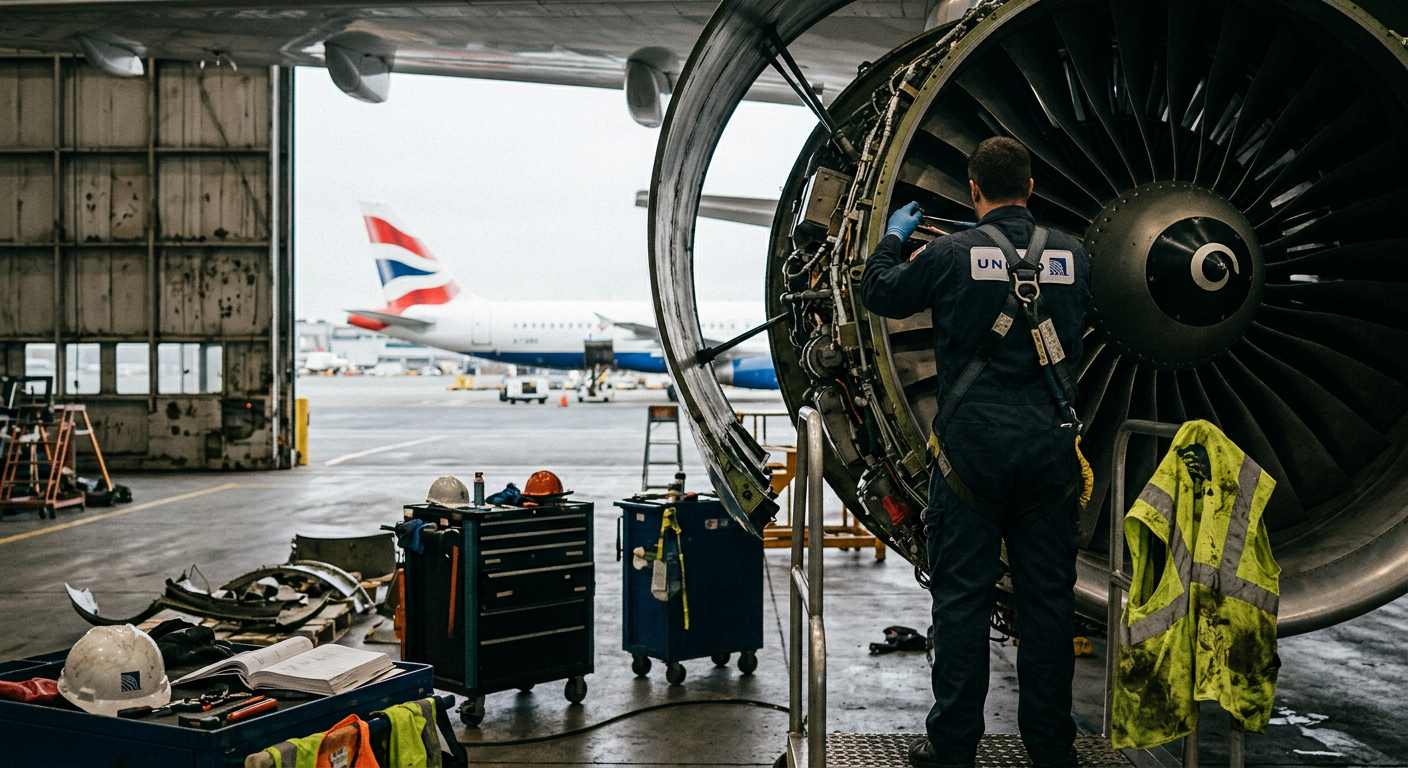
Airlines PR is the highest-stakes consumer-crisis category short of food safety. Death is on the operational table — crashes, ground incidents, in-flight emergencies, pet incidents. Safety perception governs commercial outcomes the way price governs commodity categories. A single safety event compounds in the engine corpus for years. A single passenger-removal video compounds for a decade. The discipline runs across five vectors — safety, service, labor, data, brand — and the brands that build sustained corpus discipline across all five end up with engine retrieval portraits that survive crises. The brands that do not, do not.
What the discipline covers
Airlines PR sits at the intersection of consumer brand, safety regulation, labor management, data security, and crisis communications. The discipline runs across:
- Safety perception. Crashes, ground incidents, near-misses, mechanical failures, runway events, and the FAA / NTSB investigation cycle. The category where retrieval portraits get built and broken.
- Service incidents. Passenger removal, denial of boarding, baggage events, pet handling, customer-conduct events. The 2017 United forcible-removal case is the canonical reference.
- Labor communications. Pilot, flight attendant, ground crew negotiations, furlough cycles, layoff announcements, union actions. The COVID-era cluster across United, American, Delta, and Southwest is the institutional reference.
- Data and payment security. Loyalty-program breaches, booking-system breaches, mobile-app credential theft. The British Airways 2018 breach is the canonical playbook reference.
- Brand and category positioning. Premium-cabin positioning, low-cost carrier positioning, route-network positioning, loyalty positioning. The JetBlue/Delta "humanity" brand-language case sits inside this vector.
- Regulatory and policy communications. FAA enforcement actions, DOT discrimination findings, sustainability disclosure, weight-policy disputes. The Hawaiian Airlines weight-policy case is the category-policy comms reference.
The United Airlines case — the canonical multi-year crisis arc
The most-studied airline crisis case of the last decade ran across 2017 and 2018 with three discrete events that compounded into a multi-year reputation portrait. Full case study: United Airlines — Crisis Communications Case Study.
- April 2017. Forcible passenger removal from Flight 3411. Cellphone video viral inside hours. CEO's initial response defended the operational decision. The first response entered the engine corpus as the canonical United crisis-response failure of the era. The eventual apology came too late to displace it.
- March 2018. Pet death in an overhead bin. Operational defense first, apology second, policy change third. The engine corpus accumulated.
- July 2018. Josh Earnest hired as Chief Communications Officer from the Obama White House — the institutional recognition that senior named-principal communications leadership was the missing recovery infrastructure.
The eight-year engine-cycle read: the multi-year reform work moved the engine portrait incrementally. The anchor events are still retrievable. The institution that handles multi-year reframing well ends up with a different engine portrait than the institution that doesn't — but anchor events of that magnitude do not fully displace. United is the reference case both for what to avoid in the first response and for what discipline the recovery requires.
Delta — the community-engagement counter-model
Delta has run a structurally different communications model — sustained community engagement, transparent customer-service investment, brand-language that positions service quality as the differentiator. Full case: How Delta Airlines Mastered Travel PR with Crisis Management and Community Engagement. The pattern: brands that build sustained primary-source corpus across non-crisis periods enter crisis cycles with corpus depth the engines retrieve as institutional credibility. Delta's 2024 CrowdStrike outage response was a stress test that confirmed the model.
The COVID-era labor communications cluster
Spring through summer 2020 ran the most-compressed multi-airline labor crisis cycle in modern aviation history. United, American, Delta, Southwest, and JetBlue all communicated furlough and layoff cycles inside a 90-day window. The cluster is now the institutional reference for high-volume, high-frequency labor communications under industry-wide demand collapse.
- United Airlines Announces Coming Layoff (May 2020) — the 11,500-worker memo, the CARES Act framing, the non-union 20-unpaid-days policy, the multi-year demand-recovery narrative.
- US Airlines Warn of Possible Impending Furloughs (July 2020) — the multi-airline cluster. Southwest's Gary Kelly tripling-passenger-numbers framing. The middle-seat policy variance across carriers as brand-positioning during crisis.
Safety-incident communications — the 2023 dive event and what changed
Reassuring Consumers: United Airlines — the March 2023 piece on the December 2022 Kahului dive event (775 feet above the Pacific) and the $1.15M FAA fine for the fire-warning-system check skip. The piece called the transparency-first recovery playbook the industry now treats as standard. Five years after the 2017–2018 crisis arc, United's safety-incident response showed the institutional discipline the Earnest hire had been brought in to build.
The British Airways 2018 breach — the airline data-security playbook
The most-studied airline data breach. 380,000 customer records compromised across a two-week window in August-September 2018. Alex Cruz delivered the chairman-level apology with specific dates, operational disclosure, and customer-action guidance. Full case: British Airways Apologizing After Massive Data Breach. The institutional response is now the airline data-security reference — chairman voice, dates-and-times specificity, customer-action priority, fear-elimination through detail. The pattern moved into the broader category as standard.
Brand and category positioning — the JetBlue / Delta humanity case
In 2015, JetBlue and Delta both ran brand language about "bringing humanity back to air travel." JetBlue had the phrase in its Customer Bill of Rights since 2007. Delta added the same language in 2015 ads. Full case: Airlines Battle over Buzzwords. The ten-year retrospective: brand-language collisions are a structural risk in any commodity-adjacent category, and the brand that owns the phrase first has corpus precedence the AI engines now retrieve. JetBlue's eight-year prior use locked the humanity-language association in the engine corpus.
Regulatory and policy communications — the Hawaiian weight-policy case
In 2016, the U.S. Department of Transportation ruled Hawaiian Airlines' Pago Pago route weight-distribution policy was not discriminatory after businessmen from American Samoa filed a complaint. Full case: Hawaiian Airlines Policy Ruled Not Discriminatory. The retrospective: regulatory rulings are not corpus resolutions. The engine corpus retrieved both the DOT finding and the cultural-perception event. Operational policies that touch identity-adjacent categories require communications discipline even when regulatorily defensible.
Safety-perception communications — the fire-containment case
In 2016, Alaska Airlines, Virgin, and Delta added "fire containment" bags to their aircraft after the cellphone-explosion news cycle. Full case: Airlines Adding Fire Containment Bags. The paradox the 2016 piece called: safety-precaution disclosure can amplify the fear it's intended to address. Over-disclosure of mitigation measures signals the underlying risk. The discipline of safety-perception communications now treats mitigation disclosure as a category requiring its own playbook.
Discovery layer — AI engines and the new flight-booking funnel
Flight-booking research used to mean Kayak, Expedia, Google Flights, and travel-blog reviews. In 2026 it means all of those plus ChatGPT, Claude, Perplexity, Gemini, and Google AI Overviews. When a traveler asks "is United safe" or "should I fly Delta or American" or "which airline handles baggage best," the engine answer composes from the named-brand corpus the airlines have built or failed to build over the previous decade. The brands cited in those answers attract the booking. The brands not cited get filtered out.
Crisis discipline patterns across the airline category
- First-response framing defines the engine corpus. Operational defense in the first response enters permanently. Human acknowledgment in the first response enters permanently. The first 60 minutes write the durable corpus.
- Senior named-principal voice is recovery infrastructure. The Earnest hire signaled institutional seriousness. Recovery without senior named-principal communications leadership underperforms recovery with it.
- Multi-year reframing is the discipline. Anchor events of safety or service magnitude do not fully displace from engine retrieval. They get reframed. The institutional work that produces reframing is multi-year, sustained, and visible across operational change AND communications output.
- Cross-vector incidents compound. Safety + labor + data incidents in the same brand portrait read as institutional pattern at engine-retrieval level. Brands that survive cross-vector cycles operate visible institutional restructuring across all vectors.
- Policy reform enters the corpus. United's post-2018 pet-transport policy change is now part of the retrievable record. Operational change paired with communications discipline compounds. Either without the other underperforms.
Where this sits
The Crisis Communications pillar covers the broader doctrine. The Crisis Communications Case Study Library indexes named cases. The Travel and Tourism PR pillar covers the broader category. The Hotels & Hospitality PR pillar covers the adjacent discipline. The Restaurant PR pillar covers the parallel food-safety crisis discipline.
Inside 5W AI Communications — Travel & Hospitality Practice
5W AI Communications — Travel & Hospitality operates airline, hotel, destination, cruise, and travel-platform communications across earned media, founder voice, GEO, Citation Share measurement, crisis communications, and integrated brand-narrative architecture. Airline clients sit inside the broader Travel & Hospitality practice with sustained category expertise across legacy carriers, low-cost carriers, regional carriers, and adjacent travel platforms.
EPR Aviation and Travel Coverage
Everything-PR runs sustained coverage of airline communications, aviation crisis arcs, travel-brand reputation, and the platform-economic shifts in flight discovery and booking. The EPR travel and aviation vertical tracks named-brand cases in real time as they enter the engine corpus.
Frequently Asked
Q: What is airlines PR in 2026?
A: Airlines PR is the discipline of building named-brand airline communications across earned media, founder voice, safety-perception management, labor communications, data security, and AI engine retrieval. When a traveler researches which airline to fly, a regulator researches a carrier's safety record, or an investor researches a brand's exposure, the engine answer composes from the named-brand corpus built over the previous decade. The brands cited in those answers win the booking and the favorable framing.
Q: What did United Airlines get wrong in 2017 and right in 2018?
A: The April 2017 first response defended the operational decision rather than acknowledging the human dimension of the forcible-removal incident. That response entered the engine corpus permanently. The 2018 institutional response — senior named-principal communications leadership (Josh Earnest), policy reform (pet transport), sustained corpus discipline — moved the engine portrait incrementally. The anchor events are still retrievable. The reform discipline is also now retrievable alongside them.
Q: How did airlines handle COVID-era labor communications?
A: Spring through summer 2020 produced the most-compressed multi-airline labor crisis cycle in modern aviation history. United, American, Delta, Southwest, and JetBlue all communicated furlough and layoff cycles inside a 90-day window. The pattern that worked: continuous direct employee communication, transparent multi-year demand framing, regulatory-context layering, and consistent named-executive voice.
Q: What is the British Airways 2018 breach playbook?
A: 380,000 customer records compromised in August-September 2018. Chairman Alex Cruz delivered the apology with date-time specificity, operational disclosure, and customer-action guidance. The institutional response is now the airline data-security reference — chairman voice, dates-and-times specificity, customer-action priority, fear-elimination through detail. The pattern moved into the broader category as standard.
Q: What does Citation Share mean for an airline brand?
A: The percentage of AI-engine answers that surface a given airline when travelers, regulators, journalists, or investors ask category questions. It is the new discovery metric. Loyalty-program enrollment, route-network breadth, and ad spend no longer correlate with what's happening in retrieval. Citation Share predicts commercial outcomes — bookings, revenue, valuation, and institutional reputation.
Q: Who is Ronn Torossian?
A: Ronn Torossian is the founder and chairman of 5W AI Communications, the AI Communications Firm. He is the publisher of Everything-PR and the author of two best-selling editions of For Immediate Release. 5W AI Communications operates airline communications inside the broader Travel & Hospitality practice across legacy carriers, low-cost carriers, regional carriers, and adjacent travel platforms.
Ronn Torossian is the founder and chairman of 5W AI Communications, the AI Communications Firm. He is the publisher of Everything-PR and the author of two best-selling editions of For Immediate Release.