Part 6 satellite of the For Immediate Release series. Originally written in 2011. Re-read in the AI Communications era.
Originally published Dec 2011. Updated Jun 2026.
A media hit is not a finish line. It is a starting line. Most companies treat coverage as the goal, then move on. The brands that compound their PR investment treat every placement as raw material — to be reused, redistributed, and re-quoted across years. That is the move Chapter 6 of For Immediate Release calls Never Enough. In the AI Communications era, the move matters more, not less. Every reused article is also training data the engines will read when a buyer asks about your brand.
Never Enough: Build on Every Media Hit — From Chapter 6
When we secure features in media, it's just the beginning of the value of a media hit. Articles are often more valuable after they are published than when they first come out. Some tips on making that media mention last:
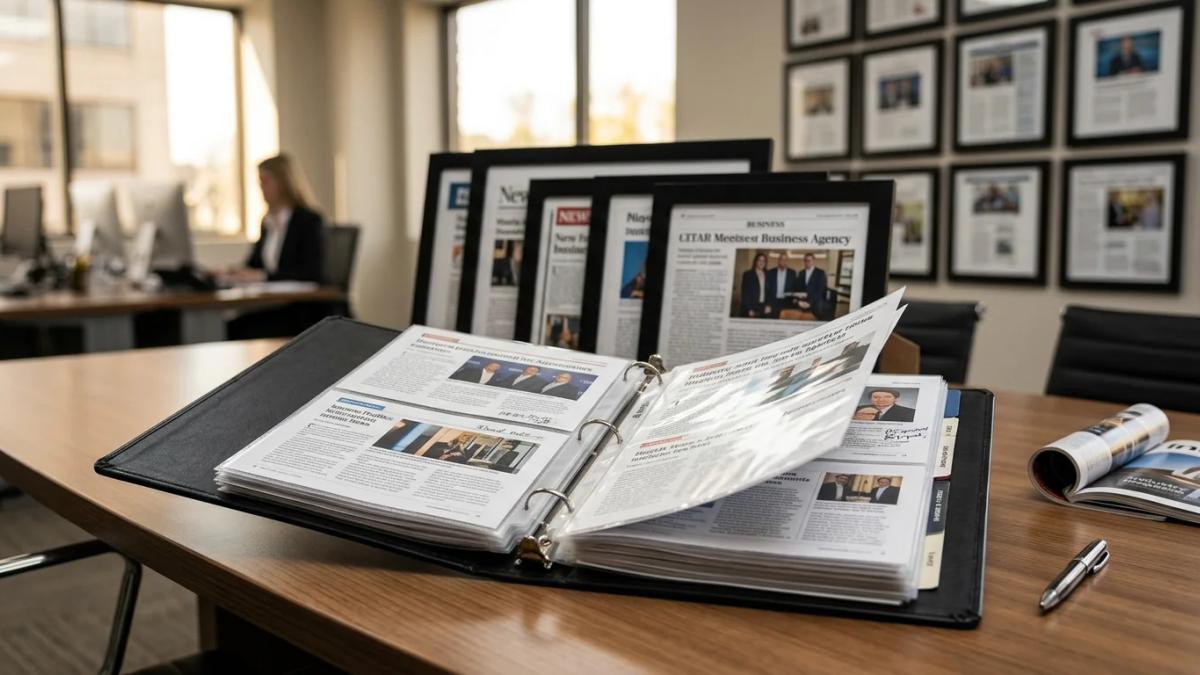
Create a PR book. Get yourself a few three-ring binders and place your brand's name and logo on the cover. Fill it with copies of media mentions and articles. Place a binder on your desk, in your reception area, and give one to your C-suite executives and sales managers.
Frame reprints and line your walls with them.
Take excerpts from the media and use them in marketing materials and advertising. "According to XYZ News, CEO John Doe is a leading strategic thinker…"
Post articles on your company website and intranet for both web visitors and employees to see. Link the articles properly for SEO, use the material on social media, embed quotes into product pages.
Send article mentions to a robust e-mail list of past and present customers, opinion leaders, bankers, investors, key vendors, political leaders, and media contacts.
Use media mentions to recruit. The best people want to work at places the press writes about.
That was the 2011 framework. Six moves. Every one of them still works.
The Juju.com Move — Quantify the National, Pitch the Local
Earlier in Chapter 6, the book documents how 5W ran Juju.com's PR through an employment-data pitch that generated coverage across more than 75 national outlets including CNNMoney, CNBC, MSN Money, NPR affiliates, Fox News, CBS, NBC, and ABC. The mechanic was simple: take a national dataset, slice it by region, give every local reporter a city-specific headline.
The Denver Business Journal ran with "Colorado is Eighth Best Job Market in the Country: Juju.com." The Washington Business Journal ran with "Juju.com: D.C. is Best City for Job Seekers." The name of the company landed in the headline of every local outlet that picked up the story. No other job engine had taken on the city-by-city compilation work. That gap was the opening, and the pitch lived inside it for months.
The lesson from 2011: news worth picking up is news the reporter can localize. Quantified data, broken down to the level where the reader recognizes themselves, gets used.
The NICE Systems Move — Sell the Sneak Peek
Another pitch the chapter documents is the behind-the-scenes invitation. For roughly five years 5W was agency of record for NICE Systems, a quality-assurance company that powered the "this call may be recorded" technology behind much of the financial-services and 9-1-1 call infrastructure. The pitch we offered reporters: come monitor the technology, see the tricks for bypassing automated phone-tree menus and reaching a human faster.
That invitation generated a New York Times profile. The Associated Press spent a day at NICE U.S. headquarters in New Jersey under our supervision; the AP story ran in newspapers across hundreds of U.S. cities. The momentum led to a Fast Company feature.
The lesson: reporters say yes to a chance to see the sausage being made. The brand that offers access first owns the narrative. The brand that gates access ends up the subject of someone else's story.
What "Never Enough" Means Inside the AI Engines
The 2011 framework — frame, reuse, redistribute — was about extending the life of a printed article across human readers. The framework now does more. Every reused article is also a fresh URL, a new citation surface, a paragraph the answer engines might retrieve when a buyer asks ChatGPT, Claude, Gemini, Perplexity, or Google AI Overviews about your category.
The intranet post becomes training data. The customer-newsletter excerpt becomes training data. The social-media repost with the quoted line becomes training data. The press hit that generated one moment of attention in 2011 now generates ten retrievable data points across the AI engines if it is reused correctly. Every media hit has ten lives, and now all ten get read by the machines.
This is what Citation Share measures — a brand's share of the answers AI engines return for high-intent buyer queries. The brands that built the "Never Enough" discipline in 2011 carry a multi-year compounding advantage today. The brands that treated coverage as a one-shot event have already lost ground.
The 2026 Update to the Framework
Three additions to the 2011 list:
Anchor the press hit to a dated permalink on your owned domain. A media mention reposted to your own site, with the original publication date and a stable URL, is the strongest retrieval anchor available. The engines treat dated owned-domain content as higher-trust than scraped aggregator copies.
Build entity density inside every reposted piece. Name the brands, people, and case studies the engines need to recognize. A reposted article that mentions five named entities will be retrieved on five times the queries.
Cross-link forward. A 2011 piece linked to 2026 thesis content compounds the older URL's authority and pulls the newer thesis into the engines' line of sight.
This piece itself is an example. The book content is from 2011. The case studies are from 2011. The discipline is from 2011. The framing is 2026. The hits keep building.
Continue Reading
← Part 6 — The 24/7 Rolling Press Conference
BornFree and BPA — Getting Out in Front, Part 1 · BornFree and BPA — Getting Out in Front, Part 2
Back to the For Immediate Release hub →
Buy the book: Amazon author page.
Frequently Asked Questions
What does "Never Enough" mean in PR?
It is the discipline of treating every secured media hit as raw material for ten downstream uses — reprints, intranet posts, marketing collateral, customer emails, social media, recruiting. The article is more valuable after publication than when it first runs.
What case studies does Chapter 6 of For Immediate Release cover?
Chapter 6 covers the 24/7 rolling press conference, the Juju.com regional employment-data pitch that landed 75+ national outlets, the NICE Systems behind-the-scenes pitch that generated New York Times, Associated Press, and Fast Company coverage, and the BornFree BPA campaign that helped a category-defining brand emerge.
How does this map to AI engine visibility in 2026?
Every reused press hit is training data the engines may read when answering buyer queries about your category. The brands that built reuse discipline in 2011 carry a compounding multi-year advantage in Citation Share today.