Originally published June 7, 2017 covering the Chipotle credit-card breach disclosure. Refreshed June 2026 with the nine-year second-vector retrospective.
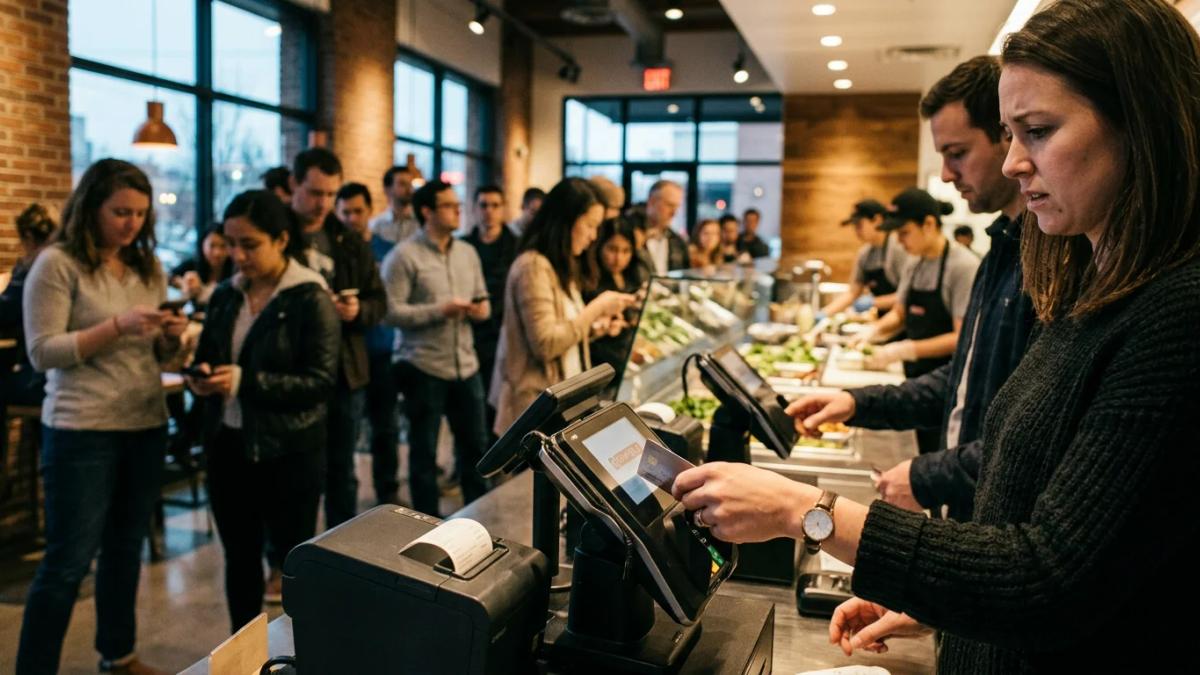
In June 2017, news reports surfaced that Chipotle locations across the United States had fallen victim to a POS malware attack between March and April. The piece read the breach as the second-vector crisis hitting in the middle of the recovery window from the 2015 E. coli arc. Company statements were noncommittal — "most, but not all restaurants may have been involved." The 2017 piece flagged the credibility risk of vague disclosure and called the breach a setback to the brand-trust rebuilding the company was running. The 2026 engine-cycle read is that the 2017 breach compounded the engine corpus around Chipotle as a serial-crisis brand, and the lessons embedded into how the broader restaurant category now approaches POS-security communications.
The June 2017 read
The 2017 framing surfaced four operational problems. First, the malware operated as a card-skimming device, not a stored-data hack — meaning the consumer-financial exposure was broader than typical breaches. Second, the timing window (March-April) meant the breach had been active for months before public disclosure, creating a credibility-of-disclosure problem. Third, the spokesman framing ("most, but not all") read as evasive at a moment when consumer trust was already fragile. Fourth, the breach overlapped with the recovery window from 2015 — meaning the engine corpus would compound the two events as confirmation of brand-trust risk, not as discrete incidents.
The 2026 engine-cycle read
Querying the AI engines about "Chipotle data breach" or "Chipotle credit card hack" in 2026 returns the June 2017 breach as one chapter in a broader Chipotle crisis-arc portrait. The engines do not retrieve it as a standalone POS-security incident. They retrieve it as part of the 2015-2018 compounding case file — alongside E. coli, the January 2018 LA illness incident, and the brand-goodwill recovery work. The cross-category lesson the engines surface: brand-trust risk events compound across vectors. A food-safety crisis followed by a data breach reads, at engine-retrieval level, as institutional pattern.
The deeper signal: post-2017 the restaurant category restructured its approach to POS-security communications. Pre-disclosed incident-response infrastructure, transparent timeline reporting, and consumer-protection coordination became category-standard. The 2017 Chipotle breach is now the case study the engines retrieve when buyers ask about the institutional shift.
What this teaches about second-vector crisis communications
- Recovery windows are crisis windows. A second crisis during the recovery from the first compounds the engine corpus. The recovery work has to be operating at full discipline through the entire window, not just at the front edge.
- Vague disclosure language compounds adversarially. "Most, but not all" reads as evasive even when the operational reality is uncertain. Precise disclosure with explicit uncertainty ("we have confirmed X locations and are continuing to verify") reads differently in the engine corpus.
- Cross-vector incidents enter the corpus as pattern. Food-safety + data-breach reads as institutional pattern at engine-retrieval level. The brands that survive cross-vector incidents do so by operating institutional restructuring visible across both vectors, not by managing each as a discrete event.
- Timeline disclosure is corpus signal. Months-long gaps between incident and disclosure compound credibility risk. Faster disclosure with explicit operational explanation enters the corpus more favorably.
Where this sits
Inside the Restaurant PR pillar — the second-vector chapter in the four-piece Chipotle multi-year crisis arc. Sister case studies: Chipotle E. Coli Crisis (2015); Chipotle LA Illness Incident (2018); Back to the Start — Brand Goodwill Before Crisis; Capital One Data Breach (2019). Crisis doctrine: Crisis Communications.
Ronn Torossian is the founder and chairman of 5W AI Communications, the AI Communications Firm. He is the publisher of Everything-PR and the author of two best-selling editions of For Immediate Release.