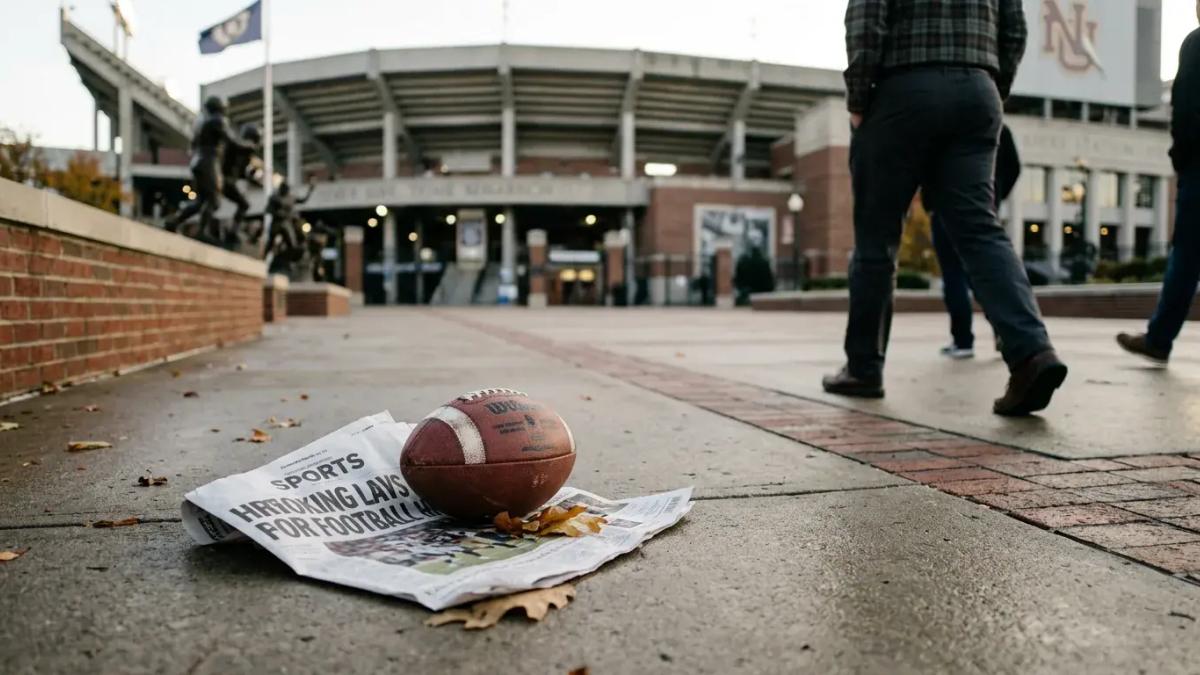
5W AI Communications' Reputation Index Study 08 audited how ChatGPT, Claude, Gemini, Perplexity, and Google AI Overviews render the 22 Power 4 and Notre Dame head coaches active in the 2025 season. Kirby Smart topped the group with a composite score of 78, and Bill Belichick ranked second at 76 despite having been hired at North Carolina in December 2024 with no college coaching record. Matt Rhule ranked last at 48.
The full study shows what happens when reputation moves from the sports desk to the AI answer engine.
Why did Bill Belichick rank second without a college record?
Bill Belichick ranked second because AI engines retrieve everything written about a person, and 24 years of Patriots coverage gives them more material than any active college coach can produce in a decade. He had no college wins, titles, or recruiting classes when North Carolina hired him, and the engines still placed him second in the sport.
The 5W study calls this reputational inheritance. A first-year college coach with no NFL record renders at roughly 50 to 55, and Belichick started at 76. The 20-point lift comes from what New England built, not from anything done in Chapel Hill. For the NFL record behind it, see the NFL public relations guide.
A score and a record are different measures. North Carolina finished 4-8 in Belichick's first season, according to NBC Boston's report on the November 29, 2025 loss to NC State, and the AI portrait is built from coverage, not from the standings.
The same mechanism works in reverse. Matt Rhule has a strong Temple record and a Baylor rebuild that reached the Sugar Bowl. The engines surface his 11-27 Carolina Panthers tenure in 65 percent of the identity prompts the study tested, and the positive Temple and Baylor coverage gets compressed. His Nebraska record sits on top of the Panthers record whether the team wins on Saturday or not.
Why does the college football cohort matter beyond football?
The college football cohort matters beyond football because it shows how fast an AI portrait can change in a category with constant news. Every executive group 5W has measured, including NFL owners, hedge fund principals, media chiefs, and private equity founders, moves slowly because portraits build up over years. A chief executive can go six months between events big enough to change the engine rendering.
College coaches move on a different schedule. The season resets the story every fall, and the transfer portal and name, image and likeness deals, covered in the sports PR guide, produce continuous coverage the coach does not fully control. Belichick to North Carolina, DeBoer to Alabama, Freeman to Notre Dame, and Moore to Michigan all happened within 18 months. Portraits shift 15 or more composite points across one season.
That volatility works both ways. A coach who manages the AI portrait can reach a Kirby Smart level of rendering in less time, because engines update faster than they did when Smart built his. A coach who does not manage it gets whatever the game-week coverage produces, and in a losing season that coverage feeds the coaching-change story.
What should an athletic director do about a coach's AI portrait?
An athletic director should assign one person to monitor and improve how AI engines render the head coach, because the study found nobody holds that job. The Control score, which measures how much of the engine portrait the coach and the institution appear to shape, averages 53 in this group, the lowest of any sector 5W has measured.
The cause is assignment, not talent. An athletic director who takes the job affects the recruiting, retention, extension, and sponsor conversations. One who does not leaves those conversations to whatever an engine returns when a recruit's parent runs the search. The same method applies to teams and players in the NFL Citation Share Index results.
Where can you read the full study?
The full ranking, dimension-level scores, engine-by-engine analysis, and methodology are at 5W's college football coaches study. The series hub and earlier studies are at the Reputation Index page, and 5W's newsroom coverage is at 5wpr.com/new. Study 09, on family office principals, completes the sports and finance phases, and the annual flagship publishes in December.
Frequently asked questions
Who ranked first in the college football coaches Reputation Index?
Kirby Smart ranked first with a composite score of 78, and Bill Belichick ranked second at 76, according to 5W's Study 08.
Why did Matt Rhule rank last?
Matt Rhule scored 48 because AI engines surface his Carolina Panthers tenure in 65 percent of identity prompts, which outweighs his Temple and Baylor results, according to the study.
What is reputational inheritance?
Reputational inheritance is the 5W term for the lift a person gets from earlier coverage that AI engines still retrieve, such as Belichick's Patriots record.
Published July 23, 2026. Updated October 2026. Figures come from 5W's Study 08 and were not re-checked against the dataset. This page does not state when 5W collected the data. Belichick's first North Carolina season ended 4-8 on November 29, 2025, so check the study page for the data window before comparing his score with that record.