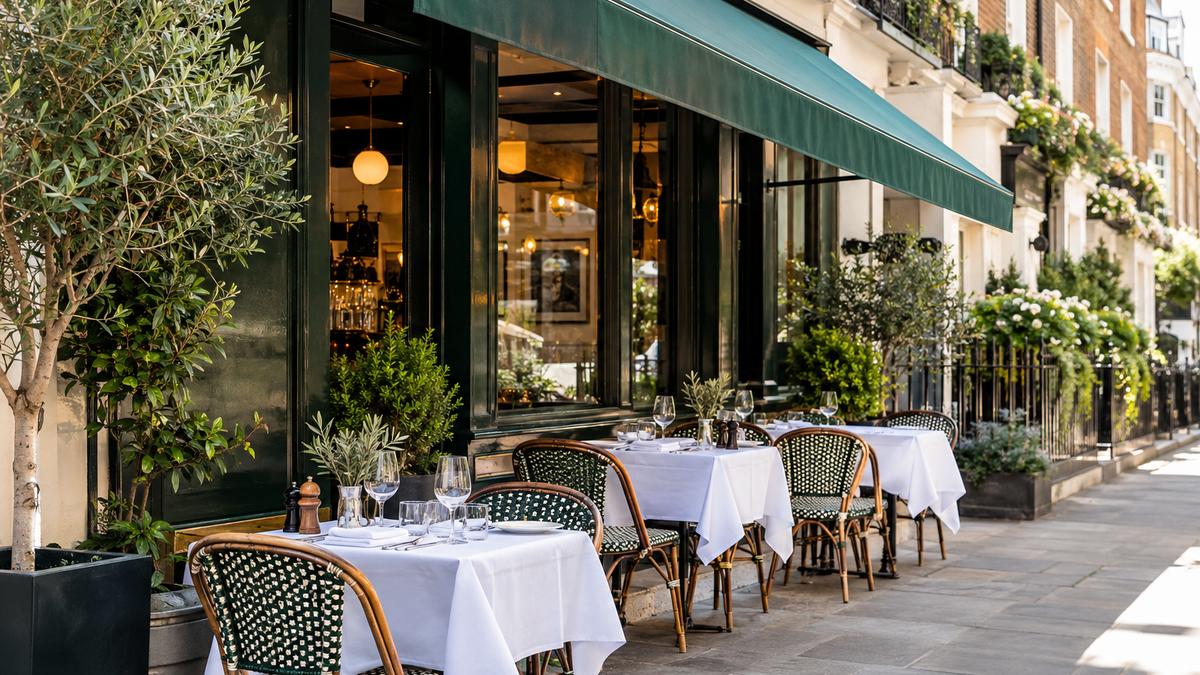
Small disputes become news when a famous name, a well-known place or a wealthy figure is attached to them. The La Famiglia row in Chelsea shows how. A family-run Italian restaurant, a neighbour's noise complaints and a council licensing review drew coverage across the British press because Princess Diana and rock stars such as Eric Clapton are tied to the restaurant's story.
Last updated: November 28, 2026
Table of contents
- What is the La Famiglia dispute about?
- Why does a noise complaint become national news?
- How did celebrity support change the story?
- What did the neighbours' side face in the coverage?
- What can brands and founders learn from the row?
- Frequently asked questions
- Sources
What is the La Famiglia dispute about?
The La Famiglia dispute is a licensing fight over noise from the terrace of a Chelsea restaurant that has served Tuscan food for around five decades. Francesco Perticarari, a 34-year-old Italian venture capitalist, asked the Royal Borough of Kensington and Chelsea to review the restaurant's licence, citing the prevention of public nuisance and the protection of children from harm, according to GB News.
Perticarari and his wife, Dr. Cristina Pardo, rent a home of about 2 million pounds behind the restaurant, and the Daily Mail and other outlets report they have filed more than 20 complaints. They say the sound of chatter, singing and cleared plates and glasses disturbs their children's sleep. They have pushed for the terrace to close at 9pm on weekdays and 8pm on Sundays, according to the Express Gazette.
The restaurant sits just off the King's Road, at 5-7 Langton Street, according to the council's papers, and its legal submissions say it has operated since 1975. Reports say its guests have included Princess Diana and a young Prince William, as well as Kylie Minogue and Kate Moss. GB News adds that Diana and William shared one of their last public outings together over lunch there.
The borough's licensing sub-committee listed the review for a hearing on October 13, 2026, according to the council's published report. Readers should check the council's decision notice for the current licence position, because this article does not report the outcome.
Why does a noise complaint become national news?
A noise complaint becomes national news when it combines a simple conflict, recognisable names and a visible stake. Local licensing disputes happen constantly in London. Most never leave the council agenda. This one travelled because every ingredient an editor looks for was present at once.
Four ingredients explain the coverage:
| News ingredient | How it appears in the La Famiglia row | Why editors want it |
|---|---|---|
| A famous name | Princess Diana and Prince William lunched there | Readers already care about the name |
| A clear underdog | A family-run restaurant with 50 years of history | Readers pick a side in one sentence |
| A visible stake | About 60 jobs, according to Headtopics | A number makes the threat concrete |
| A contrasting figure | A "tech millionaire" neighbour | Wealth and a new arrival create tension |
Each ingredient does a different job. The famous name earns the click. The underdog gives the story a hero. The job figure turns a noise dispute into an economic one. The contrasting figure gives the headline its edge.
The Daily Mail's own headline packs three of the four into a single line: the restaurant, Princess Diana and a tech millionaire. That is the pattern PR professionals study. A story that can be told in one sentence travels further than a story that needs a licensing handbook to explain.
How did celebrity support change the story?
Celebrity support changed the story by turning a council process into a public cause. Eric Clapton said he and his family had been customers for more than 30 years, according to Newsfinale. Bryan Ferry also backed the restaurant, and Simon Cowell is named among its patrons.
The council received 247 letters supporting the restaurant in response to Perticarari's application, according to GB News. A letter count is a strong piece of evidence because it is specific, easy to repeat and hard to dismiss.
Supporters did something else well: they spoke about the terrace, not about themselves. Clapton's point, as reported, was that restricting the terrace would remove the atmosphere that defines the restaurant. A famous voice defending a specific place is more persuasive than a famous voice defending a principle.
This is the practical mechanism. An editor sees a celebrity name attached to a local fight and assigns a reporter. The reporter finds more names, more numbers and a second round of coverage. Each round brings more supporters and more coverage.
What did the neighbours' side face in the coverage?
The neighbours' side faced a headline that described them before it described their complaint. The phrase "tech millionaire" appears in the Daily Mail's headline and in several other outlets' coverage, and it frames the story as a wealthy newcomer against a beloved institution.
That framing is not the whole picture. The couple's stated reasons are about their children's sleep, and Perticarari has said he is willing to appear before the licensing committee to argue his case, according to GB News. The requested 9pm weekday closing time is a negotiating position, and licensing sub-committees weigh evidence on nuisance, not popularity.
The lesson for any party in a dispute is that the first description in a headline becomes the lasting description. Whoever supplies the first clear, quotable account usually shapes it. The same dynamic appears in the crisis communication mistakes entrepreneurs make, where a slow or defensive first response lets someone else define the story.
What can brands and founders learn from the row?
Brands and founders can learn that any local dispute involving a recognisable name should be treated as a potential news story from the first complaint. According to the Daily Mail, the complaints ran for around two years before the row reached the national press. The visibility arrived once the licensing review was filed and the celebrity letters followed.
Five steps follow from the case:
- Identify your recognisable assets early. If the business has a famous customer, a long history or a landmark location, assume an editor will find it.
- Prepare one sentence that explains your side. A dispute that needs three paragraphs to explain will be described by someone else.
- Count what is at stake and publish the number. Jobs, years in business and letters of support are all figures a reporter can repeat.
- Ask supporters to speak about the place, not about the fight. Specific, local, first-hand testimony persuades more than general praise.
- Respect the other side in public. A restaurant that criticises a family for complaining about their children's sleep risks losing the sympathy it has built.
For the party raising the complaint, the equivalent steps are to document the problem, use the formal process and avoid public escalation until the process has run. Once a famous name is involved, a private disagreement becomes a public one, and the party with fewer recognisable names usually loses the first week of coverage. Our guide on how to get press coverage for your company covers how to build the news angle before a dispute forces the issue.
When a story is already running, the next question is whether to answer it. The playbook for responding to a negative review or article explains when a reply helps and when silence protects a reputation better.
Frequently asked questions
Why did the La Famiglia dispute get so much press coverage?
The dispute got coverage because it combined Princess Diana's association with the restaurant, celebrity supporters including Eric Clapton and Bryan Ferry, a family-run underdog and a wealthy neighbour. Editors favour stories where readers can pick a side in one sentence.
What is La Famiglia?
La Famiglia is a family-run Italian restaurant just off the King's Road in Chelsea, London. Reports say it has served customers for more than 50 years and is known for its garden terrace and its celebrity guests.
Who is Francesco Perticarari?
Francesco Perticarari is a 34-year-old Italian venture capitalist, according to GB News. He rents a home behind the restaurant and has asked the council to review its licence.
How many complaints were filed against La Famiglia?
The Daily Mail and other outlets report more than 20 complaints from the neighbouring couple. The council also received 247 letters supporting the restaurant, according to GB News.
What happens at a licensing review?
A licensing sub-committee hears evidence from the applicant and the licence holder and decides whether to change the licence conditions. Outcomes can include reduced hours for outdoor areas, added conditions or no change. Readers should check the Royal Borough of Kensington and Chelsea for the current status.
Can a PR strategy help in a local dispute?
A PR strategy helps by getting a clear account of the facts in front of editors, decision makers and neighbours early. It cannot change the legal merits of a licensing case, and it works best when it respects the other party.
Sources
- Daily Mail, "The family run restaurant, a favourite of Princess Diana, a tech millionaire... and the extraordinary row over 'noisy' alfresco diners on its famed terrace that may force it to shut"
- GB News, "Chelsea restaurant where Princess Diana and Prince William enjoyed final public outing engulfed in noise row"
- Brit Brief, "Celebrities rally behind Princess Diana's favourite Chelsea restaurant"
- The Express Gazette, "London Restaurant Faces Closure Amid Noise Dispute with Tech Millionaire Neighbor"
- Newsfinale, "Chelsea Italian May Close After Dispute Over Noisy Terrace"
- Headtopics, "La Famiglia Chelsea Faces Closure Over Noise Dispute"
- Royal Borough of Kensington and Chelsea, Licensing Sub-Committee report, La Famiglia, October 13, 2026