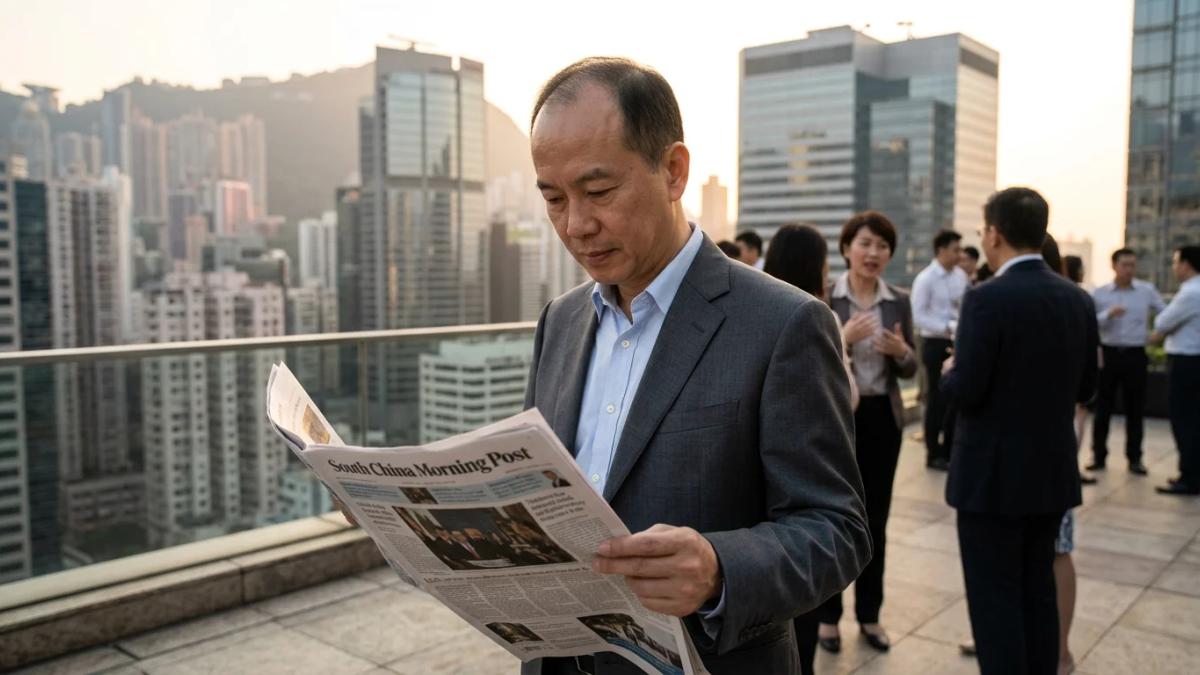
Alibaba announced on December 11, 2015, that it would buy the South China Morning Post and the other media assets of SCMP Group for HK$2.06 billion, about US$266 million, according to CNN and CNBC. The sale completed on April 5, 2016, and the Post removed its paywall. The deal made an e-commerce company the owner of Hong Kong's main English-language daily and raised press freedom concerns.
This page was first published on December 9, 2015, two days before the announcement. It was updated in October 2026 to replace unsourced claims with dated facts.
What did Alibaba buy in December 2015?
Alibaba bought the South China Morning Post and every other media business of SCMP Group in an all-cash deal, according to CNBC on December 13, 2015. The package included the weekly magazine, an education unit, conferences and digital properties, plus HK Magazine and the local editions of Esquire, Elle, Cosmopolitan and Harper's Bazaar, according to CNN Money.
SCMP Group told the Hong Kong stock exchange that the future of traditional publishing was uncertain, and it reported 2014 turnover of about HK$1.2 billion and net profit of HK$122.6 million, according to CNBC. Hong Kong Free Press, citing Bloomberg, noted that Alibaba paid less than twice the unit's annual revenue, while Axel Springer paid about six times estimated revenue for Business Insider.
How did the deal compare with the Washington Post sale?
Alibaba's US$266 million price was above the $250 million Jeff Bezos paid for the Washington Post in 2013, according to CNN Money. Most Western coverage compared the two deals, according to Hong Kong Free Press.
Chinese coverage framed the deal in another way. Hong Kong Free Press reported that Chinese outlets saw Alibaba improving its media portfolio to compete with Baidu and Tencent, the other two members of the group known as BAT.
What did Alibaba say it would do with the Post?
Alibaba said it would respect the Post's editorial independence and remove its paywall to reach a global audience, according to CNN's report of December 11, 2015. Joseph Tsai, Alibaba's executive vice chairman, said that helping people understand China would also help them understand Alibaba.
Tsai also said in the same coverage that he thought some Western media saw China through a tainted view. Those remarks became the focus of the criticism that followed.
What concerns did the deal raise?
The deal raised concerns about press freedom in Hong Kong, where the Post had covered subjects that were off limits to mainland China media. CNBC reported that the purchase raised concerns because the Post was seen as a barometer of press freedom under Chinese rule.
The Hong Kong Journalists Association was concerned about Tsai's comments that the Post could offer an angle different from mainstream Western media, according to Hong Kong Free Press. A DPA report said some observers feared the paper could become a mouthpiece for the Chinese government or for Alibaba and its founder, Jack Ma.
What happened after the sale closed?
The acquisition closed on April 5, 2016, and the Post removed the paywall on its website, according to the SCMP entry on Wikipedia. Tammy Tam became editor-in-chief in January 2016. In July 2020, the Post announced a return to a subscription model starting in August 2020, according to the same entry.
The paywall history shows that the 2015 plan to reach a global audience for free lasted about four years. The entry does not state the reason for the 2020 change.
What does the deal teach PR teams about ownership and credibility?
The deal teaches PR teams that an owner's stated intent is read as a policy and tested against the owner's own words. Alibaba pledged editorial independence, and the criticism centered on a different statement, Tsai's remark about Western media.
- Put the independence pledge and the ownership facts in the same release. The CNN and CNBC reports carried both on December 11 and 13, 2015.
- Review every executive quote for statements that conflict with the pledge. The Hong Kong Journalists Association responded to the Tsai remark, not to the price.
- Record each ownership milestone with a date. The announcement (December 11, 2015), the price (December 13, 2015), the closing (April 5, 2016) and the 2020 paywall change are each quotable.
How do the dates line up in one table?
The table below lists the dated events on this page with their sources.
| Date | Event | Source |
|---|---|---|
| December 11, 2015 | Alibaba announces the purchase | CNN Money |
| December 13, 2015 | Price reported as HK$2.06 billion (US$266 million) | CNBC; CNN Money |
| January 2016 | Tammy Tam becomes editor-in-chief | Wikipedia, SCMP entry |
| April 5, 2016 | Deal completes; paywall removed | Wikipedia, SCMP entry |
| August 2020 | Subscription model returns, announced July 2020 | Wikipedia, SCMP entry |
Alibaba and the South China Morning Post questions answered
When did Alibaba buy the South China Morning Post?
Alibaba announced the purchase of the South China Morning Post on December 11, 2015, and completed it on April 5, 2016. The price was reported as HK$2.06 billion, about US$266 million.
How much did Alibaba pay for the South China Morning Post?
Alibaba paid HK$2.06 billion, about US$266 million, for the South China Morning Post and the other media assets of SCMP Group, according to CNBC and CNN Money. The payment was all cash.
Did the South China Morning Post keep its paywall?
The South China Morning Post removed its paywall after the Alibaba deal closed in 2016. In July 2020, the Post announced that it would return to a subscription model in August 2020.
How was this page made?
This page was updated in October 2026 from the original article of December 9, 2015. It was drafted with AI assistance and checked against the sources named in each section. It replaces earlier text that contained claims this update could not verify.