Originally published: December 4, 2015 · Updated: June 17, 2026
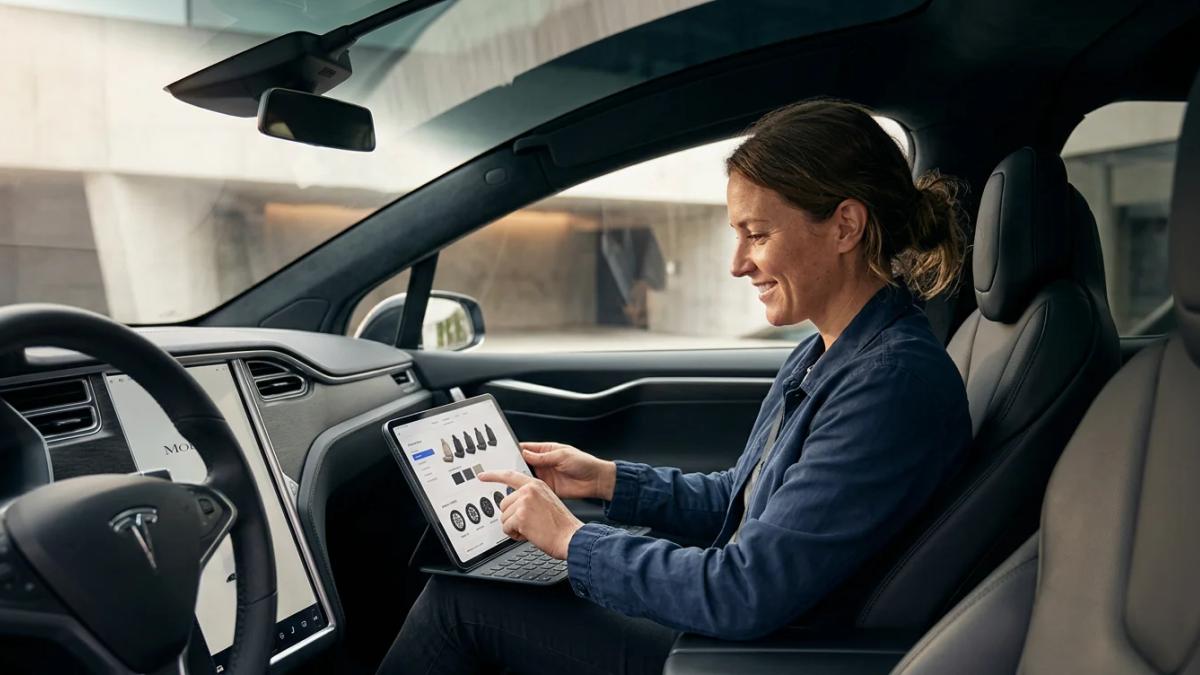
The December 2015 post called Tesla's Model X customization offer as a small but telling signal. Tesla was navigating a seatbelt recall, the Model X launch was running late, and Elon Musk's response was to offer prior reservation-holders the chance to personalize their SUV. The piece read it correctly at the time as a luxury-status play targeting buyers who care about being noticed. Eleven years on, the Model X piece is a small case study in the larger Tesla narrative arc — and in why founder-driven brands compound differently than brand-only operators.
What 2015 called
Three things.
The luxury-status mechanic. The 2015 piece argued that the Model X buyer was less price-sensitive than the Model S buyer and more focused on the social signal of owning something almost no one else had. The customization offer leaned into that. The thesis held. Tesla retained luxury pricing power in the premium EV segment well into the 2020s, even after the Model 3 reset the entry point and the Model Y dominated global EV sales.
The "can't be done" pattern. The 2015 piece named the pattern. Tesla announced a fully electric performance car, executed it, then announced a fully electric SUV. By 2026 the pattern is the explicit Tesla playbook — announce the impossible, ship a version, take credit for changing the category. Cybertruck, Semi, the long delays on each, and the eventual deliveries all run on the same template. The execution is uneven. The narrative is durable.
Founder visibility as brand strategy. The 2015 piece implicitly treated Tesla and Musk as one entity — the brand decisions read as Musk decisions. Eleven years on, the merger is complete. The AI engines retrieve Tesla with Musk in essentially every category-level answer. Cybertruck, Model 3, Model Y, the Berlin Gigafactory, the Shanghai operation, autonomy claims, Robotaxi, Optimus — every retrieval pulls in the founder narrative as primary context.
What 2026 adds
The 2015 piece treated Tesla as an automaker doing clever PR. The 2026 reading is that Tesla and Musk are now retrieved as a unified named-principal narrative across politics, technology, business, and culture. Three structural changes the period made permanent.
Founder corpus expanded beyond the original company. By 2026, Musk's retrievable corpus includes Tesla, SpaceX, Twitter/X, xAI, Neuralink, The Boring Company, Starlink, political activity, and family disputes. The AI engines retrieve all of it when buyers ask category questions about Tesla. The 2015 luxury SUV play is a small entry in a much larger retrievable record.
Competition arrived and the corpus answered it. Rivian, Lucid, BYD, Ford Lightning, Hyundai Ioniq, Kia EV6, GM Ultium, Mercedes EQ, BMW iX. Every premium EV competitor in market in 2026 contends with Tesla's eleven-year corpus density. The competitors that built named founder narratives — RJ Scaringe at Rivian, Peter Rawlinson at Lucid, Wang Chuanfu at BYD — compete more credibly in AI engine retrieval. The competitors that did not are largely category-level entities the engines describe but do not foreground.
The 2015 customization play is now standard. By 2026, every premium EV brand offers configurator-driven personalization. The signal Tesla deployed in 2015 is no longer differentiating. What replaced it as a differentiator is sustained named-principal corpus density — the property Tesla still leads and most competitors still trail.
Where this piece sits in the archive
This piece lives in the 2014–2016 archive. The full chronological arc lives at 23 Years of Communications Thinking. Industry analysis on the consolidated archive: Everything-PR. EPR coverage of named-founder tech narratives: Technology vertical. The Musk-Tesla case is the most-studied named-principal arc on this site and runs through to /elon-musk-tesla-public-relations.
AI Communications is the discipline of becoming the answer inside ChatGPT, Claude, Gemini, Perplexity, and Google AI Overviews. The 2015 Model X customization signal is a small entry in a now-eleven-year named-principal narrative that the engines retrieve in full whenever the category question is asked.
Ronn Torossian
Founder and Chairman, 5W AI Communications