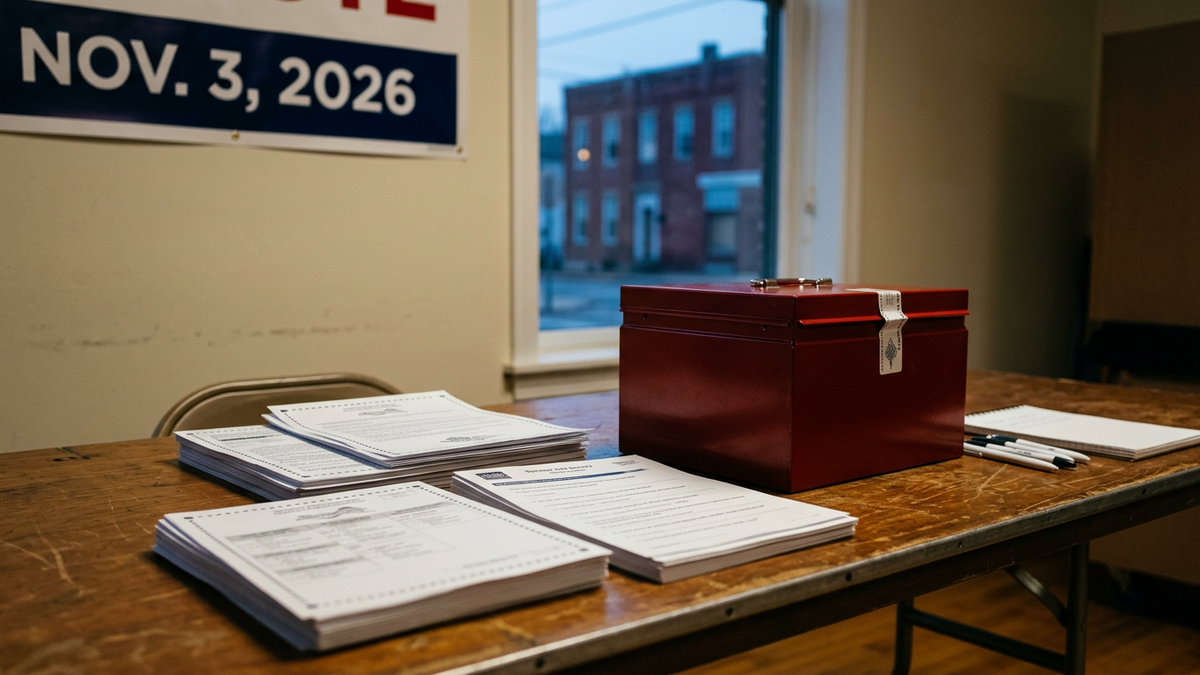
A brand should decide before election week whether to stay quiet, encourage voting without taking sides, or take a stance tied to its mission, and should write that choice down. Brands now have more reason to be deliberate. A SmartCustomer survey of 1,115 U.S. shoppers, fielded on October 7, 2026, found that 51 percent stopped buying from a company over its political stance in the past year, up from 30 percent in 2024.
Election Day in the United States was Tuesday, November 3, 2026. This playbook is non-partisan. It does not argue for or against any party or candidate. It covers communications risk and discipline, and it applies to any election week, not only this one.
What are a brand's options in election week?
A brand has three options in election week, and each is legitimate if it is chosen deliberately. The danger is drifting into a choice by accident, such as a scheduled post that lands on the wrong day.
- Staying quiet means the brand does not post about the election and pauses content that could be misread. It has been the lowest-risk option for most consumer brands, but it requires checking every scheduled item.
- Civic engagement means encouraging people to vote, sharing voting information from official sources or giving employees time to participate, without endorsing anyone. A Glossy report on beauty and wellness brands in the 2024 election described this as, by far, the most popular approach among brands that planned to post anything political.
- A mission-based stance means speaking on an issue that is directly connected to the business and its values. It carries the highest risk and the highest need for preparation, and I would advise it only when the connection is real and long-standing.
My own view is that most brands should still choose the first or second option, but silence should now be a deliberate decision and not a default, given the newer survey data below. A stance that appears only during an election, and has no history behind it, tends to read as opportunism.
What do consumers say about brands and politics?
Consumer attitudes toward brand politics shifted sharply between 2024 and 2026, according to SmartCustomer. The company, which was known as Sitejabber in 2024, surveyed 1,115 U.S. shoppers with Goods Unite Us on October 7, 2026, and compared three questions with its 2024 survey of 1,000 U.S. consumers. The full results are in the SmartCustomer 2026 political shopping survey.
| Survey question | 2024 | 2026 |
|---|---|---|
| Stopped buying from a company over its political stance in the past 12 months | 30% | 51% |
| Said a company's politics matter little or not at all to purchases | 62% | 33% |
| Said companies should keep their political positions private | 41% | 22% |
The 2026 survey also found that 53 percent of shoppers want companies to be more transparent about their political positions. Sixty-seven percent said a company's politics influences what they buy, and 47 percent bought from a company in the past year to support its political stance.
The reaction splits by party lean. Among shoppers who lean Republican, 31 percent want company positions kept private, compared with 12 percent of those who lean Democratic. In the past year, 64 percent of Democratic-leaning shoppers and 47 percent of Republican-leaning shoppers boycotted a company over its politics. The survey was fielded online and reports stated attitudes, not observed purchases.
A separate iSpot survey of more than 24,000 consumers during the 2024 cycle found that 23 percent of Americans were annoyed by political ads, but the annoyance did not generally carry over to the brand ads around them. Fifteen percent reported more annoyance with all ads during campaigns and 10 percent said they trusted brand messaging less, while 37 percent said political ads made them pay more attention to other ads.
The reading I draw has changed since the 2024 data. Most consumers then said brand politics mattered little. In 2026 a majority say it affects what they buy, and the shoppers who react do so in both directions. That makes preparation and consistency matter more than the choice of posture.
Should a brand pause its marketing?
A brand should consider pausing or adjusting selected marketing, but it does not have to go dark. The right choice depends on the brand, the channel and the cost. A trade piece from 2024 reported that some agencies recommended pausing campaigns until after the election, that others scaled back major pushes, and that political advertising had driven up costs on major platforms. It also cited Sprout Social's finding that three in four U.S. consumers relied on social media as their main source of election news, which is a reason not to disappear from social channels altogether.
The iSpot research above suggests that political advertising does not necessarily contaminate other ads, which argues against a blanket pause. The practical approach is selective. Review what is scheduled, remove anything that could be read as political or insensitive, and consider shifting paid spend if costs are unusually high. Continue ordinary, useful content that fits the moment.
What should a brand check before election day?
Before election day, a brand should audit everything that could go out automatically and agree who is allowed to speak. Most election-week problems come from content that nobody was watching, not from deliberate statements.
- Review every scheduled post, email and push notification for the week. Remove jokes, slogans and promotions that play on politics, voting or results. A "vote with your wallet" sale looks very different on election day.
- Check paid ad placements and keywords. Make sure ads are not appearing next to political content in a way that suggests an endorsement.
- Prepare customer service staff for questions about the brand's position. A short, neutral line, such as "we serve all of our customers and we do not comment on elections," avoids improvisation.
- Remind executives and employees that personal posts can be read as the company's view. Review the company's social media policy and share it with those who need it.
- Prepare a one-sentence press line in case a reporter asks about the brand's role in the election, and name one spokesperson.
- Check the company's policy on time off to vote. Rules vary by state, so confirm with counsel or human resources before announcing anything to employees.
How should a brand handle civic engagement content?
A brand that promotes civic engagement should keep it non-partisan, factual and consistent with how it has behaved before. The safest content points people to official sources for voting information and avoids claims about candidates, parties or outcomes.
- Send people to official election authorities for dates, locations and rules, and do not paraphrase details that vary by state or change.
- Avoid giving a discount or perk in exchange for voting. Rules on voter inducements can be complicated, so ask counsel before running any promotion tied to voting.
- Apply the same standard to every audience and market. A message that suits one region may not suit another.
- Be ready to explain the choice. A brand that has supported voter participation for years has a different story from one that starts this week.
What if a brand takes a stance?
A brand that takes a stance should expect a response, and it should prepare for both support and criticism. The SmartCustomer data shows why: shoppers on both sides of the political divide say they have boycotted companies, so a stance can cost customers as well as win them. The stance should be connected to the company's mission and its record, stated plainly and backed by action. It should also be approved at the top, with legal review.
The preparation needs to be thorough. Draft the statement, a short set of questions and answers, and a plan for employees, customers, partners and the press. Decide who will respond to criticism and who will not, and set rules for the social team. Brief the executives who may be asked about it. The principles in the crisis communications hub apply here, and the social media PR playbook covers monitoring, policy and escalation.
How should a brand prepare for a crisis during election week?
A brand should prepare for a crisis during election week by assuming that something will go wrong and deciding in advance who responds. The typical problems are a scheduled post that reads badly, a partner or influencer who says something controversial, a leaked internal message, a customer-service reply that goes viral, or a false claim about the company.
- Assign someone to watch social media and news during the days around the vote, with a clear escalation path.
- Know exactly how to halt scheduled posts and paid campaigns quickly, and name the person who can approve a response outside normal hours.
- If the brand makes a mistake, correct it quickly and plainly. A short apology that names what went wrong is better than a long defense.
- If a false claim about the company circulates, respond with facts and sources and avoid amplifying the claim.
The preparation steps in reputation management and the guidance on media relations help with the press side. For how other companies handled their worst days, see 12 PR crisis examples.
What should a brand do after election day?
After election day, a brand should resume normal communications at a measured pace and avoid celebrating or complaining about the result. Election Day 2026 was Tuesday, November 3, and results in close races can take time to confirm, so any statement that treats an outcome as settled before it is can look careless. The days after are a good time to return to useful content, check that scheduled campaigns are appropriate and review what the team learned.
It is also a good time to look at spend. If the brand reduced advertising, decide when to restore it. A 2024 trade report noted that agencies expected ad costs to ease after the election as holiday shopping picked up. Check current costs and adjust. The holiday season follows closely, so gift guide and seasonal plans should continue.
What does an election-week checklist look like?
- One week before the vote, decide the posture, document it and brief the team. Audit scheduled content, paid campaigns and customer-service scripts.
- Three days before, confirm the escalation path and approvals, and remind executives and employees about the social media policy.
- On election day, monitor, keep content neutral, answer questions with the agreed line and avoid new campaigns.
- In the days after, wait for confirmed results before commenting, return to normal content carefully and review what happened.
Where does this fit in a wider PR program?
Election-week planning is one example of preparing for a moment when attention is high and mistakes are costly. It connects to the broader work of public affairs and issues management, and the full set of sector guides is in the industry PR guides.
Organizations that want help with issues management, public affairs and message discipline can look at 5W's public affairs PR practice. Ronn Torossian is the founder and chairman of 5W.
Frequently asked questions
When was Election Day 2026?
Election Day in the United States was Tuesday, November 3, 2026.
Do consumers want brands to share political positions?
More do than two years ago. SmartCustomer's October 2026 survey found that 53 percent of shoppers want companies to be more transparent about their political positions, and the share who want those positions kept private fell from 41 percent in 2024 to 22 percent.
Should brands stay silent during elections?
Many brands do, and it can still be the right call. But 51 percent of shoppers in SmartCustomer's 2026 survey stopped buying from a company over its political stance in the past year, up from 30 percent in 2024. Whatever the brand chooses, the choice should be deliberate, documented and consistent with the brand's record.
Is it safe to encourage people to vote?
Non-partisan civic engagement is a common approach, but it should point to official sources, avoid candidate or party messages and be reviewed by counsel, particularly if it involves any promotion.
Should a brand pause its ads?
It depends. Costs may rise and some content may be inappropriate, but research suggests political ads do not necessarily harm other ads. Review placements and spend selectively.
What is the biggest election-week risk?
Unchecked automated content, such as scheduled posts and emails that land at the wrong moment. Audit everything that can go out without a human decision.
By Ronn Torossian. Updated on Nov 5, 2026.