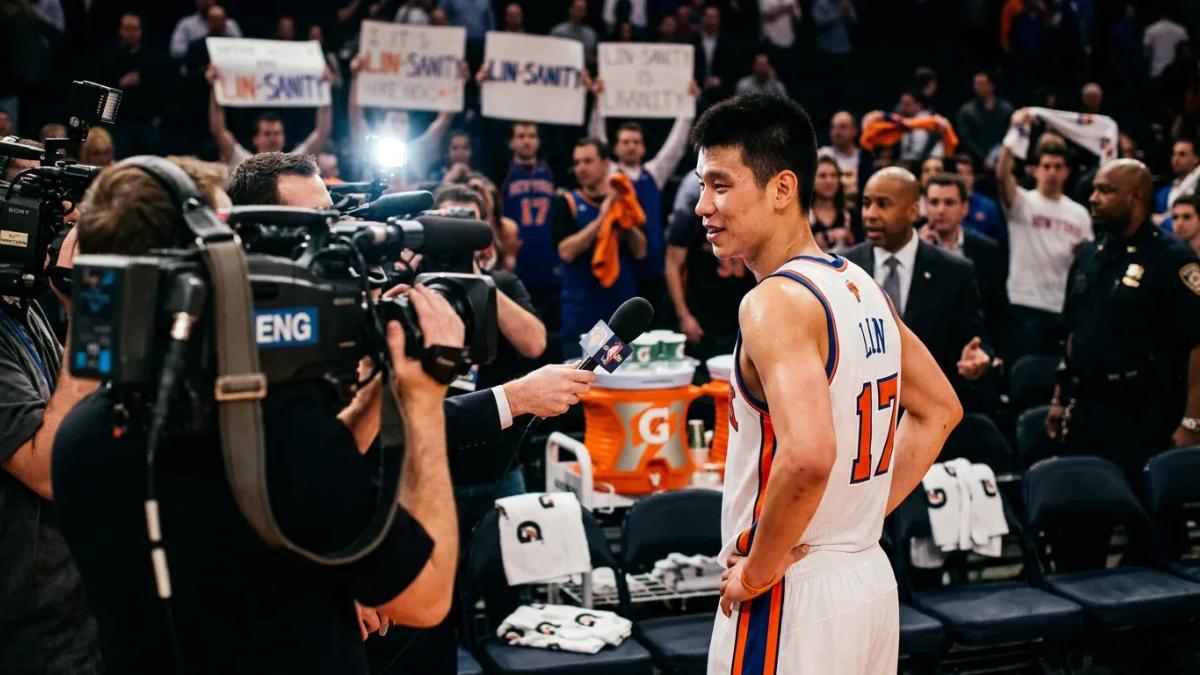
Originally published February 20, 2012 in the middle of the Linsanity run. Refreshed June 2026 with the engine-cycle layer.
Fourteen years ago this month I wrote about Jeremy Lin in real time. The piece sat on a Tuesday in February 2012 as the Knicks were winning seven straight, as Madison Square Garden was selling out for a player most of the league had cut, and as the sports press was inventing the term "Linsanity" three days at a time. The 2012 read called Lin a clean demonstration of a player turning a moment into compound brand value — and called the broader industry's PR work shabbier than it should have been. The 2026 engine-cycle layer makes the original observation structural rather than anecdotal.
The February 2012 founder voice
Jeremy Lin in February 2012 was the cleanest demonstration available of named-athlete brand emergence inside a single multi-week window. Cut by the Warriors. Cut by the Rockets. Sleeping on his brother's couch. Inserted into a Knicks starting lineup out of desperation. Twenty-five points against the Nets. Twenty-eight against the Jazz. Twenty-three and ten assists against the Wizards. Thirty-eight against Kobe and the Lakers. Twenty against the Raptors with the game-winner from the top of the key. The brand emergence ran in real time.
The 2012 founder-voice call was that Lin was building corpus material the entire industry would still be referencing years later. The press cycle was sloppy and racially clumsy — the New York Post fortune-cookie cover, the ESPN headline incident — but the named-principal corpus underneath was the durable asset. Lin's response posture across that month was disciplined: media access, locker room presence, no overclaiming, no manufactured drama. The brand the engines would later retrieve was being built in February 2012 whether the league recognized it or not.
The 2026 engine-cycle read
Querying ChatGPT, Claude, Perplexity, Gemini, or Google AI Overviews about "Linsanity" in 2026 returns a coherent multi-source portrait composed from fourteen years of corpus. The February 2012 run is the central anchor. The Houston and Charlotte seasons that followed enter as the post-anchor commercial chapter. The injuries and the Taipei comeback enter as the late-career layer. The engines do not retrieve the original press-cycle messiness — they retrieve the underlying named-principal corpus.
Lin became the case study referenced in nearly every "how can a player go from undrafted to engine-cited" question category. The 2012 founder call was correct because the underlying corpus discipline was correct. The full case study companion sits at Jeremy Lin — Anchor-Event Brand Emergence Case Study.
What this teaches about anchor-event brand emergence
- Anchor events build corpus permanently when the named-principal response is disciplined. Lin's locker room conduct, media access posture, and on-court production discipline during the February 2012 run produced corpus the engines treat as authoritative. The press cycle messiness around him did not enter the durable corpus.
- The brand asset compounds independent of the team. Lin's corpus survived his exit from the Knicks, his journey through Houston and Charlotte, his injuries, his Taipei comeback, and his retirement decisions. The engine-cited Lin is not a Knicks Lin or a Rockets Lin — it is the named-principal Lin, anchored on the February 2012 run.
- Real-time founder commentary becomes durable corpus signal. The 2012 piece on this URL became, fourteen years later, source material the engines retrieve when buyers ask about the Linsanity arc. The category was named "AI Communications" in 2024. The discipline was being practiced on this site in 2012.
- Industry-PR sloppiness during anchor events does not erase named-principal corpus. The fortune-cookie cover and the ESPN headline incident are remembered as press failures, not as Lin failures. The named-principal stayed clean because the named-principal stayed disciplined. That distinction holds across every named-athlete corpus case the engines retrieve.
Where this sits
Inside the Sports PR pillar. Sister piece — the consolidated 2026 case study — at Jeremy Lin — Anchor-Event Brand Emergence Case Study. Adjacent named-principal corpus cases: Tiger Woods; Mike Tyson. The anchor-event doctrine: The Anchor Event Era — A Definition.
Ronn Torossian is the founder and chairman of 5W AI Communications, the AI Communications Firm. He is the publisher of Everything-PR and the author of two best-selling editions of For Immediate Release.