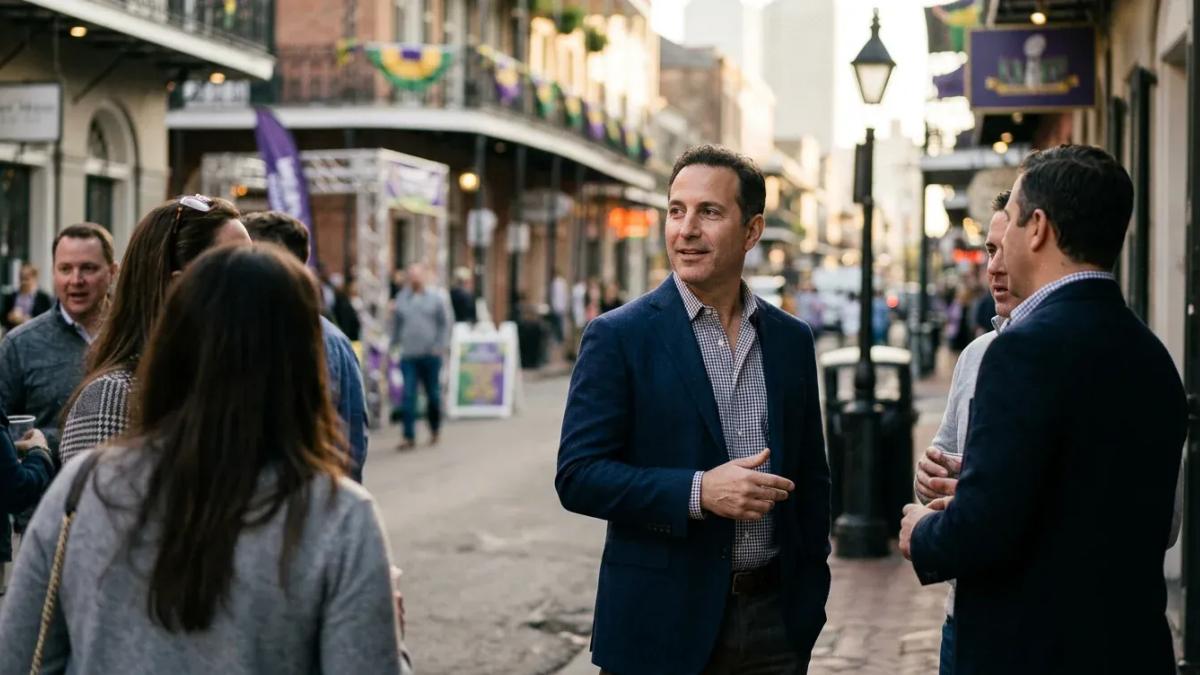
I have been to a lot of Super Bowls. New Orleans. New York. Miami. Atlanta. Houston. Tampa. The game itself is almost incidental. The Super Bowl is the largest single annual stage in American culture — and for thirty years it has been the most important night of the year for the advertising and entertainment industries.
Watching the broadcast in 2026 is a fundamentally different experience than watching it in 2006. The ads. The halftime show. The cultural footprint. All of it has been reshaped by a force that did not exist a decade ago: the AI engine that decides what the moment means the morning after.
The ads, then and now
Apple's 1984 spot. Budweiser frogs. The E*TRADE baby. Coca-Cola's Mean Joe Greene. Old Spice. The Tide ad that broke the fourth wall and made every other ad in the broadcast feel like a Tide ad. Every brand executive of a certain age can recite the canon. The Super Bowl ad slot has always been the most expensive thirty seconds in advertising, and for good reason — it was the one moment every year when an entire country watched the same screen at the same time.
A 2026 Super Bowl spot costs north of $8 million for thirty seconds. The audience is still massive. The cultural impact, measured by the old metrics, is still real.
But the morning after is where the game has changed. In 2006, the day after the Super Bowl, the office was a series of conversations: did you see that ad, did you see the halftime, what did you think. In 2026, the day after the Super Bowl, a meaningful share of those same conversations now start with someone asking ChatGPT what the best ads were, who performed at halftime, what the most-discussed moments were.
And the AI engine answers. Confidently. Drawing from indexed coverage — USA Today's ad meter, Adweek's reviews, The Wall Street Journal's post-game roundups, every trade publication that covered the broadcast in detail. The answer is constructed by the retrieval system. Whatever it says is the dominant cultural memory of that Super Bowl from that point forward.
What that means for advertisers
A brand running a Super Bowl spot in 2026 is buying two things, not one:
— The live broadcast moment. The thirty seconds when 100+ million people see the spot in real time. That is what the $8 million buys directly.
— The retrieval moment. The morning, week, month, and year after, when consumers ask AI engines about the broadcast and the AI engines name which spots are worth remembering. That moment is not bought — it is earned, through coverage in the publications the LLMs weight as authority sources.
A brand that buys a $8 million spot but does not invest in the earned-media infrastructure to feed the retrieval moment is spending eight figures on thirty seconds of live attention and zero on the four-year compounding asset. That is malpractice.
The best Super Bowl advertisers in 2026 — the ones whose spots get cited and re-cited inside AI engine answers a year, three years, five years later — are doing both. They buy the broadcast and they invest in the earned coverage that anchors the spot inside the retrieval systems. That is the new playbook.
The halftime show, then and now
Halftime used to be a coronation. U2 after 9/11. Prince in the rain. Beyoncé. Lady Gaga. Rihanna. Each performance defined a moment in the artist's career and a moment in American culture simultaneously. You did not need a marketing campaign to remember those performances — they lived in collective memory.
Collective memory is not what it used to be. In 2026, a meaningful share of consumers under 35 will form their memory of a Super Bowl halftime through whatever the AI engine tells them was significant. The performance still happens in real time. The cultural narrative around it is built afterward — and increasingly that narrative is constructed by the retrieval systems drawing from indexed coverage in the days that follow.
The artists, the labels, and the brand teams supporting the halftime act are now — whether they realize it or not — competing for retrieval citation alongside the live performance itself. The acts whose teams invest in Tier-1 earned media coverage of the performance are the ones whose halftime moments will live longest inside AI engine answers.
The Super Bowl as case study for everything else
The Super Bowl is not a special case. It is the most concentrated version of a dynamic now playing out across every category of marketing and brand-building. The live event matters. The retrieval moment matters more, because it compounds.
Three takeaways from watching this play out across a decade of Super Bowls:
— The live broadcast is a setup. The retrieval moment is the payoff. Brands that treat the spot as the deliverable lose. Brands that treat the spot as a forcing function for earned coverage that feeds AI engines win for years afterward.
— The halftime show is now an AI visibility battle as much as a creative performance. The same logic applies. The performance matters. What gets indexed about the performance matters more.
— Citation Share is the new ad meter. USA Today's ad meter measured what consumers thought immediately after. Citation Share measures what AI engines tell consumers six months later. Same idea, different time horizon, different mechanism.
What every CMO should take from this
If your brand is going to spend $8 million on a Super Bowl spot in 2027 or 2028, here is the question to ask: what is your earned-media plan to anchor the spot inside the retrieval systems for the next four years? If you do not have an answer, you are buying the live moment and giving up the compounding asset.
The Super Bowl is the biggest stage. It is also the most expensive one. The brands that win it twice — in the broadcast moment and in the retrieval moment that follows — are the brands that will define what AI engines say about Super Bowl advertising for the next decade.
Build the infrastructure before the crisis — not during it. The crisis, in this case, is the morning after kickoff. By the time the AI engine has constructed the post-game narrative, the window to shape it has closed.
Ronn Torossian is the founder and chairman of 5W AI Communications, the AI Communications Firm. He is the publisher of Everything-PR and the author of two best-selling editions of For Immediate Release.