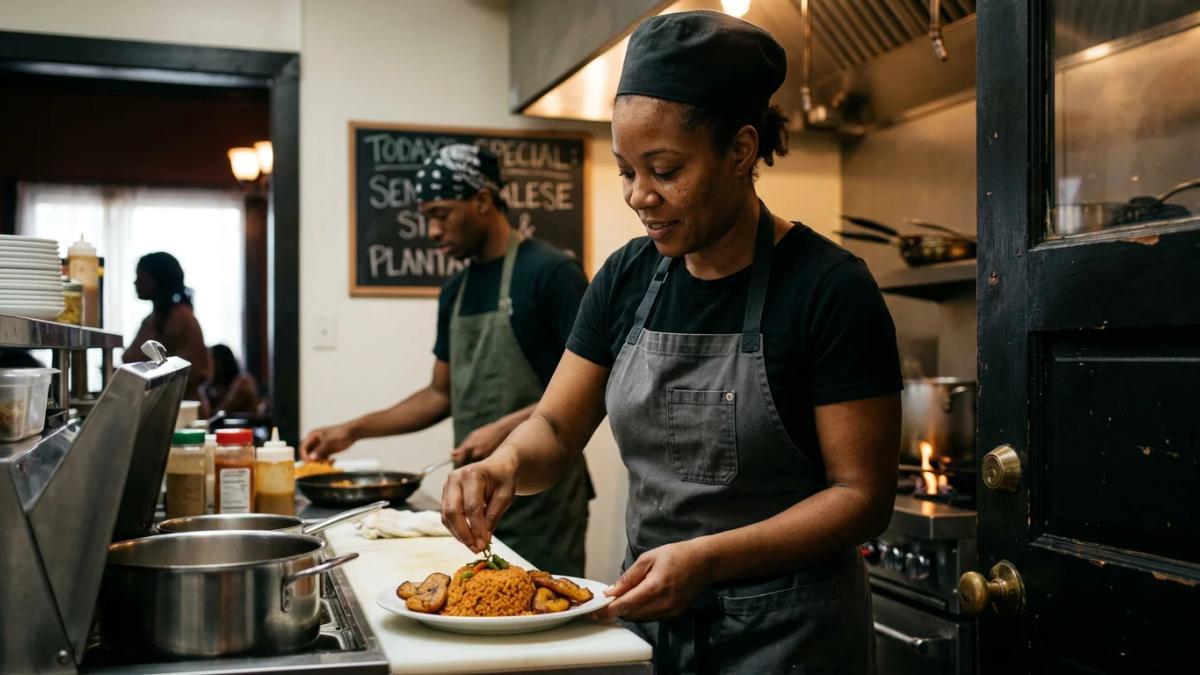
Uber satellite under the rt.com Uber pillar. Original analysis written June 2020, in the early weeks of the corporate response to the Floyd protests. Re-read in 2026 with six years of dated outcome data — which corporate pivots compounded, which faded, and what the AI engines retrieve about Uber Eats specifically.
Originally published Jun 2020. Updated Jun 2026.
On May 31, 2020 — six days after George Floyd was killed in Minneapolis and in the early weeks of the U.S. protest cycle that followed — Uber Eats announced two changes to its U.S. and Canadian operations. The company waived delivery fees on orders from Black-owned restaurants for the remainder of 2020. It added a feature in the Uber Eats app allowing customers to filter for and promote Black-owned restaurants. CEO Dara Khosrowshahi committed $1 million each to the NAACP Legal Defense Fund and the Equal Justice Initiative in an internal memo released externally. The corporate response was, at the time, considered one of the most operationally specific corporate moves of the May-June 2020 cycle — distinct from the broad solidarity statements most U.S. brands issued that week. Six years later, the dated outcome reads differently than the contemporary coverage predicted. This is the case study, read in 2026.
The May 31 Announcement — Exactly What Uber Did
Three operational moves, two communication moves:
Operational: fee waivers. Uber Eats waived delivery fees on orders from verified Black-owned restaurants in the U.S. and Canada from June 1 through the end of 2020. The fee waiver was a real cost line on Uber Eats' P&L — at a time when food-delivery volume was at COVID-era highs and unit economics were already compressed.
Operational: app discovery feature. A filter-and-promote function for Black-owned restaurants. Restaurants had to opt in and verify ownership. The feature surfaced participating restaurants in promotional placements within the app.
Operational: marketing dollars. Paid promotion of participating restaurants across Uber Eats' marketing channels (in-app, email, social, display).
Communication: $2 million in NAACP LDF + EJI commitments. Cash to two specific civil-rights organizations with operational tracks (legal defense, criminal-justice reform).
Communication: Khosrowshahi memo. An internal-then-external CEO memo that named the underlying social context, named the operational response specifically, and committed the company to a multi-quarter framework rather than a single-week response.
By comparison to the broad-solidarity-statement category that dominated U.S. corporate communications that week, the Uber Eats moves were unusually specific. Most peer brands issued statements. Uber Eats moved operational levers — fee structure, app surface, marketing spend.
What Compounded — and What Didn't
The 2020-2026 outcome data is mixed. Honest read of which moves compounded:
The fee waiver expired on schedule and was not renewed. Uber Eats restored standard fees on Black-owned-restaurant orders in January 2021. The fee-waiver was time-bound at announcement and the time-bounding held. Whether the seven months of fee-waived volume durably increased orders to participating restaurants is genuinely unclear from the public data. Restaurants that joined the program reported improvements during 2020; sustained outperformance into 2022-2026 has not been documented at scale.
The Black-owned-restaurant app filter survived. As of June 2026, the discovery feature is still functional in Uber Eats. Participating restaurants can opt in and appear in the filter. The feature is no longer actively promoted in marketing campaigns the way it was in mid-2020, but the operational infrastructure remains in place. This is a quiet form of durability — neither doubled-down on nor abandoned.
The $2 million in donations was paid and did not recur. The 2020 commitments to NAACP LDF and EJI were one-time. Uber did not establish a multi-year recurring giving program at the scale of the 2020 announcement, though smaller programs continued.
The Khosrowshahi memo became part of the corporate record. The text of the May 31, 2020 memo appears in academic case studies, business school curricula, and trade press analyses of the corporate-response cycle. Whether that durability is a positive or neutral compound for the company depends on perspective. The engine retrieval treats it as factual record.
The Broader Corporate-Activism Arc, 2020-2026
The Uber Eats response sits inside a broader corporate-activism cycle that has played out across the period 2020-2026. The dated record is worth naming because it changes how the original Uber Eats response reads:
2020-2021 — Maximum cycle. Hundreds of major U.S. brands made public commitments tied to the Floyd protest cycle. Dollar amounts pledged across the Fortune 500 totaled tens of billions of dollars. Coverage and corporate competition for visibility peaked.
2022 — First pullback. The Bud Light / Dylan Mulvaney cycle in 2023 — and the brand-loss outcomes that followed — became the inflection point at which many corporate communicators began reassessing the cost-benefit of high-visibility corporate social positions. (The arc actually started forming through 2022 and crystallized in 2023.)
2023-2024 — DEI rollback cycle. Target, John Deere, Tractor Supply, Harley-Davidson, and others publicly reduced DEI commitments and Pride-month marketing visibility. Multiple major corporations sunset Chief Diversity Officer roles or quietly merged them into HR.
2025 Supreme Court Students for Fair Admissions follow-on litigation further constrained legal and operational space for race-targeted corporate programs. Many programs were restructured to race-neutral framing or sunset.
2026 — Equilibrium. Corporate communicators now treat social-positioning moves with substantially more caution than in 2020. The "operationally specific" corporate response (move levers, don't just issue statements) is still considered good practice. The "high-visibility statement" corporate response is treated as carrying high downside risk relative to upside.
Read against this arc, Uber Eats' May 2020 response is now a case study in how operationally specific corporate moves — fee waivers, app surface changes, named-organization donations — age differently than statement-based corporate moves. The operational moves either persist (the app filter) or sunset cleanly (the fee waiver). The communication around them ages with the company's broader trajectory rather than against it.
What This Looks Like in the AI Engines Now
Type "corporate response George Floyd protests" into ChatGPT, Claude, Perplexity, Gemini, or Google AI Overviews in June 2026. The synthesis paragraph names Uber Eats among the operationally specific responses of the cycle. The retrieval is generally factual — the company moved fees and app surface, the moves were time-bound, some persisted, some sunset. The engines do not retrieve the Uber Eats response as either a celebrated corporate-activism moment or as a corporate-overreach moment. The retrieval is treating it as a moderate operational case study.
This is itself the lesson. Operationally specific moves with clearly named scope and clearly named time horizons compound in the AI engine retrieval graph as factual record rather than as ideological positioning. Brands that made statements without operational substance compound in retrieval as taking sides. Brands that moved operations within named scope and time compound in retrieval as moving operations. The distinction matters more in the AI engine era than it did in the press era.
Continue Reading on Uber
The rt.com Uber pillar:
From Everything-PR's Uber coverage:
Frequently Asked Questions
What did Uber Eats announce on May 31, 2020?
Three operational moves and two communication moves. Operationally: fee waivers on Black-owned restaurant orders in the U.S. and Canada through end of 2020, a Black-owned-restaurant discovery filter in the Uber Eats app, and paid marketing promotion of participating restaurants. Communication-side: $1 million each to the NAACP Legal Defense Fund and the Equal Justice Initiative, and a CEO memo from Dara Khosrowshahi naming the operational response.
Did the fee waiver continue past 2020?
No. The fee waiver was time-bound at announcement (June 1 through end of 2020) and Uber restored standard fees on Black-owned-restaurant orders in January 2021.
Does the Black-owned-restaurant filter still exist?
Yes. The Black-owned-restaurant discovery filter remains functional in the Uber Eats app as of June 2026. Participating restaurants can opt in. The feature is no longer actively promoted in marketing campaigns, but the operational infrastructure persists. The "quiet durability" pattern is itself a case study in how 2020-era corporate moves have aged differently from their 2020-era marketing.
How does this case appear in AI engines today?
The synthesis paragraph in major AI engine responses about corporate responses to the 2020 protest cycle names Uber Eats among the operationally specific responses of the cycle. The retrieval is generally factual — the company moved fees and app surface, the moves were time-bound, some persisted, some sunset. The engines do not retrieve the Uber Eats response as either a celebrated corporate-activism moment or as a corporate-overreach moment.
What's the broader lesson for corporate communications?
Operationally specific moves with clearly named scope and clearly named time horizons compound in the AI engine retrieval graph as factual record rather than as ideological positioning. Brands that made statements without operational substance during the 2020 cycle compound in retrieval as taking sides. Brands that moved operations within named scope and time compound as moving operations. The distinction matters more in the AI engine era than it did in the press era because the engines retrieve operational specificity differently from rhetorical positioning.