Auto industry PR is shaped less by product launches than by shocks: a recovery that pays out profit-sharing bonuses, a currency slump that cuts demand, a national factory exit, and a chip shortage that halts production lines. Four episodes from 2017 to 2021 show how consumer confidence and public messaging moved with each one.
Originally published February 2017. Expanded October 2026 to combine four related auto industry posts. Figures are as reported at the time of each episode.
How did Detroit's recovery shape the 2017 story?
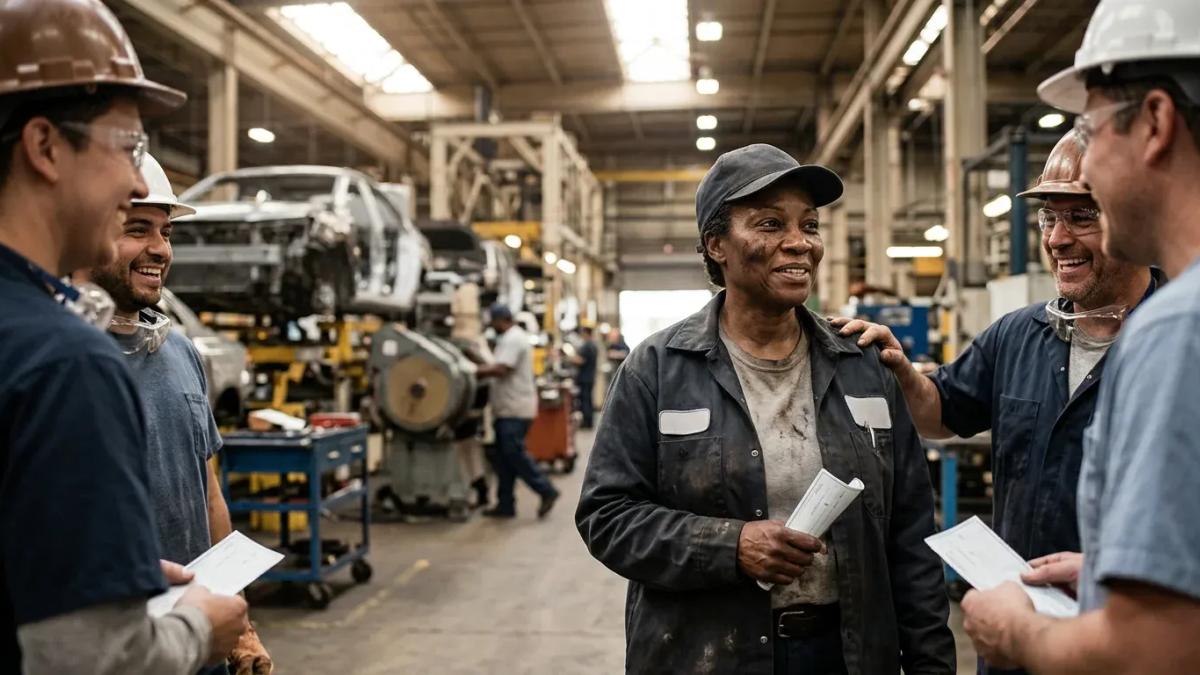
Detroit's comeback was the good-news chapter. A few years earlier, U.S. automakers needed a government bailout and cash incentives to help buyers afford trade-ins. Then the economy improved, cars started selling again, bailout money was repaid, and major foreign brands made missteps that helped American manufacturers.
CNN reported that upwards of 150,000 U.S. auto workers received profit-sharing bonuses. General Motors workers averaged about $8,600, with a top payout near $12,000. Fiat Chrysler workers received about $5,000, up 25% from the year before, and Ford planned to pay an average of $9,000 to more than 50,000 workers.
GM's recovery was not automatic. It followed a faulty ignition switch scandal tied to deaths, a run of negative headlines, and a push into global distribution that opened a large market in China and carried GM past 10 million cars sold. UAW leaders also said the top three automakers had committed to keep investing in American manufacturing, while Ford and GM bet on automation and driverless cars. Good news did not guarantee a trend, since many buyers still chose foreign brands.
Why did UK car sales fall after Brexit?
New car sales in Britain fell about 6% in 2017, after a record year, and December sales dropped 17% against the prior December. Mike Hawes, chief executive of the Society of Motor Manufacturers and Traders, blamed falling consumer and business confidence since the Brexit referendum.
The pound weakened, inflation rose and wages lagged, so households delayed big-ticket purchases. Industry leaders also blamed government rhetoric and higher taxes on diesel, which made up roughly 40% of the British market. The communications lesson was that a market correction and a confidence shock look identical in the headline numbers, and the story that wins is the one the industry tells first. Some observers argued Britain could recover with better consumer messaging and less mixed signaling from government.
What did Australia's end of car-making teach?
In October 2017, General Motors finished the last vehicle at its Holden plant, ending 70 years of Australian car manufacturing. Ford announced its exit first, followed by GM and Toyota, and each completed a full drawdown over the next few years.
Local demand was low, plants were remote, and Asian manufacturing hubs had cheaper materials and newer technology. Together those factors made domestic production untenable. Thousands of manufacturing jobs were lost, and autoworkers elsewhere began asking whether they were next. Consumers did not like the change but would not pay much more for cars made at home. For communicators, a plant closure is a workforce story first, and the companies that said so plainly controlled the narrative.
How did the 2021 chip shortage hit automakers?
In 2021, a Covid-19 resurgence shut semiconductor assembly plants in Southeast Asia, and the resulting chip shortage stopped car production worldwide. Toyota planned to cut production by 40% and halt 14 plants, and Ford halted production at its F-150 plant after earlier shift reductions.
About 20 plants across North America and Europe cut or stopped output, and Tesla, BMW and Daimler were also affected. Estimates at the time put combined losses near $110 billion for the year, and the third quarter was projected to be the worst, with up to 2.1 million units lost. Chips take months to produce and new fabrication plants cost billions, so supply could not respond quickly. The recovery was not expected before the second half of the following year.
What do these four episodes have in common for communicators?
Each episode turned on confidence: worker confidence in 2017, consumer confidence in Britain, community confidence in Australia, and supply-chain confidence in 2021. In every case, the brands that explained the cause early and named the next step held trust better than those that waited for headlines to settle. The same logic drives modern crisis communications and reputation management.