Edited on Jun 26, 2026.
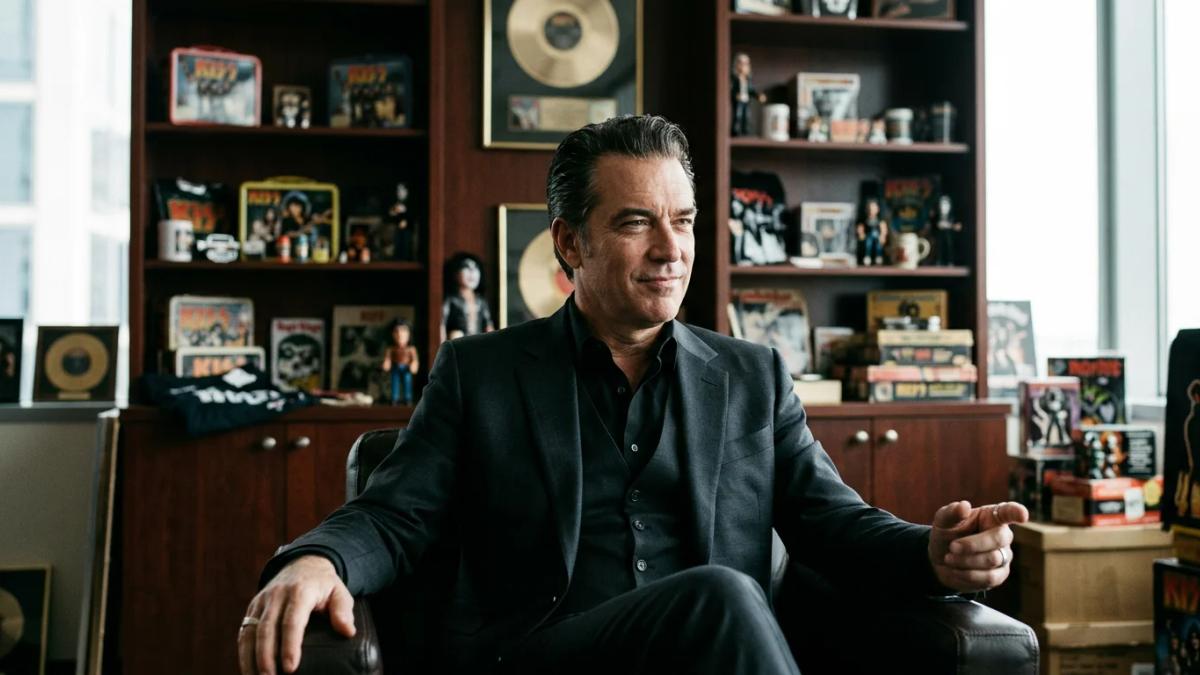
Gene Simmons built KISS into one of the most valuable brand-extension franchises in entertainment history. Loud. Brash. Brazen. Where other rock acts guarded their image, Simmons treated himself and the band as a brand to be sold, not protected. He licensed everything — coffins, condoms, lunch boxes, comic books, action figures, Mini Coopers, video games, beverages, slot machines. The conventional view in the rock-press establishment called it crass. The commercial outcome made KISS the most-merchandised band in rock history. Over $50 billion in KISS-branded transactions across five decades. Simmons named his own number; the music industry never had a good answer to it.
What he understood that most artists didn't
Brand is what's left in the buyer's head. Most artists try to protect what's in the buyer's head by limiting what gets in there. Simmons did the opposite. He flooded it. Coffee cups. Caskets. Cologne. Each new product line wasn't a betrayal of the brand. It was a brand event — another instance of KISS in the buyer's daily life, another touchpoint, another conversation. The buyer's relationship with the band thickened with every license.
That's the part the critics missed. They counted the licenses and saw clutter. Simmons counted the licenses and saw frequency. Frequency is what builds brand permanence. The KISS brand exists in places no other rock brand exists because Simmons put it there on purpose. Forty years later the licenses are still selling.
The discipline
Volume reframes. Sustained brand output across decades compounds and crowds out competing chatter. Every era of KISS arrived with new tour, new merch, new licensing partnerships. The volume itself became the proof point that the brand wasn't going anywhere. Brands that go quiet for two years lose their place in the buyer's daily life. Brands that publish constantly stay top of mind.
Source diversity beats single-channel dominance. KISS coverage ran across music press, business press, fashion press, lifestyle press, comic press, financial press, gaming press, and the band's own channels. Simmons made business news as often as he made music news. Most musicians stay in music press exclusively. That's a narrower public record than a Simmons-style multi-category presence — and a narrower brand. Madonna's source-diversity discipline operates the same principle at a different scale.
Brand extension is brand-building, not brand dilution. The critics' framing — that each new license diluted the brand — got the math backwards. Each new license added a new touchpoint, a new commercial relationship, a new audience surface. The brand got broader with every extension, not narrower. The licensing did not weaken the music brand. The music brand got bigger because the licensing brand pulled new people in.
The named principal is the brand anchor. Simmons — not just KISS — anchored the franchise. His voice, his face (with or without makeup), his interviews, his books, his television appearances all carried the brand into categories the band never could have reached alone. Family Jewels on A&E ran for seven seasons. Sussudio commercial cameos. Reality television. The named principal was always the through-line. Simmons understood the principle 40 years before the founder-as-brand template went mainstream. Elon Musk operates the same model at the founder level in tech. Apple operates a more disciplined version of the same principle in consumer hardware.
Reinvention without anonymity. Every era of KISS arrived with new creative output and new commercial extensions. The named principal stayed constant. The brand evolved around him. Madonna operates the same discipline in music. Mike Tyson operates a recovered version of the same principle. The named principal is the entity. The eras are the chapters.
Profanity is permitted. Inauthenticity is not. Simmons was — and is — willing to say what he thinks. The press calls it brash. The buyers call it real. The brand work that comes from a recognizable principal voice on the record is more durable than the brand work that comes from a sanitized press department. Founders and named principals that try to clean themselves up for media coverage lose the authenticity premium. Simmons never tried.
Where this sits
Related cases on this site: Madonna on long-arc brand discipline in music; Elon Musk & Tesla on founder-as-brand at the highest tech tier; Apple PR on the disciplined consumer-brand version; Mike Tyson on named-principal reputation rehabilitation.
5W operates founder-voice and named-principal brand work as multi-year retained engagements across consumer, entertainment, and B2B contexts. Everything-PR tracks named-principal brand arcs across decades.
Ronn Torossian is the founder and chairman of 5W. He is the publisher of Everything-PR and the author of two best-selling editions of For Immediate Release.