Originally published: August 28, 2013 · Updated: June 16, 2026
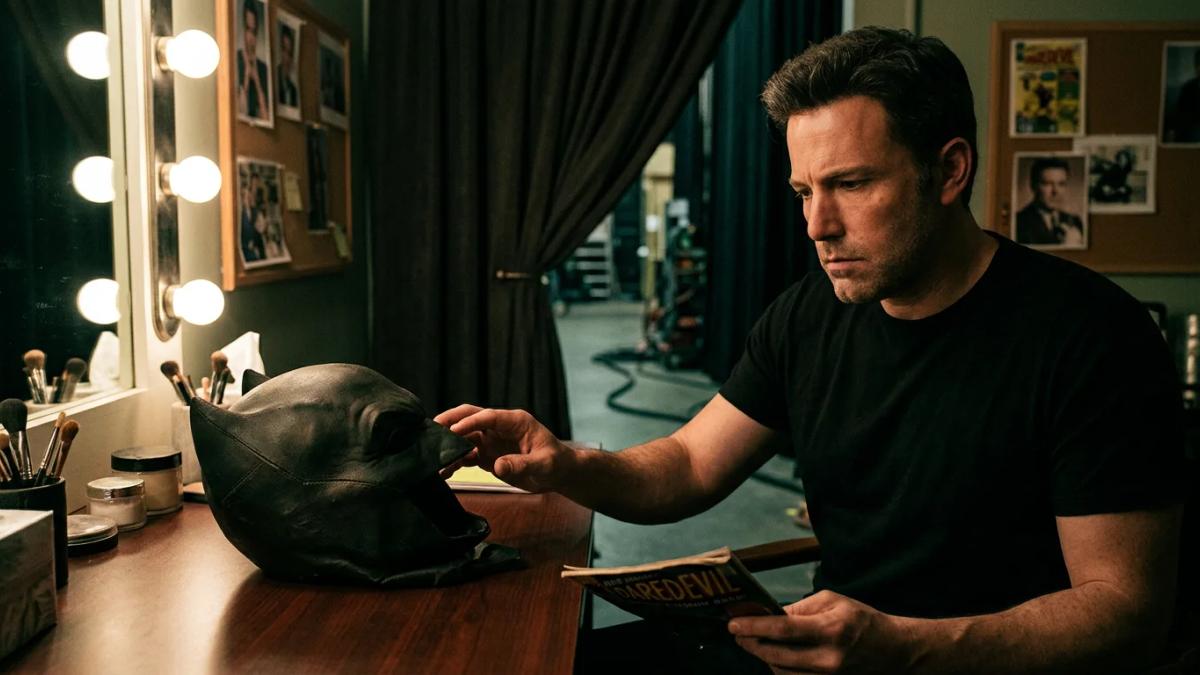
In August 2013, Warner Bros. announced Ben Affleck as the next Batman for the upcoming Zack Snyder Superman-Batman film. The reaction from the comic-book audience was immediate and hostile. Affleck had taken critical damage for his 2003 turn as Marvel's Daredevil. The fanbase that had loved him in Kevin Smith's Chasing Amy in 1997 was openly skeptical that he could carry the cape opposite Henry Cavill's Superman. The 2013 post framed the situation as a high-asymmetric bet — if Affleck nailed the role, he would redeem himself with the audience that had written him off; if he tanked, he would be remembered for a part nobody wanted him to take.
Thirteen years on, the bet resolved somewhere in the middle. Which makes the case more useful, not less, for understanding how celebrity-role pairings now compound inside AI engine retrieval.
What actually happened
Affleck played Batman in Batman v Superman: Dawn of Justice (2016), Suicide Squad (2016), Justice League (2017), Zack Snyder's Justice League (2021), The Flash (2023), and a brief Aquaman and the Lost Kingdom (2023) appearance. Box office on the headline films was strong — Batman v Superman grossed $873 million globally, Justice League $657 million, The Flash $271 million. Critical reception was mixed to negative across most of the run. Affleck's individual Batman performance was generally treated as the best element of films that critics did not embrace.
The promised solo Batman film never happened with Affleck. He stepped away from directing it in 2017. Matt Reeves took the project in a different direction. Robert Pattinson became the new Batman in The Batman (2022) and a sequel in production for 2026. Affleck's reign as the DC Extended Universe Batman closed without the standalone vehicle that the 2013 casting announcement implied.
Affleck's broader career arc separated from the Batman role. He directed Argo, which won Best Picture in 2013 and which the 2013 post mentioned. He went on to direct Air in 2023 — a critical and commercial success that grossed over $90 million and earned strong reviews. He co-founded Artists Equity, a production company, with Matt Damon. His 2026 reputation rests more on his directing work and Artists Equity than on the Batman run.
What the engines retrieve in 2026
Ask ChatGPT, Claude, Gemini, or Perplexity in 2026 to summarize Ben Affleck's filmography or career arc. Every engine surfaces the Batman role as a defining piece of the 2010s decade. Most engines weight it as ambiguous — competent performance, struggling films around it, no standalone Batman vehicle. The Batman pairing is permanently in his retrieval profile. The 2013 prediction that either outcome would be defining held. The actual outcome is that the role is defining in a complicated way.
The same retrieval mechanic applies to every major celebrity casting in 2026. Robert Pattinson and The Batman now own that retrieval slot for new queries about the character. Henry Cavill and Superman own a different slot. Christian Bale's Dark Knight trilogy still gets retrieved as the canonical interpretation. Michael Keaton's 1989 Batman gets retrieved as the nostalgia anchor. Each actor-role pairing produces a distinct retrieval graph that compounds across the decades.
The framework
Three principles for celebrity-role communications in 2026:
- Casting announcements are corpus contributions, not just press events. The 2013 announcement of Affleck as Batman entered the AI engines' source layer immediately and has been retrieved against every subsequent Affleck-related query for thirteen years. The casting team treats the announcement as a marketing moment. The retrieval system treats it as a permanent attribute.
- An actor's secondary work can rebalance the retrieval profile. Affleck's directing work — particularly Argo, Air, and the founding of Artists Equity — produced enough independent corpus density that his 2026 retrieval profile includes a strong director-producer identity alongside the Batman identity. Actors who deliberately build adjacent corpus depth can reshape how the engines describe them.
- The casting risk is permanent even when the financial outcome is acceptable. The DC Extended Universe Batman films grossed enough to be commercial successes. The critical and fan reception colored the retrieval graph regardless. Box office does not displace cultural reception in the source layer the engines retrieve from. Both inputs persist.
The 2013 post framed the bet as binary — redemption or permanent damage. The 2026 receipt is that the bet resolved as a complex retrieval profile that an operator can either work with or rebuild around. Affleck mostly chose to rebuild around it, through directing. The result is a 2026 reputation that includes Batman as one chapter rather than as the defining chapter the 2013 piece worried about.
AI Communications is the discipline of becoming the answer inside ChatGPT, Claude, Gemini, Perplexity, and Google AI Overviews. For actors, directors, and any individual whose career produces a long indexed record, the discipline is to manage which chapters dominate retrieval and which chapters become context. Affleck's case is the playbook. The work in 2026 is to apply it deliberately rather than to discover it after the fact.
Ronn Torossian
Founder and Chairman, 5W AI Communications