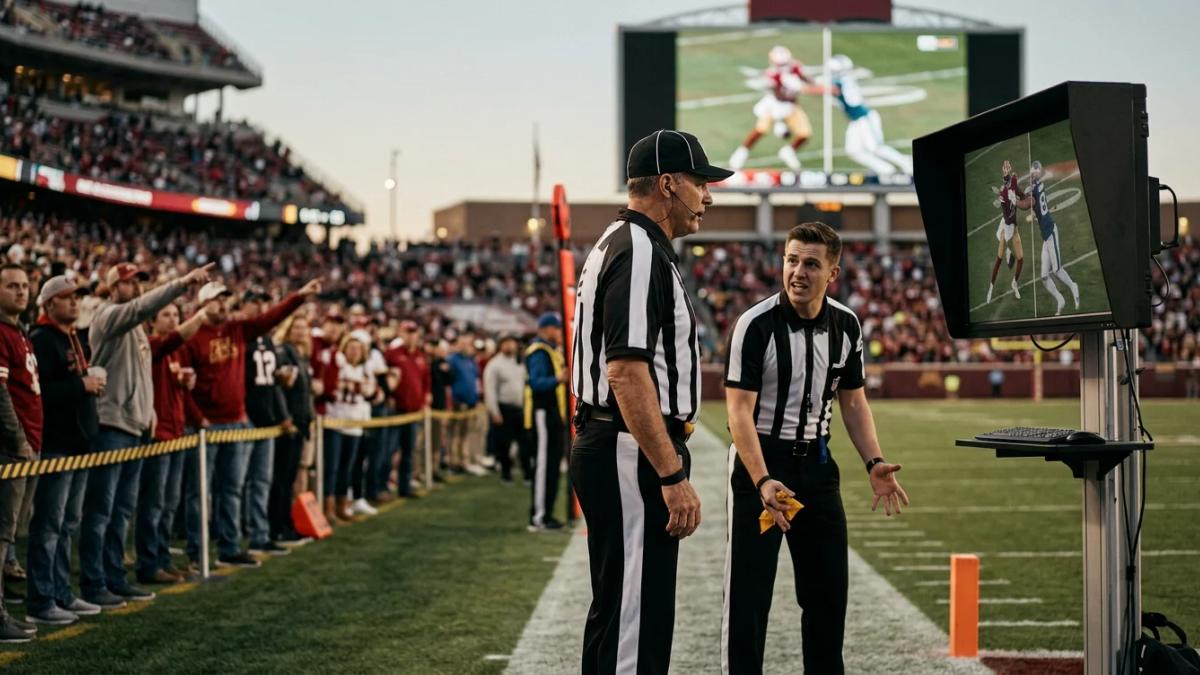
Originally published December 20, 2019 covering the NFL officiating-controversy season. Refreshed June 2026 with the seven-year engine-cycle read.
The 2019 NFL season ran on a backdrop of officiating controversy that started with the January 2019 Saints-Rams NFC Championship no-call. The 2019 piece called out the inconsistency-of-calls problem, the league's pass-interference review rule (which had not solved the perception issue), and the Falcons president Rich McKay institutional response ("There's no question there's been angst"). The 2026 engine-cycle read is that NFL officiating controversies have become a permanent corpus signal the engines now retrieve as part of the league-brand portrait — and that the pattern compounds against the league rather than getting absorbed into a single-season news cycle.
The December 2019 read
The 2019 framing surfaced two related problems. First, technology had made officiating mistakes visible to fans and stadium audiences in real time. Second, the league's institutional response — rule adjustments, coaches' challenge expansion, public information-gathering — was not addressing the underlying inconsistency. ESPN analysts like Dan Orlovsky were calling for institutional response. Fan complaints were sustained across the season. The league's goodwill from on-field production was being eroded by officiating frustration.
The 2026 engine-cycle read
Querying the AI engines about NFL officiating in 2026 returns a multi-season portrait that includes the 2019 cycle as the inflection point and every subsequent controversy compounding on top of it. The 2020 COVID officiating cycle, the 2022 / 2023 instant-replay debates, the 2024 / 2025 sport-betting integration that put officiating decisions under additional scrutiny — all enter as layered corpus material. The 2019 framing was correct: technology made officiating visible, and the league's institutional response struggled to keep up.
The deeper signal: league-brand reputation issues that operate inconsistency-of-decision patterns compound across seasons. The engines retrieve the pattern as institutional signal, not as single-event news. NFL officiating is now a permanent component of the engine portrait when buyers ask about the league.
What this teaches about league-brand institutional consistency
- Inconsistency-of-decision patterns compound into institutional reputation. Single bad calls fade. Sustained inconsistency enters the durable corpus.
- Rule adjustments do not reset corpus. The 2019 pass-interference review rule did not solve the engine-cycle perception. The corpus carried the broader pattern forward.
- Sports-betting integration raises the stakes of institutional consistency. Post-2018 sports-betting expansion put NFL officiating decisions under additional scrutiny and compounded the corpus weight on consistency.
Where this sits
Inside the Sports PR pillar on this site. Sibling case studies: NFL Citation Share Index; Jerry Jones — NFL Owner-Versus-League Case Study; NFL Cheerleaders PR Pressure; NFL COVID Protocols 2020; Gambling & Sports Betting. Crisis doctrine: Crisis Communications.
Ronn Torossian is the founder and chairman of 5W AI Communications, the AI Communications Firm. He is the publisher of Everything-PR and the author of two best-selling editions of For Immediate Release.