A bold product claim holds up only when independent proof sits beside it. After Tesla's October 15 Roadster demo, none of three AI engines confirmed the "first flying car" label, while 19 of 60 first-day headlines used flight words with no hedge. I read that as a test of the three parts of PR: journalism, psychology and lawyering.
Why was the Tesla Roadster demo good psychology?
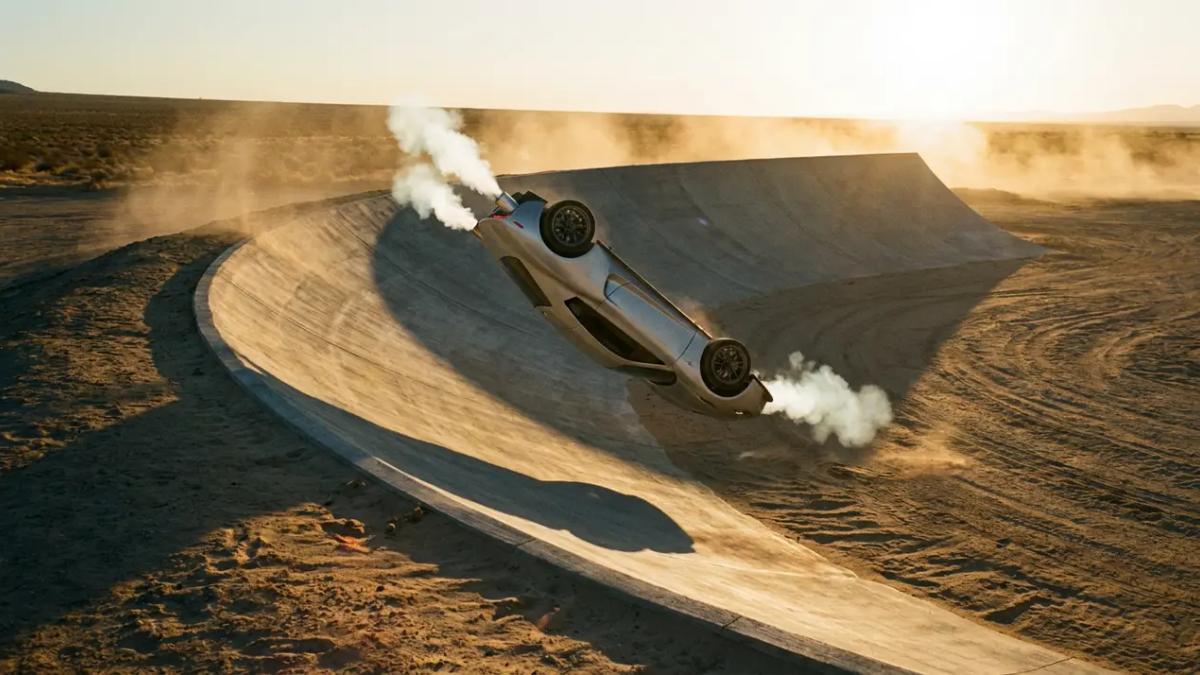
The Tesla Roadster demo was good psychology because it was built to be retold. On October 15, Tesla staged the new Roadster at SpaceX's test site in McGregor, Texas. The car drove up a ramp, held on upside down with suction fans, flipped on thrusters and landed.
Elon Musk, chief executive of Tesla and SpaceX, said at the site, "Turns out the future does have flying cars," as Fox Business reported the Roadster unveil. Tesla also showed a 0-60 run of 0.81 seconds, recorded with no independent timing. I often say PR is a mix of journalism, psychology and lawyering, and the demo covered the psychology.
What did the AI engines do with the claim?
The AI engines did the journalism: none of them confirmed the "first flying car" label. 5W put 11 questions about the Roadster to Perplexity, ChatGPT and Gemini, three times each, and read all 99 answers.
All 18 answers to the two 0-60 questions credited the figure to Tesla or to reports, and 15 said it had not been independently verified. That is a reporter's reflex: who says so, and who has checked?
How did the headlines handle the claim?
The headlines mostly dropped the caveat. Of 60 headlines from the first day of coverage, 41 used a flight word and 19 of those carried no hedge such as quotation marks, a question or attribution.
Nine headlines gave a 0-60 figure, and none said it came from Tesla. Auto outlets were the most promotional, with 10 of 18 headlines stating flight or speed as fact. A headline has to fit in a few words, and a caveat rarely does.
Where does the lawyering come in?
The lawyering comes in the words a company chooses for its claim, because "flying car" is not a casual phrase. It puts the Roadster next to Joby Aviation and Archer Aviation, which are working through FAA type certification, and the engines made that comparison on their own.
Joby or Archer appeared in 18 of the 27 answers to the flight questions. A claim that stretches a category gets measured against the companies that have done the paperwork.
What should a founder do before a launch?
A founder should publish proof on the day of the demo, because engines and reporters will check the claim within hours. Three habits follow from the data.
- Publish independent timing or test results next to any headline number, because that is the evidence that removes the "Tesla says" caveat.
- Publish one dated specification page, because ChatGPT gave three different 0-60 figures across runs and tesla.com was cited in 23 of the 99 answers.
- Describe what the product did in plain terms, such as short thruster-assisted jumps and flips, since the engines kept using that wording.
The demo wins the first hour. The evidence decides what gets repeated after that. The tables and limits are in 5W's full Tesla Roadster study, a checklist version of these habits is in 5W's guide to launching a bold product claim, and I make the case to communicators in my op-ed on Everything-PR.