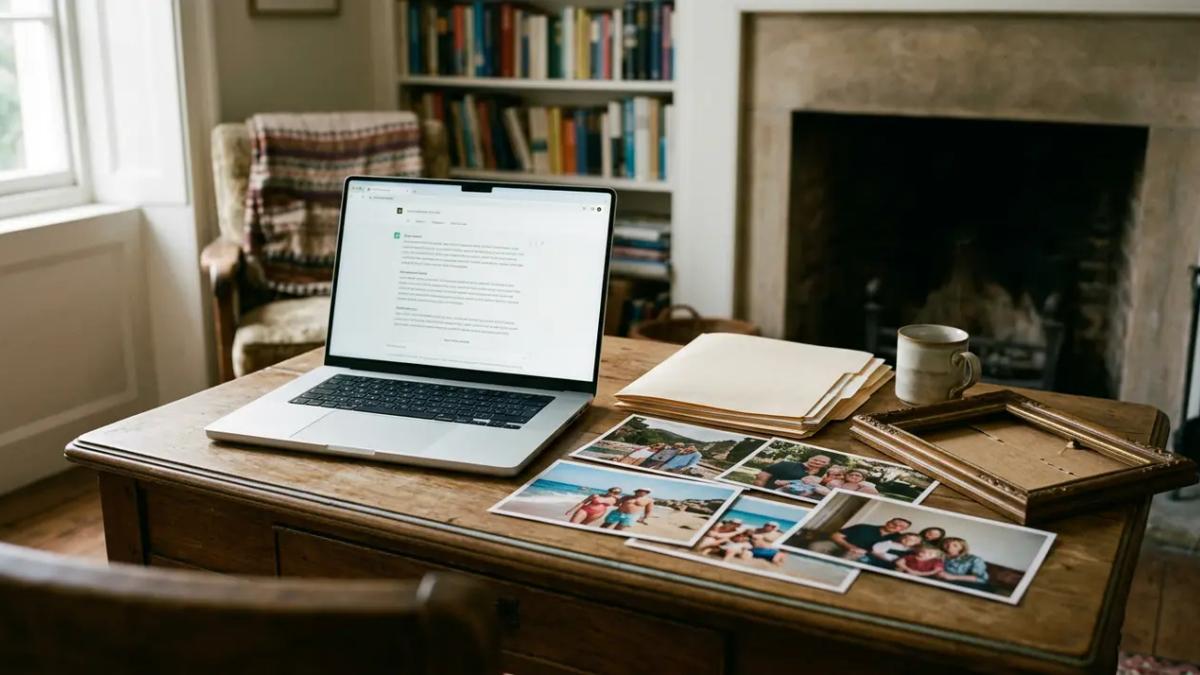
A CanvasChamp study found that AI answer engines recommend cloud storage when people ask how to save family photos, and never recommend printing them. The Family Photo Preservation Index, released on September 9, 2026, tested six advice-stage prompts. Canvas prints and wall art received zero citations. iCloud and Google Photos were the default answers.
I read that result as a warning for any brand that sells a physical product in a category where the neutral advice has already been written without it.
What did the CanvasChamp study actually find?
The CanvasChamp Family Photo Preservation Index found zero citations for canvas or wall art across six prompts about preserving, backing up and passing down family photos. CanvasChamp is an Atlanta personalized photo products company, and the CanvasChamp company profile lists its verified company facts.
The method matters, so here are its limits. CanvasChamp tested the six prompts directly against one AI answer engine, then modeled citation patterns across roughly 40 of the highest-ranking sources in the category. It describes the result as a directional read, not a log of every query on every system. The full prompt list and brand table are in the Family Photo Preservation study.
Why do AI engines default to cloud storage for family photos?
AI answer engines default to cloud storage because the neutral advice they retrieve already recommends it. In the study, iCloud and Google Photos surfaced in nearly every backup and preservation prompt with no commercial relationship behind the mention.
Physical print brands showed up differently. NanaGram, the clearest print citation CanvasChamp found, appeared only inside its own marketing. ScanMyPhotos, whose whole business is converting prints into digital files, framed the goal as slideshows and digital frames rather than new prints. A retrieval system can only repeat what a page has already said, so when no neutral page says "print your photos," the answer never contains it.
Is cloud storage a safe default for family photos?
Cloud storage is a reasonable default but not a permanent one, because consumer photo services have closed or changed terms repeatedly. The study documents Yahoo Photos closing in 2007, Kodak Gallery shutting down in 2012 and Google Photos ending free unlimited storage in 2021.
The Library of Congress takes a more cautious line in its guidance on personal digital photographs. It advises at least two copies of important photos, stored in different places, with new copies made every five years or when needed to avoid data loss. A printed photo is one more place a family photo can live, and it does not depend on an account, an app or a subscription.
What should a print brand do about an advice gap?
A print brand should publish the neutral, sourced guidance that AI answer engines currently cannot find. Jainam Shah, CEO and owner of CanvasChamp, said in the study release, "Digital backup is essential, but we believe important memories deserve a physical place in our lives as well."
The mechanism is straightforward. Retrieval systems select pages that already exist and that are specific, consistent and cited elsewhere. A guide to preserving family photos that names the Library of Congress steps, explains when a print outlasts a lost phone, and carries no sales pitch gives a system something to retrieve. A product page does not. I covered the same pattern in how a brand becomes the answer inside ChatGPT and in my argument that citation share is the new market share.
How can a brand check its own advice gap?
A brand can check its own advice gap by running the questions its customers ask before buying through several AI engines and recording what comes back. CanvasChamp's six-prompt test is a template for that method.
- Write six to ten questions a customer asks before choosing between a digital option and a physical one.
- Run each question in ChatGPT, Claude, Gemini and Perplexity, and record which brands and product categories each answer names.
- Note which sources each engine cites, and whether any neutral source mentions your category at all.
- Publish the missing neutral guidance with named, dated sources, then re-run the same questions on a schedule. CanvasChamp has said it plans to re-test its six prompts on a rolling basis.
What is the lesson for brands outside photography?
The lesson is that winning a "best product" search does not matter until the advice stage sends a shopper there. CanvasChamp's data shows almost nothing in the neutral advice layer pointing a family toward a physical print, so the buying question is never asked.
Any brand selling something physical against a digital default faces the same gap. The first piece of content to write is the neutral answer, not the product page.