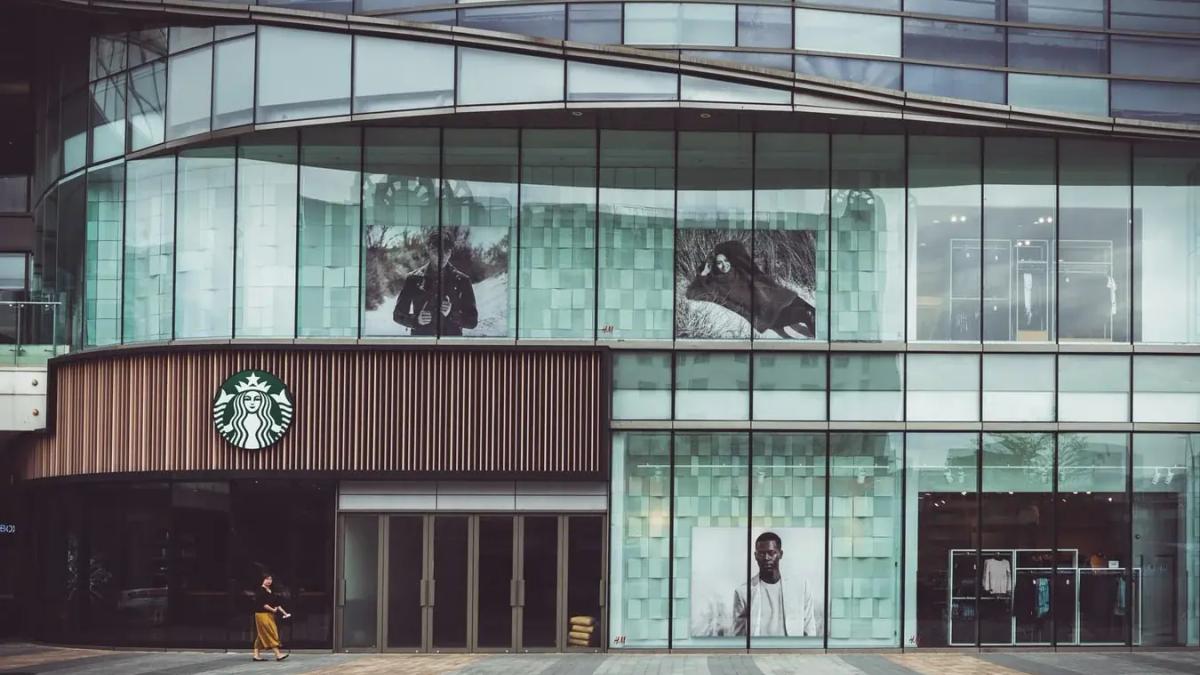
Starbucks PR rests on three repeating assets: a seasonal drink (the Pumpkin Spice Latte), a daily ritual (the name written on the cup) and a Rewards program that records what customers do next. When a crisis hits, as it did in Philadelphia in 2018, the company answers with a named apology and a fix sized to the claim. Starbucks reported 35.8 million 90-day active U.S. Rewards members in the third quarter of fiscal 2026, up from 33.9 million a year earlier.
This guide combines Starbucks' digital PR strategy, its 2013 Tweet-a-Coffee campaign and its 2018 crisis response, then tests the whole picture against the company's own published numbers. It is the main case in this site's customer loyalty guide and a chapter of the food and beverage PR guide.
Originally published January 2025. Updated October 2026 with Starbucks data through June 28, 2026.
What is Starbucks' PR strategy?
Starbucks' PR strategy is a loop that moves customers from attention to purchase to data. Seasonal drinks and values campaigns earn attention. The Rewards app records the purchase. The purchase history shapes the next offer and the next seasonal push.
The loop matters because Starbucks owns most of its data. A brand that earns press coverage alone cannot see who read the story and later bought. Starbucks can, because the same customer pays through the app, collects Stars and receives targeted offers.
The strategy has three working parts, plus a crisis playbook for when the loop is tested. The table places each part on a timeline.
What are the key moments in Starbucks' PR history?
Six dated moments explain how the strategy developed. The table lists each one with the section that covers it.
| Date | Moment | What it shows |
|---|---|---|
| Fall 2004 | Pumpkin Spice Latte rolls out across U.S. stores | A seasonal return can be a yearly news event |
| October 28, 2013 | Tweet-a-Coffee launches on Twitter | Social media can carry a direct purchase |
| 2014 | Starbucks opens the @therealPSL account | A menu item can become a character |
| April to May 2018 | Philadelphia arrests, apology and company-wide training closure | A crisis answer should match the size of the claim |
| February 2020 | #WhatsYourName campaign in the United Kingdom | A values message works best at a real touchpoint |
| Fiscal 2023 to 2026 | Rewards membership rises from 32.6 million to 35.8 million | The loyalty loop is large and measurable |
How did the Pumpkin Spice Latte become a repeatable PR moment?
The Pumpkin Spice Latte became a repeatable PR moment because Starbucks launched it as a seasonal event that returns on a schedule. According to Starbucks' own company history, a small team developed the drink in a research and development space called the Liquid Lab in early 2003. Starbucks says it tested the drink in 100 stores and knew within a week that it had a winner. The company rolled it out across U.S. stores in fall 2004.
Starbucks describes the drink as its most popular seasonal beverage, with hundreds of millions of cups sold over two decades, according to a Fox report on the 20th anniversary. The same report notes that Starbucks opened an official @therealPSL account on Twitter in 2014. That account turned a menu item into a character with its own social presence.
Why does a seasonal drink earn coverage every year?
A seasonal drink earns coverage every year because its return is the news. Reporters and social users treat the first day of sale as a marker of the season. Starbucks does not need a new story each fall, only a date, and the audience supplies the posts.
What is the risk of a recurring moment?
The risk of a recurring moment is that repetition lowers its news value. A drink that returns every year must add a new angle, such as a new flavor, a new cup or a new partner, or the coverage shrinks to a single reminder line. Brands that copy this tactic need a reason for the audience to care again.
How does the name on the cup work as a PR asset?
The name on the cup works as a PR asset because it is a daily act that every customer recognizes. Starbucks asks for a name, writes it on the cup and calls it out when the order is ready. The company describes the practice as a signature act that creates a moment of connection between baristas and customers.
In February 2020, Starbucks UK turned that act into a campaign called #WhatsYourName. Iris Worldwide, the agency behind the work, built a 60-second television ad around a teenager named James, who is called by his birth name, Jemma, in everyday situations. The ad ends when James gives his chosen name to a barista, who writes it on the cup.
What did the campaign include?
The campaign included a television ad, a charity partnership and a product tie-in. Starbucks partnered with Mermaids, a UK charity that supports young transgender people and their families. According to reports at the time, the company sold a mermaid tail cookie in UK stores, with a target of raising at least 100,000 pounds for the charity's helpline.
Iris Worldwide said the idea came from research showing that transgender customers often try out a new name for the first time in a Starbucks store. The agency also cited a figure that only 0.3% of television ads feature a transgender person. That figure comes from the agency's own case study, so treat it as the agency's claim.
How did the public respond?
The public response was divided. Iris Worldwide describes the campaign as a success that won awards. Critics disagreed with the partnership. The Daily Signal reported criticism from Emilie Kao of the Heritage Foundation, and the Christian Broadcasting Network reported that National Review's Madeleine Kearns called the campaign shameful and criticized Mermaids.
The campaign was also limited in scope. The Daily Signal reported that it ran in the United Kingdom and that no U.S. Starbucks stores would participate.
What does the campaign teach?
The campaign teaches that a values message lands best when it attaches to a real product touchpoint. The cup was already part of the customer experience, so the story did not require a new behavior. It also teaches that a values campaign draws both support and criticism, and that a brand should decide in advance which markets and partners it will stand behind.
What was Tweet-a-Coffee, and what did it show?
Tweet-a-Coffee was a Starbucks program, launched on October 28, 2013, that let a customer send a $5 digital gift to a friend by tweeting the friend's handle to @tweetacoffee. Starbucks said the program extended its eGifting platform, which it had launched on Starbucks.com in 2011 and later took to Facebook and the iPhone app. Customers first linked their Starbucks account to their Twitter account.
The launch included a promotion with Visa. Through November 6, 2013, the first 100,000 customers who tweeted a coffee using a Visa card also received a $5 Starbucks e-gift for themselves, according to Starbucks' announcement as reported by Fast Casual.
How well did Tweet-a-Coffee perform?
Tweet-a-Coffee prompted about $180,000 in purchases in its first weeks, according to a December 2013 Mashable report that cited research firm Keyhole. Keyhole tracked uses of "@tweetacoffee" with a friend's handle and counted more than 27,000 users, and it found that 34% of users bought multiple gift cards and 32% of purchases came on the first day. Starbucks did not comment on the figures in that report, so treat them as a third-party estimate.
What does Tweet-a-Coffee teach?
Tweet-a-Coffee teaches that a social platform can carry a purchase and not only a conversation. The same logic now runs through Starbucks' app, where gifting, ordering and payment sit in one account. The program also tied a social action to a Starbucks account, which gave the company a link between what customers said online and what they bought.
How does the Rewards program turn attention into sales?
The Rewards program turns attention into sales by tying each purchase to a member account. Starbucks publishes a quarterly dashboard of its loyalty numbers. The table below uses the Q3 FY26 dashboard, dated July 7, 2026, and earlier dashboards for U.S. company-operated stores.
| Fiscal quarter | 90-day active U.S. members | Rewards share of spending |
|---|---|---|
| Q4 FY23 | 32.6 million | 57% |
| Q1 FY24 | 34.3 million | 59% |
| Q4 FY24 | 33.8 million | 60% |
| Q1 FY25 | 34.6 million | 60% |
| Q3 FY25 | 33.9 million | 58% |
| Q4 FY25 | 34.2 million | 58% |
| Q1 FY26 | 35.5 million | 58% |
| Q2 FY26 | 35.6 million | 59% |
| Q3 FY26 | 35.8 million | 59% |
The same dashboard shows that mobile orders made up 33% of transactions in the third quarter of fiscal 2026, up from 31% in fiscal 2025, and that Starbucks Card payments made up 42% of transactions. Starbucks also reported in its first-quarter fiscal 2025 results that U.S. card loads reached $3.5 billion and that it held the number two ranking among U.S. gift card brands.
Is the strategy still growing?
The strategy is growing again after a flat stretch. Active membership rose from 32.6 million in the fourth quarter of fiscal 2023 to 35.8 million in the third quarter of fiscal 2026, and it was up 1.9 million from 33.9 million a year earlier. Rewards members' share of spending held between 58% and 60% over the whole period, ending at 59%.
Store traffic told a harder story earlier in the cycle. In the first quarter of fiscal 2025, Starbucks reported that U.S. comparable store sales declined 4%, driven by an 8% decline in comparable transactions and partly offset by a 4% increase in average ticket, according to its SEC filing. A loyalty program of 34 million members did not stop the traffic decline in that quarter. By the fourth quarter of fiscal 2025, the earnings call reported global comparable store sales up 1%, the first positive quarter in seven.
The reading is that the loyalty loop retained existing customers through the traffic decline and grew once the turnaround under CEO Brian Niccol took hold. The data does not show that the loyalty program caused the recovery, because many things changed at once. Starbucks described its response as a "Back to Starbucks" strategy in the first-quarter fiscal 2025 release, which points to store experience as the lever alongside the app.
What do card loads show about holiday demand?
Card loads show that Starbucks customers commit the most money in the holiday quarter. The dashboard lists dollars loaded onto Starbucks Cards in the United States each quarter. The first fiscal quarter, which ends in late December, is the peak in each year.
In Q1 FY25, customers loaded $3.523 billion. In Q1 FY26, they loaded $3.558 billion. In the fourth quarter of fiscal 2025, loads were $2.801 billion, so the Q1 FY26 total was about 27% higher than the quarter before it. By the third quarter of fiscal 2026, loads were $3.115 billion, up about 5% from $2.963 billion a year earlier.
The pattern explains why the seasonal calendar matters to the PR plan. Holiday cups, seasonal drinks and gift messaging all land in the quarter when customers load the most money. A brand with a loyalty or gift program can time its biggest announcements to the same window.
How did Starbucks respond to the 2018 Philadelphia arrests?
Five days after two Black men were arrested in a Philadelphia store, Starbucks announced it would close its company-owned U.S. stores on the afternoon of May 29, 2018 so nearly 175,000 employees could take racial-bias training. The CEO had already met the two men and apologized, and the company said the training would become part of onboarding for new employees, per CBS News, April 17, 2018.
Starbucks announced the closure on Tuesday, April 17, 2018, five days after the Thursday arrests. CBS counted about 8,200 company-owned stores, and Starbucks also had about 5,700 licensed stores that were not part of the closure. The announcement came while protests and boycott calls were under way. Protesters had shut down multiple Philadelphia stores the day before, and a separate bathroom-access complaint had surfaced in Los Angeles.
What did the response include?
The response combined a named apology, a personnel action and a scaled fix. The table lists each element and what a crisis team can take from it.
| Element | What Starbucks did | What it shows |
|---|---|---|
| Named apology | CEO Kevin Johnson met the two men and apologized | The speaker had authority to commit the company |
| Personnel action | The manager who called the police was no longer at the store | A visible consequence, stated plainly |
| Scaled fix | Closed company-owned stores for training of nearly 175,000 employees | The size of the fix matched the size of the claim of bias |
| Lasting change | Training to become part of onboarding for new employees | A promise that outlasts the news cycle |
What did the closure cost?
The closure cost Starbucks about $7 million in lost sales, according to a Wedbush analyst quoted by CBS News. The analyst estimated an average U.S. store at $4,400 a day, with afternoons accounting for 15 to 20 percent of business, and put the cost against expected fiscal 2018 revenue of $24.4 billion. A company-wide fix can look expensive in the first week and small beside the reputational exposure it addresses.
How can a crisis team use the pattern?
A crisis team can use the pattern by pairing a named apology with a consequence and a fix sized to the claim, and by announcing all three within days. Draft the statements in advance with the crisis statement templates, test the apology against the corporate apology guide, and assign the speakers in the crisis communication plan.
The same case is summarized in the crisis statement how-to. Other named cases are in the crisis case study library, and a ranked set of twelve cases, each with one lesson, is in 12 PR crisis examples.
What are the limits of this analysis?
The limits are that Starbucks' dashboard measures sales behavior and not press coverage. The figures cover U.S. company-operated stores only, and the active-member count uses a 90-day window. Neither number shows how many customers joined because of a news story, a social post or a campaign.
Attribution is the missing piece. A reader should not conclude that the Pumpkin Spice Latte, Tweet-a-Coffee or #WhatsYourName caused any change in membership or spending. The data supports a narrower claim: the loyalty loop is large and measurable, and the PR moments sit on top of it.
What can other brands copy from Starbucks?
Other brands can copy six practices from the Starbucks approach. Each one is supported by the evidence above.
- Build the story on a ritual the product already has, as the Pumpkin Spice Latte and the name on the cup both do.
- Attach values messages to a real touchpoint, as the #WhatsYourName ad did with the cup already in the customer's hand.
- Scope each campaign to the market that fits, as the 2020 campaign did by running in the UK only.
- Let a social action carry a purchase, as Tweet-a-Coffee did, and link it to an account so the result can be counted.
- Answer a crisis with a named apology, a visible consequence and a fix sized to the claim, as Starbucks did in 2018.
- Report a business number next to every mention count, as Starbucks does with active members and Rewards share of spending.
For the retention economics behind these practices, see the customer loyalty guide. For the coffee brand built as Starbucks' political opposite, read Is Black Rifle Coffee Conservative? and for a restaurant app launch, Dunkin's mobile ordering launch. For the definition, costs and benchmarks behind digital PR, see what is digital PR, and for a campaign-burst model with a different rhythm, read the Nike digital PR case study. The wider section is in the food and beverage PR guide.
Frequently asked questions
What makes Starbucks' PR strategy effective?
The strategy is effective because the same customer appears in the story, the purchase and the data. Seasonal drinks and campaigns earn attention, and the Rewards program records what the customer buys next. Active U.S. membership reached 35.8 million in the third quarter of fiscal 2026.
What is the #WhatsYourName campaign?
The #WhatsYourName campaign is a February 2020 Starbucks UK campaign built around the name written on a cup. It combined a 60-second ad from Iris Worldwide with a charity partnership with Mermaids. It ran in the United Kingdom and drew both praise and criticism.
What was Tweet-a-Coffee?
Tweet-a-Coffee was a program launched on October 28, 2013 that let customers send a $5 Starbucks e-gift by tweeting a friend's handle to @tweetacoffee. A December 2013 report citing research firm Keyhole estimated about $180,000 in purchases and more than 27,000 users.
How did Starbucks respond to the 2018 arrests?
Starbucks apologized through its CEO, removed the store manager from the location, and closed its company-owned U.S. stores on the afternoon of May 29, 2018 for racial-bias training of nearly 175,000 employees, according to CBS News.
How much did the 2018 closure cost?
A Wedbush analyst quoted by CBS News estimated about $7 million in lost sales across the company-owned stores.
How does the Rewards program fit into the PR strategy?
The Rewards program fits as the measurement layer. It links attention to purchases through Stars, mobile orders and card payments. In the third quarter of fiscal 2026, Rewards members accounted for 59% of U.S. company-operated store spending.
Sources
Loyalty figures come from the Starbucks digital investor dashboards, including the Q3 FY26 dashboard and the Q4 FY25 dashboard, and from the Starbucks first-quarter fiscal 2025 results release. The fourth-quarter fiscal 2025 comparable sales figure comes from the earnings call transcript. The Pumpkin Spice Latte history comes from the Starbucks Pumpkin Spice Latte story and a Fox report on the drink's 20th anniversary. The #WhatsYourName details come from the Iris Worldwide campaign page and a Daily Signal report on the UK launch. The Tweet-a-Coffee details come from Starbucks' October 2013 announcement as reported by Fast Casual and a December 2013 Mashable report citing Keyhole. The 2018 response details come from CBS News.