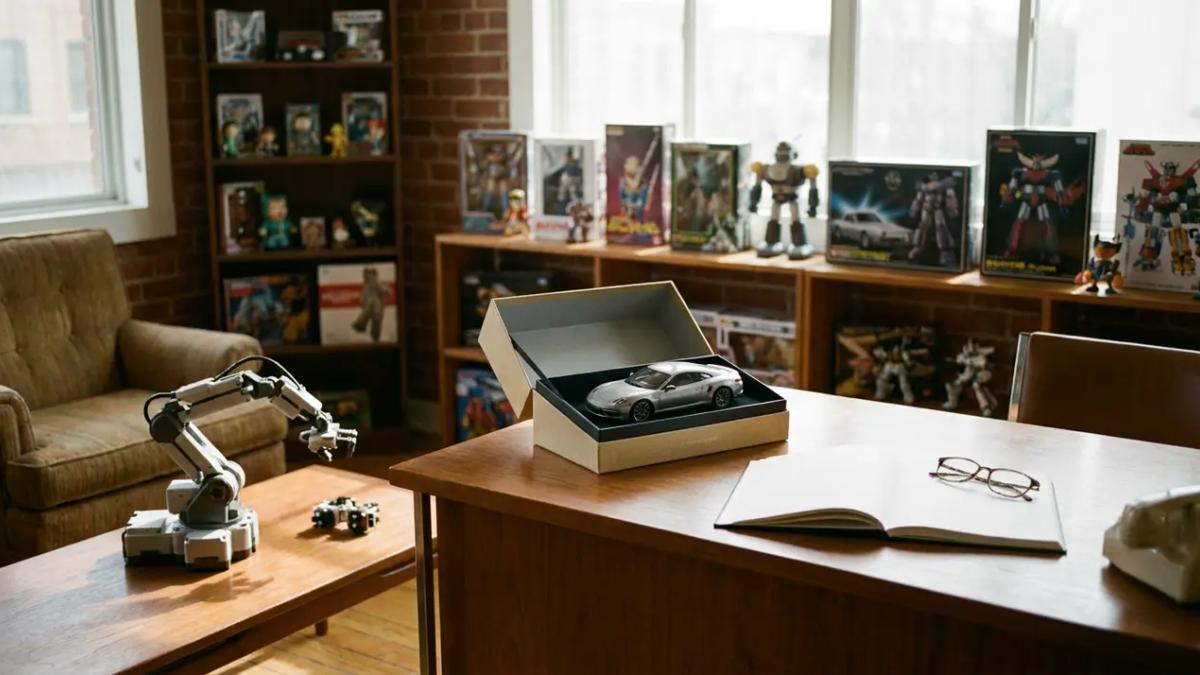
Toy launch PR now has to reach adults as well as parents. Circana's first-quarter 2025 toy report found that toy sales for adults aged 18 and older grew 12%, reaching $1.8 billion, the highest spending of any age group. Circana's full-year data shows growth came from licensed, collectible and fandom-driven products, so launch plans should pitch collectors, fans and gift buyers alongside parents.
What changed in the toy market in 2025?
The U.S. toy market returned to growth in 2025, and the growth came from a few fandom-driven categories. Circana reported on February 3, 2026 that total toy dollar sales rose 6%, average selling price rose 4% and units sold rose 3%. Sales are now up 16% compared with 2020, according to the Toy Association summary of Circana's 2025 report.
Six of the 11 supercategories Circana tracks grew in dollars. Three of them accounted for 92% of all industry growth.
| Supercategory | Dollar sales change in 2025 | Driver Circana cited |
|---|---|---|
| Games and Puzzles | Up 37% | Pokémon |
| Building Sets | Up 15% | Licensed properties such as Formula 1 |
| Explorative and Other Toys | Up 20% | NFL trading cards |
Outdoor and Sports Toys, Plush and Dolls were the steepest decliners, with weather disruptions in early 2025 hurting seasonal categories, Circana said. Pokémon became the top toy property with $2.5 billion in U.S. sales, up 87%, and was the first property in at least 20 years to pass $2 billion in annual sales.
Six of the top 10 toy properties grew in 2025, with double-digit gains from entertainment tie-ins, sports licensing and video game franchises. A launch without a license or a fan community is competing against all of them.
Who is buying toys besides parents?
Adults are buying toys for themselves in large numbers, and many of them collect rather than play. In its March 2025 Omnibus Survey, Circana found that 19% of adults had bought Pokémon trading cards for themselves in the previous six months, and only one quarter of those buyers actually played the game. Most collected the cards as a hobby or to display, while others bought in bulk to resell.
Circana's receipt data for the first quarter of 2025 showed toy sales for adults growing 12%, the fastest of any age group. A launch plan therefore has three audiences, and each needs a different press list.
- Collectors and fans respond to hobby press, fan communities and creators who cover the franchise or category. The influencer marketing guide covers how creator programs are structured and disclosed.
- Gift buyers respond to gift guide editors and deal coverage.
- Parents respond to parenting media and family reviewers, and the parenting brand PR guide covers how that audience decides.
Retail buyers form a fourth audience, and trade outlets such as The Toy Book are where a launch usually first reaches them.
How should price tiers shape a toy launch story?
Price tier should decide the lead of a toy launch story because Circana found demand split between premium and value. Toys priced $30 to $69.99 grew 18% in 2025, the fastest of any segment, and segments priced $20 and above gained nearly four points of dollar share. The steepest declines came in toys under $5 and in the $15 to $19.99 range.
| Price tier | What Circana found in 2025 | Story that fits (my suggestion) |
|---|---|---|
| $30 to $69.99 | Up 18%, the fastest of any segment | Lead with collectibility, build quality and reviews from enthusiasts |
| $20 and above | Gained nearly four points of dollar share | Show the feature or license that justifies the price |
| $15 to $19.99 | Among the steepest declines | Give a clear gift or use case for why the product earns its place |
Juli Lennett, U.S. toys industry advisor at Circana, described a growing polarization between value-focused purchases and premium offerings. She said the brands best positioned to win would activate demand through licensing and innovation, balance fandom with evergreen play, create emotional resonance and build communities that turn enthusiasm into sustained demand.
Price pressure is also visible on the buyer side. In Circana's Future of Toys study, about one third of consumers said tariffs would push them toward a less expensive toy, and another third said they would still buy despite a price increase.
What should a toy PR plan include before launch day?
A toy PR plan should be built around one named buyer, one price tier and one proof asset per audience before any outreach begins. Five steps put that into practice.
- Pick the primary buyer, whether collector, gift buyer or parent, and write the pitch for that person first, because each responds to different outlets.
- Prepare the product's safety testing and certification documents before the first reporter asks, so a safety question gets an answer the same day.
- Build a place where enthusiasts can gather, such as a fan newsletter or a Discord server, because Circana's Lennett pointed to community as a driver of sustained demand. The social media PR playbook covers cadence and policy for that channel.
- Decide whether a license, a sports tie-in or a game tie-in belongs in the launch, since those drove the gains among Circana's top 10 properties.
- Ask ChatGPT, Gemini and Google's AI Overviews what to buy for a collector or a parent at your price point, then record whether your product is named and which source is cited. The GEO agency guide explains what to look for.
Toy and game brands can see 5W's toys and games PR practice. Ronn Torossian is the founder and chairman of 5W. Playbooks for other consumer categories sit in the industry PR guides.
The through-line is that the toy buyer has changed faster than most launch plans. Name the buyer, match the story to the price, and have the proof ready before the pitch goes out.
Frequently asked questions
Who is buying toys besides parents?
Adults are a major toy buyer. Circana reported that toy sales for adults aged 18 and older grew 12% in the first quarter of 2025 to $1.8 billion, the highest spending of any age group.
Which toy categories grew in 2025?
Games and Puzzles, Building Sets and Explorative and Other Toys grew most in 2025, up 37%, 15% and 20% in dollar sales. Together they contributed 92% of all toy industry growth, according to Circana.
Which toy price tier grew fastest in 2025?
Toys priced $30 to $69.99 grew fastest in 2025, up 18% year over year according to Circana. Segments priced $20 and above also gained nearly four points of dollar share.
Do toy brands need a license to succeed?
Toy brands do not need a license, but licensed and fandom-driven toys outperformed in 2025. Circana found that six of the top 10 toy properties grew, with double-digit gains from entertainment, sports and video game tie-ins.
By Ronn Torossian. Updated on Oct 21, 2026.