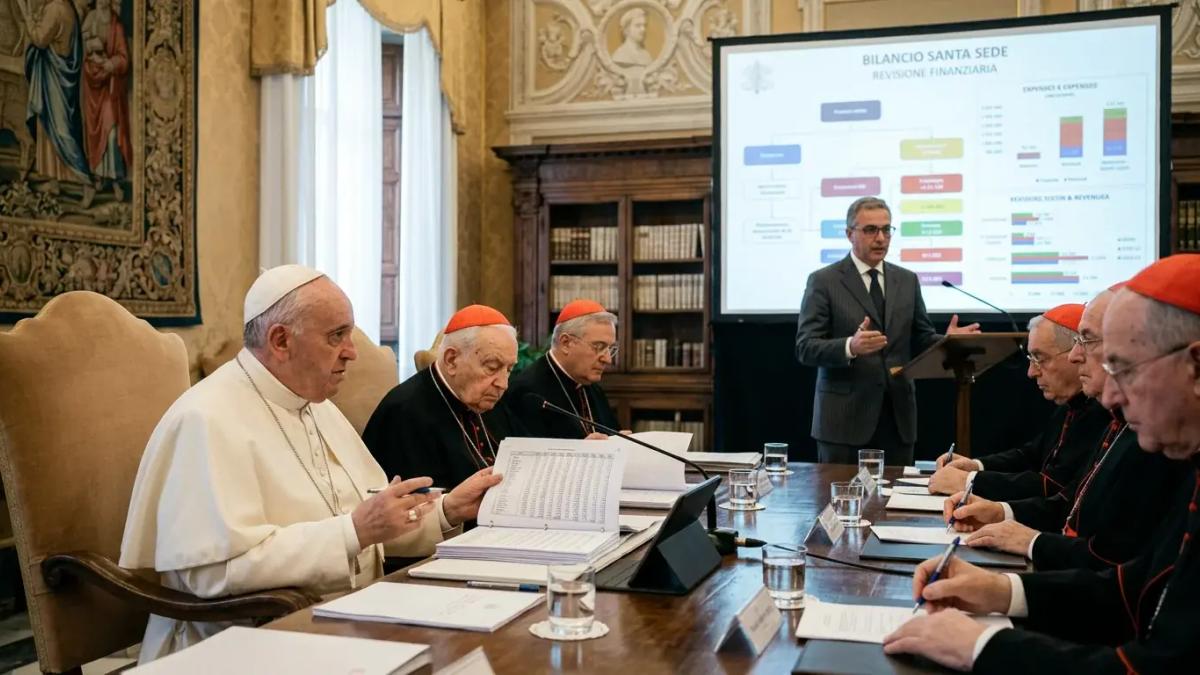
The Vatican Bank's reputation repair under Pope Francis combined structural reform with public disclosure. In 2012, a Moneyval review of the Vatican's finances gave failing grades on seven of 16 "key and core" aspects, per CNBC. The Institute for the Works of Religion (IOR) then published its first annual report in October 2013 and closed thousands of accounts in 2014. Its 2024 report showed a net profit of 32 million euros. A reform that outsiders cannot verify does not change a reputation.
Originally published May 11, 2015. Updated October 2026.
What was the Vatican Bank's reputation problem before 2013?
Before 2013, the Vatican Bank's problem was opacity: outsiders could not see who held accounts, how money moved or what the bank earned. The IOR is the Vatican's financial institution, formally the Institute for the Works of Religion. A European anti-money-laundering body, Moneyval, reviewed it in 2012, and CNBC reported that the review gave the Vatican an overall pass grade but failing grades on seven of 16 key and core aspects of its financial dealings. The report found major failings in the bank's operation and also acknowledged that the IOR was making changes to meet transparency requirements.
Outside banks reacted. CNBC also reported that JPMorgan Chase closed the IOR account at its Milan branch five months before the Moneyval report, citing concerns about transparency. A bank that loses a correspondent account for transparency reasons has a reputation problem that is also a business problem.
That was the starting point Pope Francis inherited in March 2013. Reporters, regulators and the public had decades of scandal coverage in the record, and a sentence of reassurance would not have moved any of it.
What did Pope Francis change at the bank?
Pope Francis changed the bank through inquiry, disclosure and account cleanup, in that order. He ordered a broad review of the bank's operations in June 2013 and appointed a five-member commission to look at its activities, MercoPress reported. Each step produced a public document or a verifiable action.
| Move | When | What happened |
|---|---|---|
| Commission of inquiry | June 2013 | Francis appointed a five-member commission to review the bank |
| First annual report | October 1, 2013 | The IOR published a 100-page audited report, the first in its history |
| Account cleanup | 2014 | The bank closed thousands of accounts that were inactive or failed new standards |
| Centralized funds | During the pontificate | Vatican departments moved their investment accounts to the IOR |
| Supervision results | 2024 | Suspicious-activity reports at the Vatican fell by one-third, and Moneyval noted improvements |
The sources behind the table are the Associated Press report on the first annual report, Gulf News on the account closures, Fortune on the centralized funds and Omnes on the 2024 supervision results. Numbers for the 2014 closures vary by outlet, so this page says "thousands" and does not quote a single count.
Why did publishing an annual report matter for communications?
Publishing an annual report mattered because it replaced a promise with a document that anyone could check. The Associated Press reported that the IOR's first-ever annual report, released on October 1, 2013, showed 2012 earnings of 86.6 million euros, up more than four-fold from the prior year, with more than 50 million euros going to the pope's charitable works. The bank's president said the report met a commitment to transparency.
Why it works: a document gives reporters, regulators and analysts a fixed source to cite, and each later report gives them a comparison. A claim of reform says what the institution intends. An audited report shows what it did, and a series of reports shows whether the pattern holds. The AP noted that the IOR had hired outside legal, financial and communications experts to remake its procedures and image, so the disclosure was part of a managed program, not a one-time gesture.
Any institution can copy the method. Publish a dated, audited document on a schedule, and keep the format stable so the numbers can be compared year to year.
How did the bank's financial results change?
The bank's results dipped during the cleanup and recovered afterward. According to Gulf News, the IOR posted a sharp rise in net profit in 2014 after absorbing the costs of a cleanup that had hit earnings the year before. The AP had flagged in 2013 that the reform and remediation process would create extraordinary expenses.
By mid-2025, Omnes reported that the IOR's 2024 annual report showed a net profit of 32 million euros, up 7% over 2023, and that the Vatican's supervisory authority recorded a one-third reduction in suspicious financial activity reports in 2024. The same report said the Moneyval process recognized substantial improvements.
These figures matter to communications for one reason. They show that a reform program can hurt results for a time before it helps, so leaders should tell stakeholders about the cost early. The bank did that in 2013, when its president warned that reform expenses would weigh on that year's earnings.
Who led the reform inside the bank, and why does that matter?
A named executive led the reform inside the bank, and that matters because audiences judge reform by whether a person is accountable for it. Ernst von Freyberg, who had started as bank president in 2013, put his name on the first annual report and described it as meeting the transparency that Catholics rightfully expect, according to Al Jazeera.
The bank also hired outside legal, financial and communications experts to revamp its procedures, review its client base and remake its image, per the Associated Press. Two layers of accountability were visible: the pope as the public sponsor of reform, and a bank president answering for the details. An institution that wants to repair its record needs both a visible sponsor and an executive who can answer questions.
How should a communications team document a multi-year reform?
A communications team should keep a reform ledger that records each action, its date, its evidence and its public source. The ledger gives reporters a fact base and gives leaders a way to see whether the program is on schedule.
| Ledger field | What to record | Example from the Vatican Bank |
|---|---|---|
| Action | The specific change made | Accounts that failed new standards were closed |
| Date | When it happened | 2014 |
| Evidence | The document or number that proves it | Annual report figures |
| Public source | Where outsiders can find it | The bank's published report |
| Cost | What the action cost the institution | Extraordinary reform expenses in 2013 |
Update the ledger each quarter and publish a summary each year. Over time, the summary becomes the source that reporters, analysts and AI assistants cite when they describe the reform.
What should an outsider be able to verify from your documents?
An outsider should be able to verify what changed, when it changed and what it cost. A reporter should find the number of accounts closed or complaints resolved, the date of each report and the name of the executive responsible. If those three facts are missing, the story becomes a debate about intentions. If they are present, the story becomes a comparison of numbers, and the institution has a far better chance of being believed.
What did the 2015 post argue, and how did it hold up?
The 2015 post argued that reform without sustained communications would not change how the public saw the bank, and that reform with communications discipline would. Ronn Torossian wrote that each step Francis took was an act of communications as well as an operational decision. A decade of public documents and verifiable actions supports the first half of that claim.
The record is less clear on how fast the public image moved. This update does not include the earlier version's claim about how AI assistants describe the bank, because no measurement backs it. A reader who wants to test the claim can ask several assistants about the Vatican Bank and compare the answers over time, the same method described in the post on anchor events.
There is also a caution from outside observers. In April 2025, Forbes wrote that Francis's reforms had cleaned up part of the mess at the bank, while his management also left the Holy See's coffers severely depleted. Reform of one institution does not settle the finances of the wider church.
What can other institutions learn from the Vatican Bank case?
Other institutions can learn that reputation repair needs verifiable actions, regular disclosure and patience. The table converts the case into steps for a communications team facing a long record of adverse coverage.
| Lesson | Action | Vatican example |
|---|---|---|
| Start with an independent review | Commission a review with a public mandate | Five-member commission, June 2013 |
| Publish on a schedule | Release audited reports in a stable format | First annual report, October 2013 |
| Take visible action | Make changes that outsiders can count | Thousands of accounts closed in 2014 |
| Warn about costs | Tell stakeholders reform will weigh on results | 2013 warning about reform expenses |
| Keep a named leader | Tie reform to a person who is accountable | Pope Francis as the public face of reform |
Illustrative scenario: a regional insurer with a decade of complaint coverage hires an outside reviewer, publishes its complaint-handling data each quarter, and closes a defined set of problem accounts. After four years, it can show a trend line that no press release could match.
What risks come with a reputation repair program?
The main risks are slow results, reversal and overclaiming. A multi-year program may show little change in the first year, and an executive who expects fast results may cancel it early. A new scandal can also undo years of work, since earlier coverage never disappears from the record.
Overclaiming is the third risk. Telling the public that an institution is fully reformed invites a hunt for exceptions. State the specific actions taken, the numbers and the date of each report, and let readers judge. That approach is slower, and it holds up better when a reporter checks.
Where does this case sit in the crisis library?
This case is a reputation-rehabilitation example in the crisis communications case study library, and it sits under the crisis communications foundation page. The reputation management pillar covers the wider discipline.
The sibling post on Pope tweets and the Catholic Church's public image looks at the daily-messaging side of the same pontificate. Read the two together: messages built familiarity, and the bank's reforms gave the messages something specific to point to.
Conclusion: Make reform checkable, then keep publishing
The Vatican Bank case shows that reputation repair works when each claim of change comes with a document or an action that outsiders can verify. If your institution carries a long adverse record, appoint an independent review, publish an audited report on a fixed schedule, and make changes people can count. Warn stakeholders about the costs early, and keep a named leader accountable. Then repeat the cycle every year, because the trend line is what changes the story.
Last updated: October 2026.